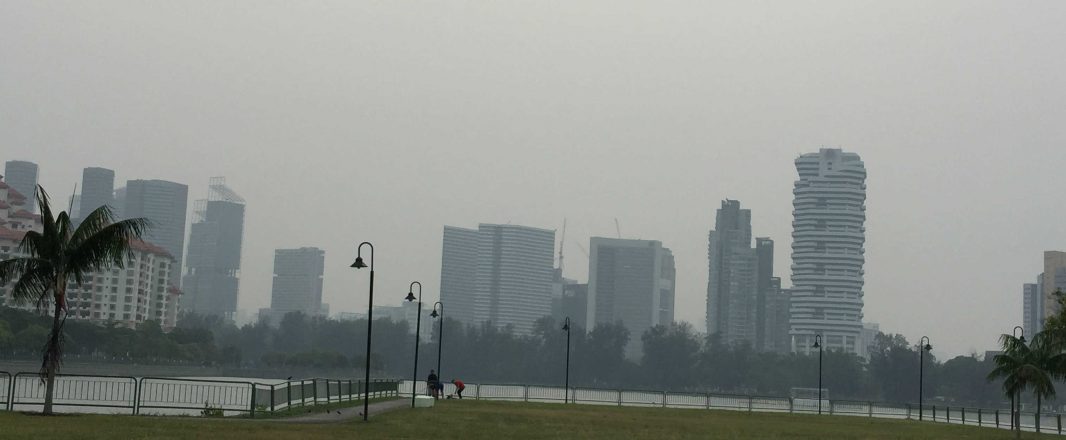
If there is anything that has occupied Singapore’s attention as of late, it is the haze. A sinister toxic cloud of smoke continues to waft inland, caused by Indonesia’s seemingly unending forest fires south of the island.
Locals, expats and visitors alike have swarmed pharmacies and clinics to get their hands on the much-coveted N95 respiratory masks that offer at least some protection from the foul-smelling grey fog.
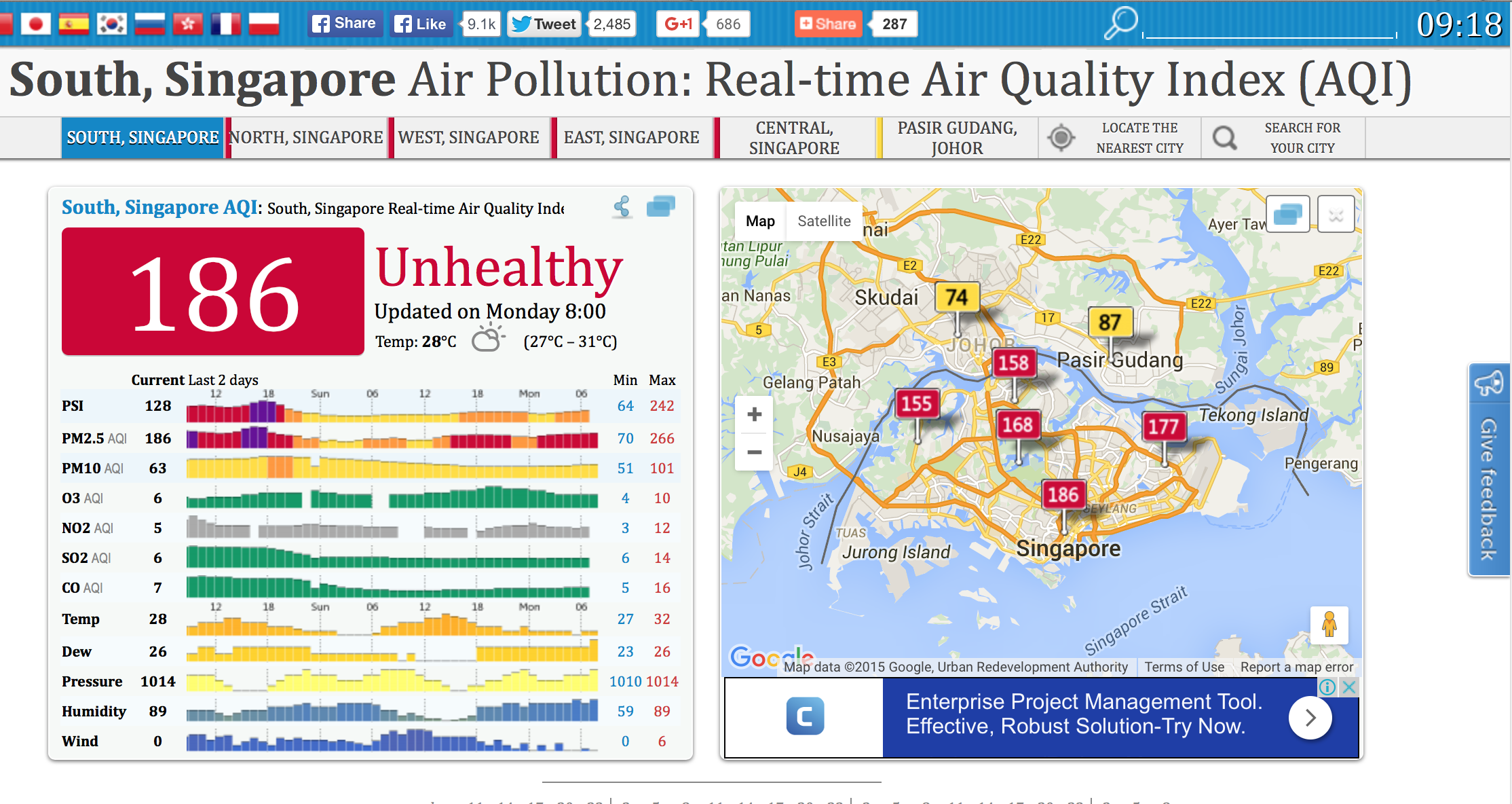
The reading this morning, Oct 5, from http://aqicn.org/city/singapore/south/
According to the NEA (National Environmental Agency), the Pollutant Standards Index (PSI), measures a total of six potential pollutants (including sulphur dioxide, particulate matter, fine particulate matter, nitrogen dioxide, carbon monoxide and ozone) but even they have been forced to change their protocols to assess this threat reliably, only now taking account of the dreaded PM 2.5 particle count – the insidious micro particles that can cause permanent harm.
Still, every morning, national news networks report estimated PSI levels over the preceding 24-hours from the NEA. The nation has become transfixed on an alternative site from aqicn.org with its singular numeric indicator that has the capacity to affect absolutely everybody’s day plans and threatens to tarnish Singapore’s reputation as a ‘clean city’.
Offices let employees work from home and school has been cancelled for many kids (much to their joy!). All aspects of daily life have been affected and everyone’s eyes are now captured by the day’s colour coded number that tells us how at risk we are, with even the conventional red for ‘danger’ on aqicn.org now deemed inadequate and being replaced by a deep purple that tells us essentially that we face serious risk if we venture outside.
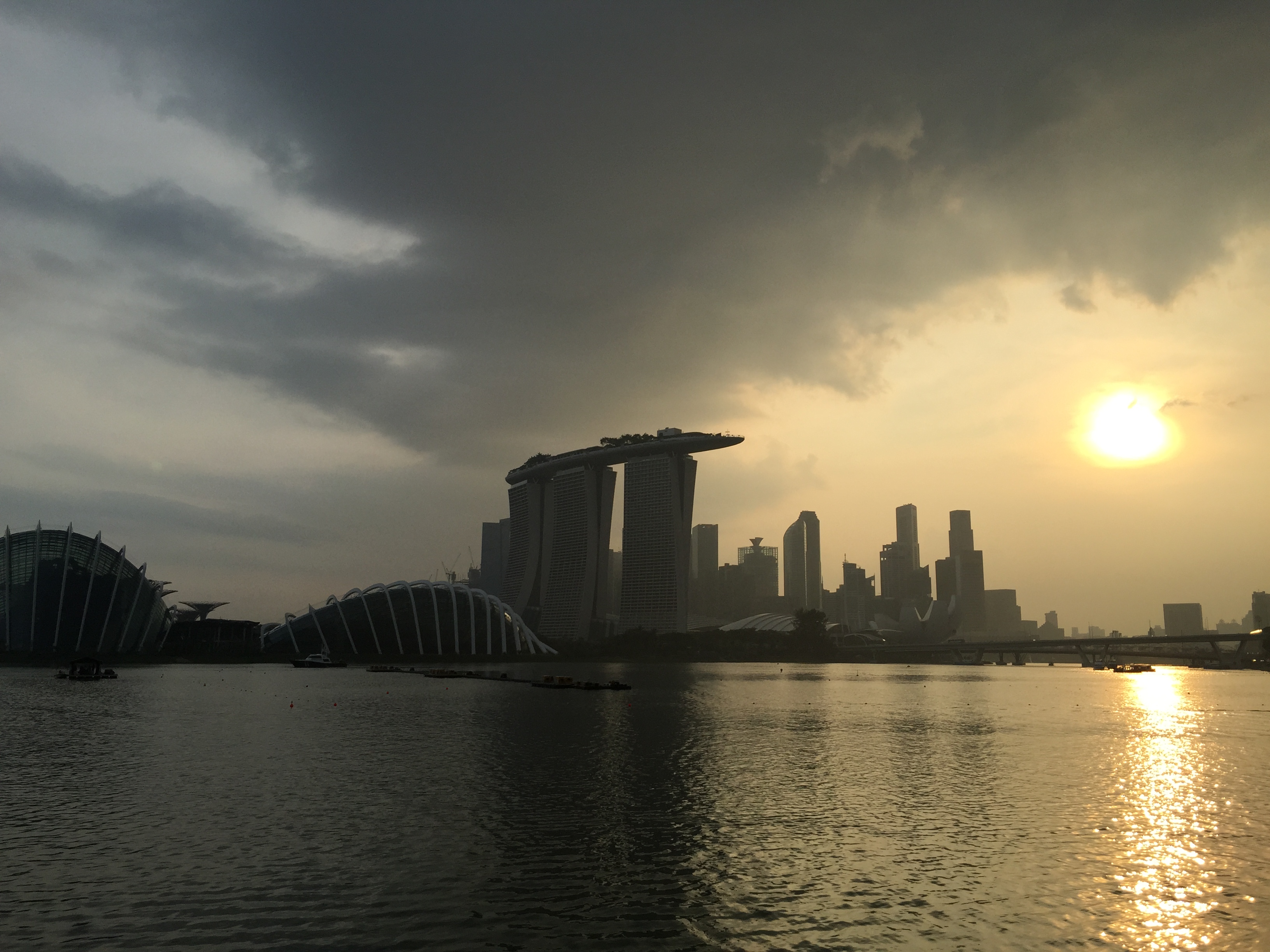
A diffused sunset over the most iconic building in Singapore.
It draws to attention the impact it must have on Singapore’s tourist numbers. A large amount of Singapore’s appeal is the perception of it as being impeccably clean, well organised and influential on the global stage. Many come to take a selfie at Marina Bay Sands’ infinity pool and to admire the greenery of the Botanic Gardens and nature reserves in the self-proclaimed Garden City.
Visitors flock to open-air hawker centres to sample local cuisine and bounce between malls along the retail stretch that is Orchard Road. Resorts World Sentosa, a main highlight for many that travel here to see, suddenly loses its appeal as the mist of the cooling fans become indiscernible from the surrounding grey of the pervading fog. The rooftop bars at the pinnacle of Singapore’s skyscrapers no longer offer the winning combination of cocktails with views of a glittering skyline. Instead, the haze rests over it all like thick leaden dust on a piece of artwork.
It cannot be any vote of confidence to see people spluttering and coughing, through stinging eyes when walking along the streets. Suddenly, Singapore does not match up to its spotless international reputation and due to the growing public sentiment that there is a lack of political accountability and action, its power and influence is drawn into question.
Ultimately, Singapore sits helpless and sitting on its hands, hoping for this to all suddenly and literally blow over. After all, this does happen every year with even the Straits Times reporting examples of it dating back to as early as the 70s. If it takes something as simple as the haze to trip up this nation, does it reflect a crack in the façade of Singapore’s ‘perfection’? If so, will it recover? We all pray so.
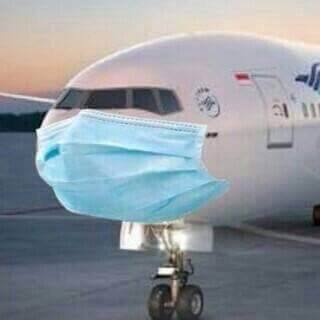
Editor’s note: This is an annual problem that affects not only Singapore but also neighbouring South-east Asian countries. This year, the haze was reported in Phuket as well for a couple of days. Malaysia is another country that cops it. It’s prompted spoofs like the image below on social media. This is a good opinion piece on the haze, if you want to understand more of the underlying challenges of battling this annual problem that faces South-east Asia. Everyone, us included, are caught up in the ring of fire.