In the news: Airlines in focus this week with the aviation industry reporting a good 2018, Malaysia Airlines launching its pilgrim-centric service for umrah and hajj, and easyJet offering 3D AR hand luggage scanning for passengers.
Aviation: 2018 – A year of flying high for airlines
(Image credit: ArtMassa/Getty Images)
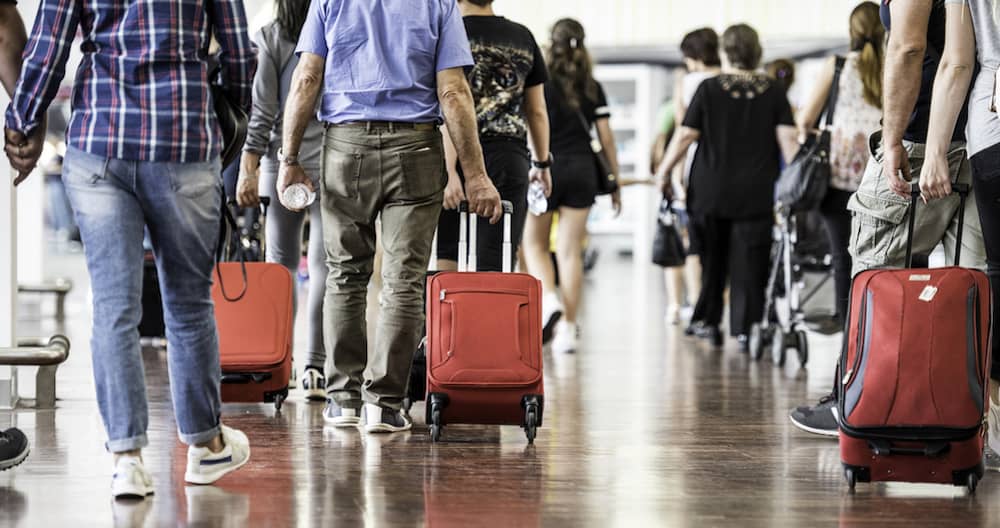
For airlines worldwide 2018 was a good year with revenue growth and a “record load factor” due to healthy passenger demand for travel.
Revenue passenger kilometre (RPK) rose by 6.5%, slower compared to 2017 that saw an annual growth rate of 8%. Despite the slowdown it was still another year of above-trend growth, said the International Air Transport Association (IATA) when announcing the global passenger traffic results for 2018 last week.
“Full year 2018 capacity climbed 6.1%, and load factor edged up 0.3% percentage point to a record 81.9%, exceeding the previous high set in 2017 ,” it added. December RPKs rose 5.3% against the same month in 2017, the slowest year-over-year pace since January 2018. However, the association noted this was a continuation of the trend that saw demand growth decelerate to an annualised rate of 5% in the second half of 2018 compared to 9% in the first half.
Alexandre de Juniac, IATA’s director general and CEO, said aviation continued to support the global economy with the strong passenger demand last year.
“We expect similar, if somewhat moderating performance in 2019. Nevertheless, slowing growth in the second half of 2018, coupled with concerns over issues including Brexit and US-China trade tensions, are creating some uncertainty to this positive outlook.”
Here are the full results of the report.
International passenger markets
International passenger traffic in 2018 climbed 6.3% compared to 2017, down from 8.6% annual growth the year before. Capacity rose 5.7% and load factor climbed by 0.4% to 81.2%. All regions recorded year-over-year increases in traffic led by Asia Pacific. However, North America and Africa were the only two regions to post stronger demand growth in 2018 compared to the prior year’s performance.
- Asia Pacific airlines’ 2018 traffic rose 7.3%, compared to 2017, driven by robust regional economic expansion and an increase in route options for travellers. Although this was a slowdown from the 10.5% year-over-year growth recorded in 2017 versus 2016, it was strong enough to lead all the regions for a second consecutive year. Capacity rose 6.4%, and load factor ticked up 0.7 percentage point to 80.6%.
- European carriers’ international traffic climbed 6.6% in 2018 compared to the previous year, which was down from 9.4% growth the year before. Capacity rose 5.9% and load factor increased 0.6% to 85 %, which was the highest for any region. On a seasonally-adjusted basis, traffic growth has softened a bit in recent months likely owing, in part, to uncertainty over the economic backdrop and Brexit.
- Middle East carriers’ traffic increased 4.2% last year, down from 6.9% growth in 2017. It was the second year in a row of moderating demand growth. Capacity climbed 5.2% and load factor slipped 0.7% to 74.7%. The deceleration in growth reflects the impact of policy measures and geopolitical tensions, including travel restrictions and the temporary ban on large portable electronic devices. Traffic actually declined 0.1% year-on-year in December, but this may reflect volatility in data.
- North American airlines had their fastest demand growth since 2011, with full-year traffic rising 5% compared to 2017, an increase from 4.7% annual growth in 2017. Here too, however, demand growth slackened noticeably in the last two quarters. This may be owing to increasing concerns over the US economic outlook and trade tensions with China. Capacity climbed 3.7%, and load factor edged up 1.0 percentage point to 82.6%, second highest among the regions.
- Latin American airlines’ traffic climbed 6.9% in 2018, a slowdown compared to 8.8% annual growth in 2017. Capacity rose 7.7% and load factor dipped 0.6 percentage point to 81.8%. Traffic was affected by the mid-year general strikes in Brazil as well as by political and economic developments in some of the region’s other key economies.
- African airlines saw 2018 traffic rise 6.5% compared to 2017, which was an increase compared to 6% annual growth in 2017. The strong performance took place in spite of the mixed economic backdrop of the continent’s largest economies, Nigeria and South Africa. Capacity rose 4.4%, and load factor jumped 1.4% to 71%.
Domestic passenger markets
Domestic air travel climbed 7% last year, which was unchanged from the rate in 2017. All markets showed annual growth, led by India and China that posted double-digit annual increases. Capacity rose 6.8% and load factor was 83%, up 0.2% compared to 2017.
- India’s domestic market posted the fastest full-year domestic growth rate for the fourth consecutive year, with an 18.6% annual demand increase. Domestic demand is underpinned by robust economic expansion and increasing numbers of city pairs.
- Australia represented the opposite picture, as annual traffic rose just 1.4% although this was a slight increase over the rate of 2017.
The bottom line
“Last year aviation continued to demonstrate why it is the Business of Freedom in 2018. We safely transported more than 4.3 billion passengers. These people used air connectivity to conduct trade and business, reunite with friends and loved ones, explore the world and, in some cases, even to begin new lives,” remarked de Juniac.
He called for borders to remain open to continue to make this possible. “In 2019, we will be strong advocates against a rising tide of protectionism and trade conflict, so that the Business of Freedom can continue to do its part to make the world a more prosperous and happier place.”
Airlines: Amal takes flight to serve hajj and umrah pilgrims in South-east Asia
(Image credit: Malaysia Airlines)
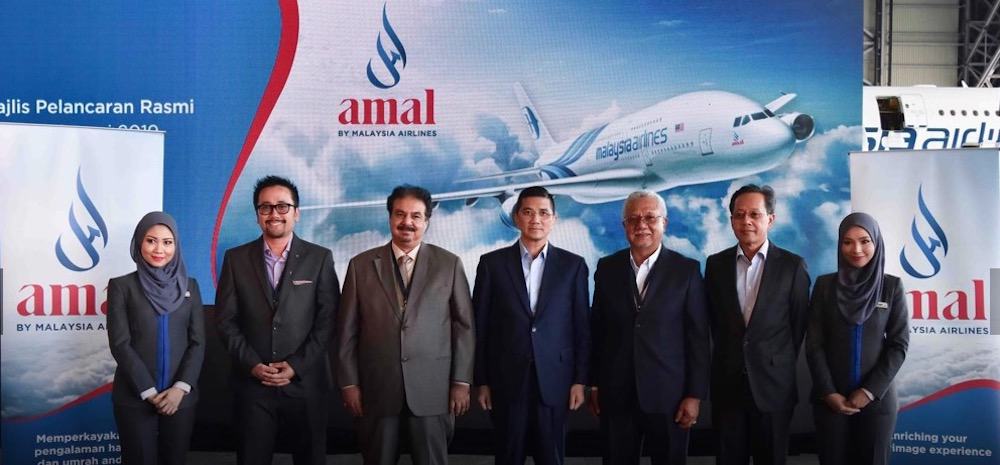
Malaysia Airlines officially launched Amal (formerly known as Project Hope), a pilgrim-centric service dedicated for hajj and umrah, with the unveiling of its name and logo on February 12.
Described as the “world’s first airline” to cater specifically only for hajj and umrah pilgrims to Jeddah and Madinah, Amal by Malaysia Airlines will help in the airline’s five-year turnaround plan (Malaysia Airlines Recovery Plan) that is expected to return the carrier to profitability by mid-2019.
The pilgrim-centric service is forecast to contribute between 10% and 15% to the revenue of Malaysia Aviation Group (MAG) in the next two years from the current 5%. The group is a global aviation organisation with subsidiaries and equity investments organised into four distinct business segments, one of which is Malaysia Airlines.
“We see big potential for the hajj and umrah market, and we have the added advantage of having years of experience providing such a service. The opportunity is not just in Malaysia, but also in Thailand and Indonesia, which are just next door,” said MAG chief executive officer Captain Izham Ismail
He pointed out Indonesia, in particular, has a Muslim population 10 times larger than Malaysia and is an under-served market. Amal plans to get about 10% market share in Indonesia in the next two year, and to carry 13,000 pilgrims from Thailand within the same time frame.
“The aim is to establish an air transport system and infrastructure dedicated for Hajj and Umrah for Muslims not just from these three countries but also other Asean countries,” added Captain Izham.
Amal chief executive officer Hazman Hilmi Sallahudin hopes Amal will alleviate the overall quality of services in the pilgrimage market, which is often associated to non-premium services.
“As Saudi Arabia aims to quadruple the number of pilgrims to 30 million by 2030, Amal is honoured to play a part in making Saudi Vision 2030 a great success,” he said.
Hazman Hilmi said Amal commenced its first service in October last year, and currently flies up to three times a day to Jeddah and Madinah using the Airbus A380-800 aircraft.
He disclosed Amal was expected to take over Malaysia Airlines’ operations for normal flights from Kuala Lumpur to Jeddah and Madinah around April this year.
Technology: easyJet’s passengers can now measure carry-ons using 3D AR scanning feature

(Image credit: jchizhe/Getty Images)
British low cost carrier airline easyJet has made it easier for its customers to check if their hand luggage falls within the maximum cabin dimensions allowable with augmented reality (AR).
The Luton-based airline has introduced a 3D AR hand luggage scanning feature on its mobile app, making it “the first UK airline” to offer this functionality.
“The new technology has been introduced to offer customers an easy way to check their hand luggage dimensions to give them peace of mind before they travel to the airport,” it explained in a statement.
Passengers can thus avoid paying for oversized baggage that has to be checked in instead of carrying them on board.
The new app feature uses Apple’s ARKit 2 technology and is available on iOS initially and sits on easyJet’s app which, according to the airline, has now surpassed 30 million downloads.
The app works by using AR technology combined with customers’ smart phone cameras (iPhone 6S onwards). The scan itself provides an on-screen 3D box which, when combined with the phone’s camera, sizes the cabin bag and indicates whether it fits within the maximum dimensions.
“We are constantly on the search for ways to improve the travel experience we offer our customers when flying with us and this new technology is a perfect example of that,” Daniel Young, head of digital experience at easyJet, commented.
“We continue to place innovation at the heart of our industry-leading mobile travel app to give our customers the tools they need to take stress away from the airport experience. Embracing this latest technology makes preparing for travel easy and fun.”
Cormac Reilly, VP & global head of Travel Partners Solutions who developed the feature for easyJet at Travelport, said: “By incorporating this unique augmented reality feature in the app, easyJet will further reduce un-expected baggage queries on arrival.”
Other companies offering AR baggage measurements include KLM Royal Dutch Airlines and travel metasearch engine KAYAK.
KLM launched AR for hand baggage check on all its flights in September last year. KAYAK, in the same month, also leveraged AR with the introduction of its bag measurement tool on its app. This is very handy for travellers on trips involving different airlines for it helps them check if their luggage will fit in the overheads bins for any airline found on KAYAK.
• Featured image credit: chuyu/Getty Images