
THE Wrap is a round-up of news in the travel and technology industries, and an update on how businesses in these sectors are adapting and resetting as they prepare for post-pandemic travel.
Emirates extends IATA Travel Pass to 10 cities
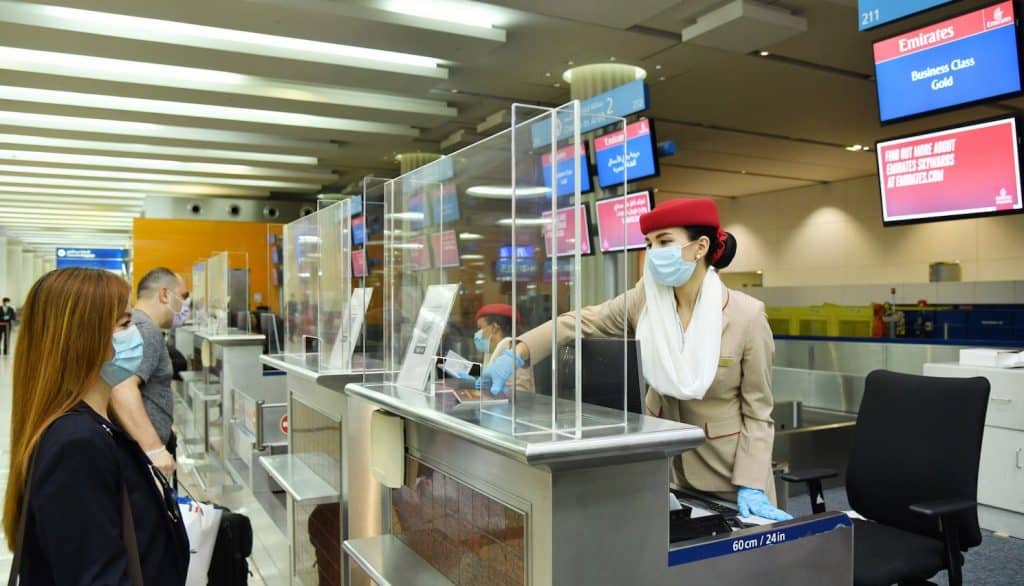
Emirates has stepped up the implementation of the IATA Travel Pass, offering it to customers flying to 10 cities and plans to roll it out across its global network in the coming weeks.
Emirates customers departing Dubai to London, Barcelona, Madrid, Istanbul, New York JFK, Moscow, Frankfurt, Charles De Gaulle and Amsterdam can use the digital solution/app to access PCR test labs, as well as manage documentation such as vaccination and Covid test results.
Passengers on these flights will receive an SMS and email with the activation code and instructions on downloading the app.
The Dubai-based carrier has also partnered with Alhosn, the official UAE app for Covid contact tracing and health documentation. The app is a joint initiative between the UAE Ministry of Health and Prevention and local health authorities, and is endorsed by the National Authority for Emergency and Crisis Management.
From July, Emirates will integrate the Alhosn app with its check-in systems, expanding on its existing integration with the Dubai Health Authority (DHA). Customers travelling from the UAE will be able to retrieve and verify their Covid medical records, regardless of where in the UAE they had their vaccination, or PCR and antigen tests.
“Over the past months we have really accelerated our biometric, contactless and digital travel verification projects to provide our customers with even greater convenience and assurance when they fly with Emirates,” said Emirates’ chief operating officer Adel Al Redha.
“From our biometrics path at Dubai International to initiatives like the IATA Travel Pass and integrations with the health authority databases, these projects deliver multiple benefits from better customer experiences to the reduced use of paper, and improved efficiency and reliability in travel document checks.”
SIA Group commits to protect the environment, launches carbon offset programme

As part of its commitment to net zero emissions by 2050, the Singapore Airlines (SIA) Group on June 25 launched a voluntary carbon offset programme for its customers.
Customers of Singapore Airlines and Scoot can offset carbon emissions on the respective airline microsites at any time before or after a flight. Corporate customers will be able to take part in the programme from 4Q 2021.
Customers can also choose to use their KrisFlyer miles and HighFlyer points to offset their carbon emissions from the fourth quarter of this year.
Both airlines will match the offsets that these customers purchase for the first six months from the launch of this programme.
Customers can calculate and offset the emissions associated with their journey via the BlueHalo digital solution, developed by Australia-based Tasman Environmental Markets.
Carbon offset projects from the contributions include preserving forests in Indonesia and protecting endangered species like the orangutan; building renewable solar energy projects across India that generate renewable electricity; and providing efficient, clean-burning cookstoves that reduce smoke pollution for villagers in Nepal.
The SIA Group said these projects “have a proven and measurable impact on communities and the environment.”
Malaysia Airports to open Covid-19 screening facility at KLIA

Malaysia Airports Holdings Bhd (MAHB), the operator of airports in Malaysia, will open private Covid-19 screening facility at eight locations at the KL International Airport (KLIA) in July 2021.
Announcing this in a statement, MAHB said five would be located at KLIA main terminal and three at budget terminal klia2. This facility is among several improvements that it is implementing “to enhance comfort and convenience while going through the necessary travel safety protocols at the airport.”
Among the services provided are passenger escort from the arrival gate to the testing area, VIP service, and waiting lounges equipped with computers, WiFi, portable WiFi rental, as well as F&B offerings. Passengers are also given options for various payment platforms such as credit card, cash, online transfer, e-payment and insurance claim.
The wait times for test results are shorter as the new facility is able to produce the Covid-19 antigen rapid test kit (RTK-Ag) and polymerase chain reaction (RT-PCR) results within 15 minutes and three hours respectively.
MAHB group chief executive officer Dato’ Mohd Shukrie Mohd Salleh said safety is the “topmost priority” and the company has engaged with the respective authorities to ensure that the appointed service provider is sanctioned by the Ministry of Health to perform such services.
“We are certain that this new facility will go a long way in spurring the demand for travel once borders are reopened. … The new facility is expected to cater to around 40,000 passengers daily, which will sufficiently cater to international arrivals at both terminals as the traffic recovers.”
MAHB said more service providers would be appointed at other international airports once the necessary approvals have been obtained.
International traffic for APAC airlines stagnant, cargo demand solid

More than a year into the pandemic airlines in the Asia Pacific region are still reporting depressed levels of international passenger traffic volumes due to strict border restrictions amid concerns about the spread of Covid-19 variants.
Preliminary May 2021 traffic figures released by the Association of Asia Pacific Airlines (AAPA) showed only 1.3 million international passengers flew on the region’s carriers during that month, just 4.3% of the volumes carried in the corresponding month of 2019. The international passenger load factor averaged 28.4% for the month, with available seat capacity at 12.3% of levels recorded in 2019.
Air cargo, however, fared better as strong business and consumer demand globally drove demand for air cargo. For the month, international air cargo demand (measured in freight tonne kilometres) saw a 23.1% year-on-year growth. Average international freight load factor rose by 11.7 percentage points to 73.7%.
AAPA director general Subhas Menon said air cargo volumes carried by APAC carriers have largely recovered to pre-pandemic volumes. “This contrasts starkly with the depressed state of international passenger traffic, which has remained largely stagnant with no improvements seen in over a year.”
He attributed the uneven pace of vaccinations throughout the world for the delayed recovery in international air travel. “In some advanced economies, travel markets are slowly recovering as populations get vaccinated and business activities resume. However, the same cannot be said for the majority of the emerging market economies in Asia where vaccination roll-outs remain slow due to supply constraints, logistical issues and limited manpower. As a result, the travel and tourism sectors in the region have continued to suffer as strict border controls remain in place.”
Renewed concerns over the emergence of new Covid variants have also held back any reopening of borders. “This will have a negative impact on airline survival, and additional government support will likely be required as the crisis is prolonged,” said Menon.
• Featured image credit (IATA Travel Pass): IATA