
A new beginning was heralded at this year’s WiT Singapore. From three different guests – a hotel tech upstart, a new Middle East airline voice, and an OTA expert in social commerce – we saw a bold splash of what travel’s future road trip will look like.
“Get your motor running: head out on the highway. Looking for adventure – in whatever comes our way.” Just hearing the iconic Steppenwolf song summons great scenes in our minds, largely thanks to Peter Fonda, and the actor-director, Dennis Hopper.
Everyone loves a great road movie. Yet it’s interesting to think about how road movies have evolved in our popular imagination since the 1960s, when movies like Easy Rider defined this counter-cultural romp. Films like French New Wave classic Breathless, post-apocalyptic epic Mad Max or female renegade romp Thelma & Louise, our longing for escape and freedom flares brightly – until our heroes are beaten by a world with no room for outsiders.
The new millennium heralded a more nuanced escapist version – of the lovable losers on the road, who survive by sticking together. We saw Cameron Crowe’s rock band tour Almost Famous; two mad pre-wedding dashes to Las Vegas in The Hangover, and Santa Barbara wine country in Sideways. Then a dysfunctional family on tour in Little Miss Sunshine, a road movie with heart whose ultimate hero, precocious young Olive, represents the next generation of travellers.
Over the years, what’s remained clear is that our thirst for an ‘open road rebirth’ is as real as ever. Likewise for the travel industry, where we are forever reaching for the car keys, and for new ways to grab that windows-down sense of escape and renewal.
A brave new travel dawn
WiT Singapore 2026 kicked off with a powerful image of the open road – and delivered a rich sense of newness in spades. First came the theme: 21: A New Beginning. Next, our starkly different global realities to contend with. Followed by a growing sense that with the rapid pace of agentic AI, many parts of the landscape are changing before our eyes.

So it was refreshing to hear from three champions of this newness. The first, Richard Valtr, Founder of Mews, kick-started a bold new “$2.5 billion hospitality unicorn”, seeking to become a cloud-native operating system for the accommodation sector.
The second, Barathan Pasupathi, has evolved from a foundational role with Jetstar Asia, to be CEO at Kuwait’s Jazeera Airways – with a front-seat view of one of the world’s newest and fastest-growing markets.
And thirdly, a new kid on the block in comparison. Marcus Yong, Vice President, Global Marketing at Klook, stepped up to explore the brave new world of social commerce, and its new world of influencers, trends and video-driven stories.
Richard Valtr and the new hotel iPhone
Every road movie needs a restless young hero, and Richard Valtr’s story start there. At 14, during his summer holidays, he worked a graveyard shift at his family’s boutique hotel in Prague, matching credit card slips to guest bills late at night. The session’s host, WiT founder Yeoh Siew Hoon, sees this as the fuel for a revenge story against the old guard of hotel software.
His early journey took a winding path. “I wasn’t really serious,” Valtr recalls of his 20s. “I was off starting art galleries, writing guidebooks in El Salvador.” His father, a programmer, told him that when he hit his 30s, he had to get serious. “So I started Mews when I was 29.”
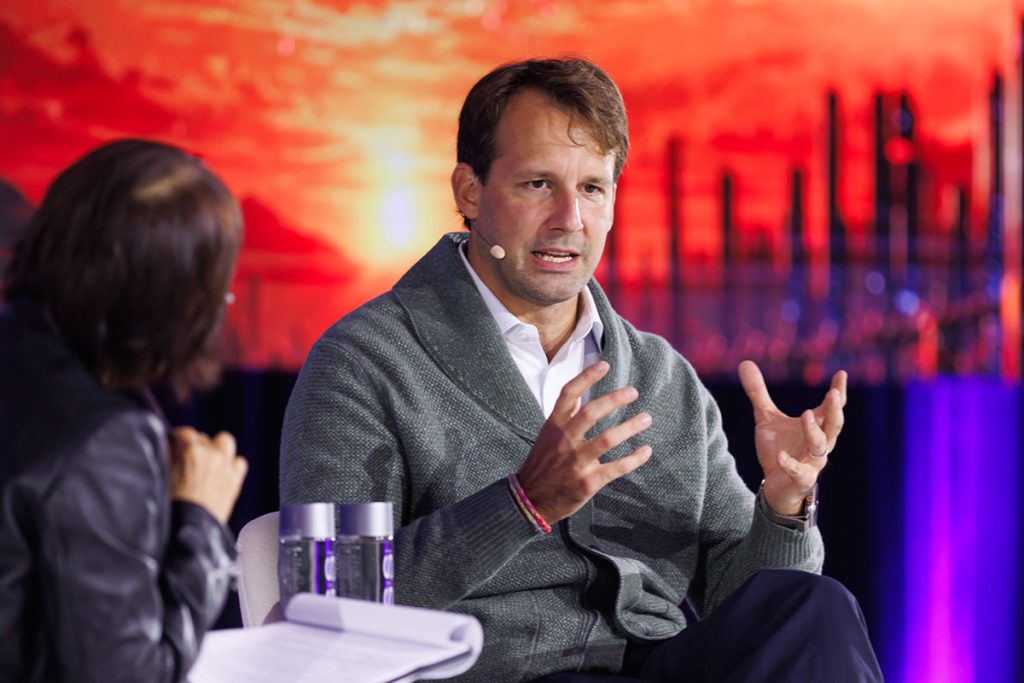
Mews now makes a property management system: the software that its hotels run on, from a booking to the bill. Founded in 2012, it now counts around 15,000 hotel customers in 85 countries. In January 2026, it raised US$300 million in Series D funding, for a US$2.5 billion valuation.
Asked who was most surprised by his success, he jested, probably his friends. Asked who he’d like to surprise next, he said, “I want to surprise hoteliers.”
Over the last 20 or 30 years, he argues, many hoteliers “have kind of lost their mojo”. Hospitality and hotels have become smaller in their ambition, he asserts, while the ultimate travel power sits with the experience creators. Now AI, and its new agentic means of disrupting distribution, can help bring that mojo back.
In the past year, Mews merged product managers, designers and engineers into a single role, simply called ‘product’. Engineers once off “in their little hut” away from customers now work with internal AI harnesses that draw in sales calls and customer-service questions. The result, Valtr claims, is “an eight times boost” in productivity.
Next comes the payments piece. In August, De Nederlandsche Bank, the Dutch central bank, granted Mews an electronic money institution licence – a regulated permission to hold and move customers’ money. Mews heralds it as the first such licence held by a hospitality operating system in the European Economic Area. “If you operate a great hotel, you should be able to operate more,” says Valtr. The licence also takes aim at fraud, which he calls “a huge, huge part of what stifles this industry today”.
So should a hotel buy one all-in-one system, or an open one? Valtr sees parallels in smartphones. “You don’t want an iPhone which is just the marketplace and apps, but you also don’t want an iPhone which is just Apple’s apps,” he says. “You want both of those.” Likewise, nobody should have to “open up 40 different windows on a browser” to do their job.
Next, a glimpse of the road ahead. To cater to “different aspects of my personality”, Valtr now runs three personal chief-of-staff agents through AI: “Maybe people won’t be as weird as me,” he concedes, but he predicts that customers will embrace having agents do their work, while hotels enjoy the convenience of holding “20,000 conversations – basically with every single possible prospect at the same time”. When a traveller’s agent asks for a price, the hotel should be able to answer with “the best price and the best overall package”. This, he says, is probably five years away.
Asked how he feels looking at what he has built, his answer is that of a driver. “I’m kind of disappointed.” He believes Mews should be 20 times bigger: he hopes within three years. The biggest threat? “Hubris”. He points to the Catholic Church, which he calls the planet’s most resilient organisation, run on a clear and simple hierarchy. Without such discipline, “power gets taken away from the people that are closest to the actual issue.”
Asia features in this story too. Japan was Mews’ third country, after the Czech Republic and Germany. Today, Asia-Pacific is about 6% of the business. While on the consumer side, Asia is “far in advance of most of the Western world”, its business tools have further to go. Yet humility will be needed in the pitch. “We don’t want to kind of come in and say like, oh, we figured it out everywhere, so we’re just going to come to Asia and take over.”
Valtr’s own measure of success will be when the relationship has evolved to the point where every partner hotel can say “Here is 20% of profit that I would not have been able to do on my own,” he says.
Bara keeps his eyes on the horizon
At five years old, Barathan Pasupathi, known as Bara, had a favourite model plane. He would stand at Singapore’s Changi Airport, watching aircraft taking off, and wondering how something that big could actually fly. He intended to find out. “But I’ve got such bad eyesight that I could never fly an airplane,” he bemoans. The plan was adjusted: he would run an airline instead. Rejected once by an airline in Singapore, he found his way to Qantas and Jetstar.
His career since then reads like a map of low-cost aviation within two dynamic regions. He was a founding executive and CFO at Jetstar Asia from 2004 to 2007. He served as CFO of Jazeera Airways, helping list the airline on the Kuwait stock market. He then returned to lead Jetstar Asia as CEO for 12 years, scaling it to 18 A320s, 22 destinations and five million passengers a year. Then in March 2024, he became CEO of Jazeera Airways.
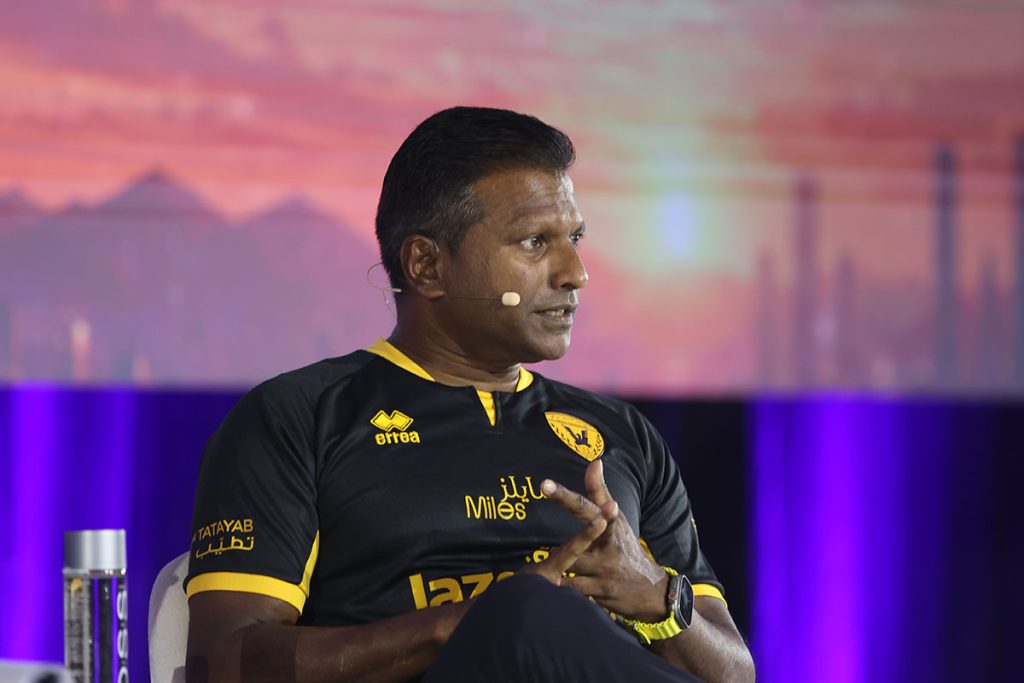
When Qantas closed Jetstar Asia at the end of July 2025, Bara took it hard. “Look, I was heartbroken,” he says. He made sure he was aboard the very last flight.
Fast forward to today’s climate for low-cost airlines: “Look, it is a tough, tough world,” he says, due to pressures like high fuel prices, fierce price competition, and airports raising taxes. He can see more airlines either merging or closing down: “It will happen.”
Much of his past year has felt like a road movie. On 28 February 2026, as war broke out in the region, Kuwait International Airport closed. Bara was in Munich. He travelled via Istanbul, Jeddah and Riyadh, then went to Saudi Arabia’s aviation regulator to say that Kuwait, as a country, needed help: “They said: ‘29 airports, pick one.’” With missiles striking near the coast, Jazeera went inland, to Qaisumah. Bara himself made the road trip three times, travelling 700 kilometres by road.
In Kuwait, with the airport terminal shut, Jazeera built a temporary one overnight at the Kuwait International Fairgrounds in Mishref, moving 1,000 seats out of its terminal to do so. At the peak, he says, the airline ran 150 buses, “eight times more buses than planes”. Its crews coordinated over 9,000 cross-border bus movements, allowing it to operate over 1,500 flights and carry over 200,000 passengers, routed through nearby hubs. Eventually, Jazeera resumed full operations on 3 May.
Asked whether the young boy at Changi ever imagined running an airline through a war, he says no. Yet he gives credit elsewhere: “We are very agile and hardworking teams.”
Despite the short-term roadblocks, Bara’s lens remains a big-picture one. In the Middle East, the travel trade channels remain strong: the airline is about to open physical sales outlets in Kuwait, serving a large blue-collar expatriate market that prefers to buy face-to-face, and supporting the launch of Jazeera Holidays.
The same wide angle applies to growth. Bara calls Kuwait “the pearl of the GCC” for its location, drawing customers who drive in from Saudi Arabia’s Eastern Province. Underinvested in infrastructure since the Gulf War, Kuwait’s government is now in building mode, including a large new terminal. Jazeera already owns its own terminal and is planning a terminal expansion to accommodate six to ten million customers. He sees room for Kuwait Airways and Jazeera to coexist in an informal dual-brand strategy, as happens in Asia-Pacific.
Then there is Saudi Arabia, a market he describes as seven times larger than Kuwait. “We see ourselves doing more in Saudi Arabia,” he says, naming Madinah as “a big prospect”. Saudi Arabia, he notes, has extended the Umrah season to almost ten months a year, while easier visas should open markets across Africa, the CIS and Eastern Europe.
The scene is still a map waiting to be redrawn: with more airports, more routes, and more ways to buy a ticket, ranging from an app to a shopfront store. Kuwait’s hub, in time, may offer a play in the region similar to Changi Airport’s. “The region, and Saudi Arabia, are large. So we have the catchment.” In the meantime, the boy with the model plane is still eyeing many more adventures ahead. “What I’ve seen in the Middle East, from where we fly, is fascinating,” he says.
Marcus and Klook unleash the influencers
Marcus Yong began his talk with an old travel map. Travellers, he reminded the WiT audience, once carried the Lonely Planet guidebook. Later, they searched Google for things to do. Today’s planning unites what he calls “the left brain and the right brain”. On the left is AI. On the right, social media.
According to a survey Klook commissioned, nine out of 10 travellers in Asia-Pacific have used AI for travel planning: mostly for translation, budgeting, logistics and research. “But what happens when you need to be inspired?” he asked. “That’s where social media comes in.” Some 80% of travellers, he says, have booked an experience or visited a destination due to a social recommendation.

Social commerce simply means people buying travel due to something they saw on social media – whether inside an app, through an influencer’s promo code, or bought from a livestream. For travel companies, the options are numerous. “It can be anything you want,” Yong says. “The most important thing is how you, as a brand, can connect social engagement to bookings.”
To get started he offers five truths to the social commerce journey.
The first is that people still trust people. Some 85% of the travellers surveyed don’t trust AI at face value, Yong says, because AI cannot yet manufacture trust and authenticity. Travellers today use AI for recommendations, checking them on social media for human reviews. To make his point, he describes a recent creator event in Fukuoka, Japan. Klook flew in 127 creators from 70 markets for seven nights, generating over 1,000 posts and 33 million impressions. Why not just let creators make content with AI? “Authenticity always wins,” he asserts.
Secondly, size is not everything. Klook launched its creator programme in 2023. It now counts around 30,000 creators across 88 markets. Most are micro-influencers with 10,000 to 50,000 followers, and nano-influencers with fewer still. These drive much of the conversion. One in three travellers say a micro-creator can influence them to book an experience, second only to word of mouth from friends and family. What content works? Detailed utility guides and step-by-step tips first, then behind-the-scenes footage.
Thirdly, less is more. Eight in ten creators told Klook that brands ask for everything at once: deals, engagement, conversions, top of funnel and bottom of funnel. Klook now narrows its programme to three measures: views and impressions, engagement, and direct bookings and sales.
Fourth, the journey is not linear. Only 11% of travellers want to buy inside a social app after watching creator content, Yong says, while three in four will click through on a link. Unlike a hairspray or a book, travel’s consideration period is long. People save videos, compare prices, check availability, and go back to social media to confirm the experience can be trusted, he says. To keep track, each Klook creator has a unique referral code: the company has launched personalised creator storefronts, or Kreator Shops, which it recently opened to all its creators.
The fifth truth is that community is the secret sauce. Half of Klook’s active creators have been with the programme since the start. Asked why they stay, creators put “tribes and community” ahead of brand reputation, payouts and tools. Klook runs workshops, hackathons and summits. At the Fukuoka event, an established Malaysian creator ran a three-hour workshop teaching smaller creators how to make better content.
He sums this all up as blending three Cs: content, commerce and community. “It’s going to be hard work. I’m not going to lie to you guys,” Yong warns of the road ahead. “But if you invest in it, it’s worth it.”
So what’s the destination?
For Mews’ Valtr, the destination is, curiously, to make the hotel experience into a more human one. Asked to name the industry’s most embarrassing teenage habit, he is clear: “I think the check-in,” he says. “The fact that we call it a check-in and not a welcome, and we call it a check-out and not a goodbye, is actually embarrassing.” The industry, he argues, has focused too much on standard operating procedures, rather than whether a guest is “creating memories”.
Jazeera’s Bara sees “a big growth plan for Kuwait” once the current turbulence passes. Saudi Arabia’s civil aviation authority is targeting 330 million passengers a year by 2030. Easier visas are already opening new source markets, and he foresees more direct flights. Recent numbers already show a rebound. In the second quarter of 2026, Jazeera’s operating revenue rose 45.5% year on year.
Yong from Klook sees AI and social media as partners and not rivals, whereby people still supply the inspiration and trust. In his view, the brands that win will be those that invest in creators as a village. “Community is something that has stuck in my head for this last couple of days,” he says.
He talks of Klook’s long-term active creator base, as evidence that relationships are what matters. “They continue to engage with us. They work with us. They’ve not gone dormant, and the reason for that, when we ask what makes creators stay long term, is overwhelmingly tribes and community,” he says.
In Little Miss Sunshine, the family’s yellow Volkswagen van has a broken clutch. The only way to get moving is for the whole family to push, then jump aboard as it rolls forward. In many respects, travel’s new beginning in 2026 feels much the same.
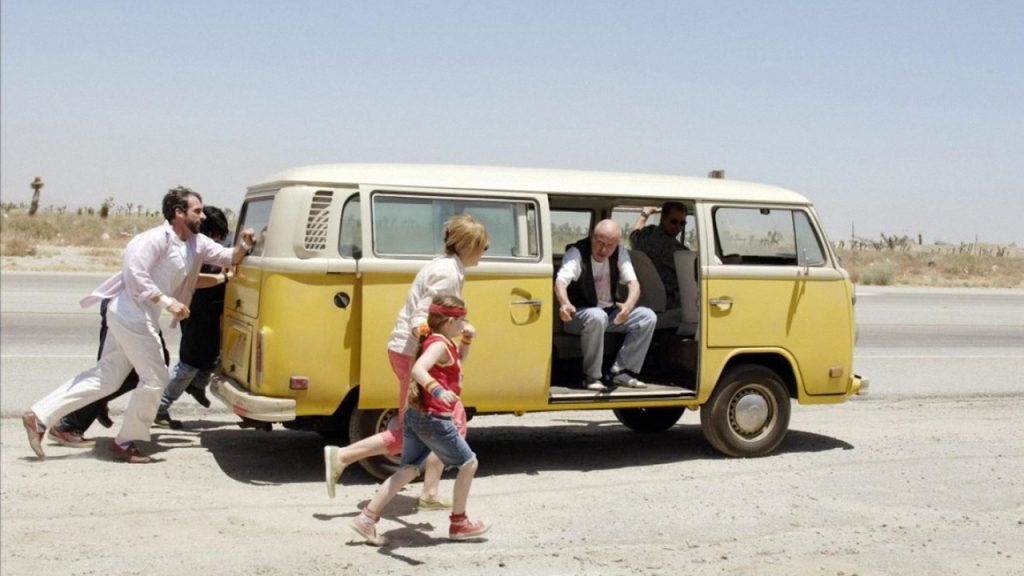
A scene from Little Miss Sunshine
An open platform built to let its partners plug in and play. An airline that turns 9,000 bus journeys into a lifeline. And a creator community where, like a rock and roll tour, half the crew have been there since day one.
In the old-school road movies, the world isn’t ready for our band of travellers. Yet on this evidence at least, travel is getting ready for its own windows-down adventures. The lenses may be new, but the destination’s familiar: one of being welcomed, being connected, and trusting the person who points you down the road.