
Customised itinerary planning remains one of the hardest problems to solve with technology but one Australia-based start-up is having a go at it. Tripbooka is an online platform connecting travel agents with travellers who want the ease of technology but still want the human touch when it comes to planning their holidays and itineraries. Luke Crawford, co-founder and CEO, shares the company’s vision and plans.
Q: Describe what you’re trying to do with Tripbooka.
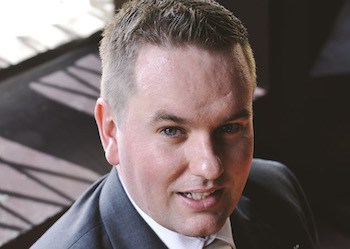
Luke Crawford
To build a universal platform where potential travellers who are looking for help, assistance, inspiration or research can come to one easy-to-use website and have everything they need at their fingertips. Traditional brick-and-mortar agents as well as OTAs who may have a call centre and have slow periods throughout the day can also log in and potentially gain new customers at basically no cost.
Q: What gave you the idea? Why do you want to do this?
The main idea came from a conference I attended a few years back, and marketplaces where running hot in other industries at the time. I was sitting amongst travel store owners while listening to their senior leadership team talk about what they are doing from a head office perspective and how they are going to approach the year ahead. However, the agents were more concerned with how management was going to help them bring new customers through their door. As they were literally thinking about their physical door, I was brainstorming around their online door as that’s the way the world was heading and I guess the rest is history.
Q: How long have you been trying to solve the problem? What were some of the early challenges?
I have been thinking about this for the last three-four years; however I didn’t really start to focus on it until the beginning of last year. I wondered why previous attempts never succeeded as other companies have tried and failed, so for the first two years I thought about how Tripbooka would be different to what’s in the market and ultimately what the customer is after – and by customer, I mean both the buyer (the traveller) and the seller (the travel agent).
Some of the early challenges we faced when designing Tripbooka was really from the agents’ side. As the agents were acting as our back office consultants so to speak, we really had to make it as streamlined as possible and not disrupt their current workflow too much. This, we found, had a negative impact on agent usage. To fix the problem we consulted with many different agents across the travel spectrum to come up with the easiest solution whereby they could easily turn around a quote in minutes without too much disruption to their normal working day.
Q: Recruiting agents or generating customer demand – which is harder?
Everyone said it was going to be difficult to recruit agents as they are very much set in their ways. However, we found this this to be completely untrue. Agents were willing to come onboard as they could see Tripbooka would help benefit the traditional travel agent industry as a whole rather than being a competitor.
With any new business, customer retention is always hard especially when working in a niche environment. However, as we identified who our target market was from the start, we have been able to drive a very effective marketing model to not only drive awareness but also usage. Tripbooka.com.au did a soft launch in Australia at the beginning of October last year and so far, we have had close to 5,000 users use Tripbooka, and over 150 agents have successfully signed up.
Q: What are some of the current challenges?
The main challenge is where we decide to innovate and add value along the travel research and booking flow. Our main goal is to have Tripbooka at a stage where it’s almost the first thing the agent logs into in the morning. We are currently integrating with many of the agent’s suppliers to allow one simple universal long in for the agents.
Q: What is the adoption rate by customers? What kind of activity are you seeing on your platform?
 Currently we are have seen around 10% adoption rate which is above our planned forecast. We heavily monitored the system at first as we were expecting a lot of people just testing the system. However, when we started seeing the itineraries come through, we realised early on this was not going to be the case.
We saw that these itineraries were more detailed than what you could do with any current online travel agency. These were travellers who seemed to be inundated with information overload, and was not able to make a formed decision as a result.
We also found that the travellers were more specific in what they were after and were happy to share that information with us, for example: having frequent flyer miles and wanting to upgrade, would like a child friendly resort with interconnecting rooms, wanted to know if a mid size SUV would be big enough for 4 adults with 6 bags.
As a result of all of this we found the queries that were coming through were quality rather than quantity which was what we were after in the first place.
Q: What’s your revenue model?
Currently Tripbooka is a free service for travellers and agents. We have a very clear and defined revenue model which will be released later this year. At the moment we are all about driving awareness to our unique service and to show that we can add value by bring customer service back to the online market.
Q: What’s the market opportunity?
The offline market is still a US$836b dollar industry while online it’s 492b as per Phocuswright’s research. While the online market is taking share from offline, there will come a time when online growth will stabilise and we will have this offline market which hasn’t adapted to today’s technology savvy traveler.
We believe this is where the market opportunity will be and where Tripbooka will add value by allowing the traveller to be inspired, search, request everything online, at their own pace and time and knowing it’s booked by a professional agent. This will also give the traveller comfort knowing that a professional travel expert is on hand for any question or help along the entire travel booking process.
Q: What are some of the more unusual requests you’ve seen on the platform?
We were quite surprised at the level of detail people will go into to get the best possible experience from their trips. When you think about it, a holiday is probably one of the most expensive things you would spend your money on besides buying a house, car or your wedding day. So travellers want to make sure they get the best service and value for their money.
This is also why we are introducing a profile search and ranking for the agents. Similar to an eBay, Alibaba or freelancer profile, this will allow the traveller to make an informed decision on which agent they would like to select as we have seen it’s generally not all about price as most people would believe.
We have seen that the agents who are winning the quotes are the ones who have paid the most attention to what the traveller is after and has provided that element of information you simply can’t Google.
Q: Do you see a day when technology will replace the human touch when it comes to customising itineraries for special interest travellers?
I don’t think we will ever see that day or in my lifetime anyway, I believe we would see it more as a blended approach. I see technology assisting the travel expert. As humans, it’s in our nature to explore and as a result as soon as a hot destination becomes to commercialised, we move onto another place with fewer ATMs and “off the grid” holidays are still possible.
I believe agents are here to stay. However, their roles will change and adapt to their customers’ needs. The agents who are too set in their way and are resisting this change will be left behind. This is ultimately why we created Tripbooka in the first place.
• Featured image credit (travellers): vladans/iStock