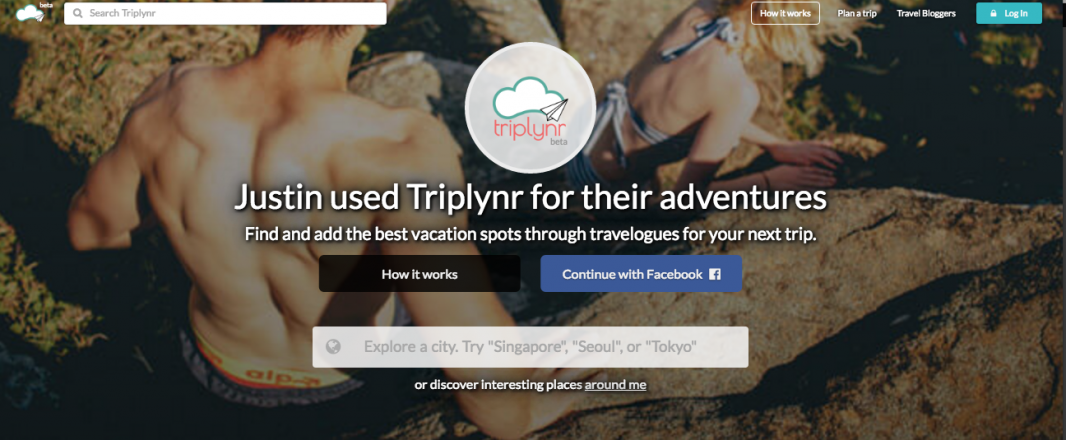
Launched approximately six months ago, Singapore startup Triplynr is a website designed to simplify stages of travel planning through an image grid format.
“It’s like a Pinterest board for travel,” said co-founder Sean Yang, “it takes out the hassle of having to open 10-20 browser tabs just to research where to go and what to do.”
Triplynr was originally designed as a more ‘traditional’ trip planner, like Sygic Travel (formerly Tripomatic), with destinations illustrated across a city map. However, user feedback indicated this layout was too difficult to use and wasn’t particularly inspiring.
Thus, Sean and a team of three others aimed to create a product that was not only simpler to use but would foster the pre-travel excitement and ‘wanderlust’ that often comes with planning a holiday.
They are achieving this by creating an attractive, easy-to-use website wherein users can browse and ‘pin’ appealing images of different destinations to their own page, and then use this material to craft personal travel itineraries.
“Our ultimate goal is to be the trip manager for everyone.”
Content, community and outreach
Currently, Sean claims there are thousands of cities existing on the platform, with all media material being sourced through geo-tagged public images sourced from Instagram.
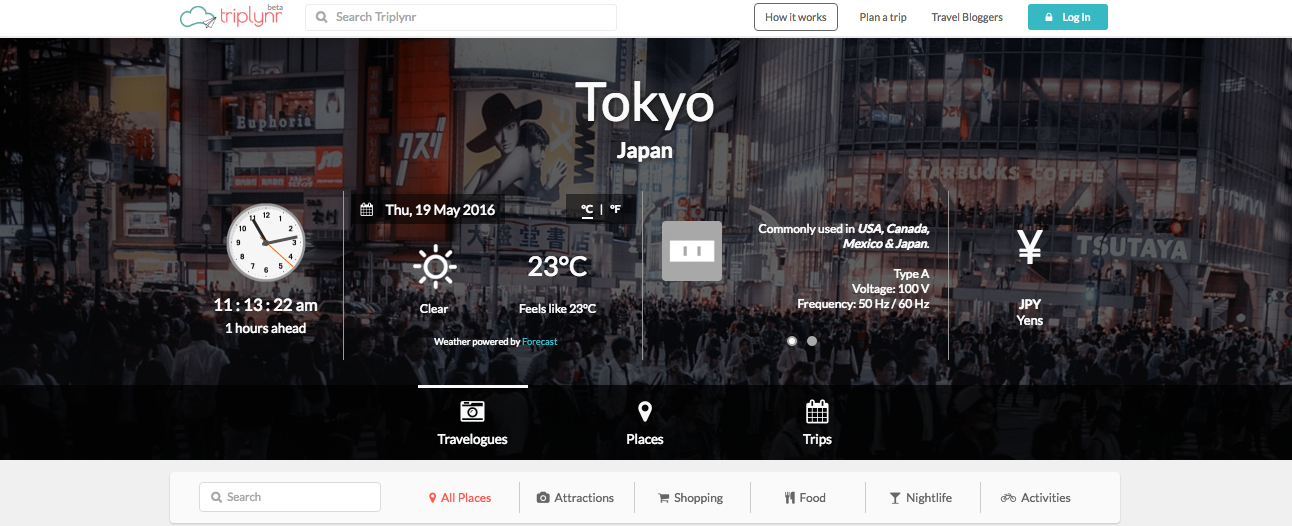
The page has a clean layout. Trips are neatly organised into a series of tabs on users’ individual profiles, including a brief trip summary, destination catalogue, day planner and travelogue, to “scrapbook” their journey.
It also provides useful general information on each city, such as weather forecasts, exchange rates, and even what plug adaptor is needed.
To expand its outreach, Sean shared ambitions to cultivate a “Triplynr Bloggers’ Network”, to help travel bloggers engage with their online audiences both on their own websites and Triplynr.
“When [bloggers] create an account with us, they are a different tier of user,” said Sean. Their profiles will bear the mark of the ubiquitous ‘verified user’ tick, to verify their credibility on the platform as a ‘trusted source’.
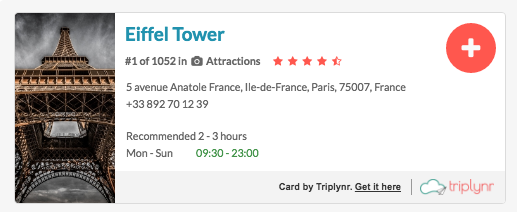
Destinations are portrayed as widgets on bloggers’ profiles
Additionally, a Triplynr widget can be embedded on their own websites, so readers can find key information (e.g. opening hours) on destinations that bloggers mention in their articles They can then add destinations directly from the blog post onto their own Triplynr itinerary.
Bloggers and influencers are therefore able to share their catalogues of things to do, so that their followers can directly copy or draw inspiration from it.
That way, Triplynr can build a body of more trusted and verified content that would indirectly improve the quality of content for particular destinations, reducing their reliance on publicly available Instagram content.
For an added social element, users can also invite their “travel mates” so that groups can collaborate when organising a shared itinerary. Sean hopes it will organically foster an online travel community.
Web vs. Mobile
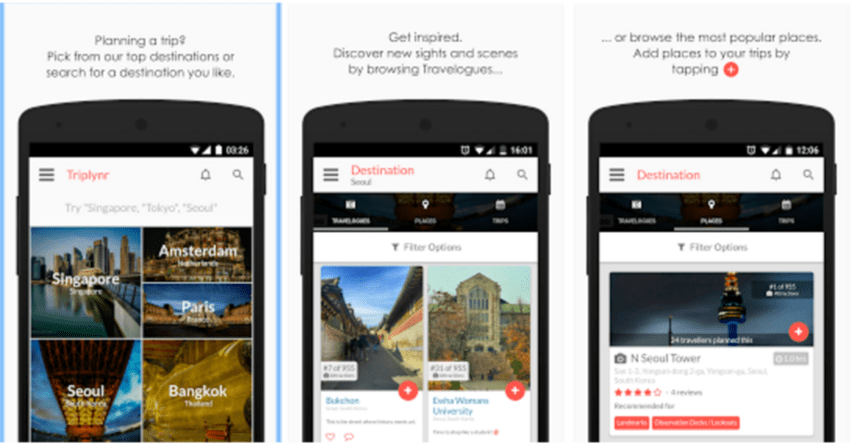
Triplynr is web-focused at the moment, but is also available on mobile as a downloadable Android app, which Sean finds “feels better” than the web version on mobile.
Its primary benefit is not only so people can plan their trips on the go (e.g. by highlighting nearby attractions to their point of interest), but they can also download their trip for offline mode.
“It helps last-minute travellers or when you have extra time during your travels and need quick recommendations.”
Business development
When it comes to its business model, Triplynr is in the pilot stages of implementing a booking mechanism so that they can reap commission from users that purchase attraction tickets (and eventually make hotel bookings) through their platform.
Sean stated, “We’ll be sharing commission with our ticketing/booking partners. There will be B2B models in the future, but as of now we are focusing on user acquisition.
“The commission structure will make us some money but we won’t be relying on it solely.”
One future strategy is to develop Triplynr into a “value-added service to hotels” where hotels can use the platform as an “online concierge” and create their own itineraries for guests to use as a source for recommendations.
In the long run, Sean is focused on embracing data analytics to help Triplynr scale. “When we have enough users involved, we’ll be able to get a sense of travel patterns and go from there.”