
In start-up years, TripZilla is still an infant. Founded in 2010 by husband and wife team Winnie Tan and Eric Koh, the online portal claims to be South-east Asia’s foremost travel listings site – cornering almost 80% of the Singaporean market alone. I caught up with Winnie to find out how TripZilla is doing, since it made its debut at the WIT Bootcamp in 2010, and her thoughts on being a female entrepreneur.

Winnie Tan: “Being a woman, there’s actually going for me than against me.”
Q: How is TripZilla performing?
Traffic to TripZilla.sg is currently higher than our next three competitors combined. In H1 2015, our media sales grew by 50% year-on-year. We now have more than 20 airlines and national tourism organisations on board TripZilla but we’re always looking to grow.
Q: How has your business evolved?
When we started out, we knew that retail travel agencies weren’t able to reach the customers, so we looked at the market and asked, “What tools can we build to organise the market?”
We were the first movers – although this wasn’t a good thing because no one understood what we were doing. We had to do a lot of convincing for quite a while… actually for the first two years.
At the start, TripZilla was focused on travel listings alone. There used to be a content section on TripZilla but this has grown into a new product – TripZilla Magazine – that now attracts over 1 million visits monthly.
If we had focused on listings alone, we would not have had the kind of organic growth that we have now. We spend almost nothing on marketing; what we do is to provide content that is very specific to Asian travellers and to cater to their interests.
Looking ahead, we are testing out a low cost carrier search function that directs traffic to airline sites.
Q: The Internet is global. How important is it to provide a localised service when it comes to online travel?
We realised early on that the experience of travel is very different for Asians –right down to Singaporeans vs Malaysians. When they travel, the things they are looking for can be quite different, so our content is very localised to cater to these communities.
We do whatever it takes to draw travellers to our site, but it has to be localised. For example, we provide aggregated deals including airline promotions that are specific to each country.
Q: What trends do you see shaping the industry? 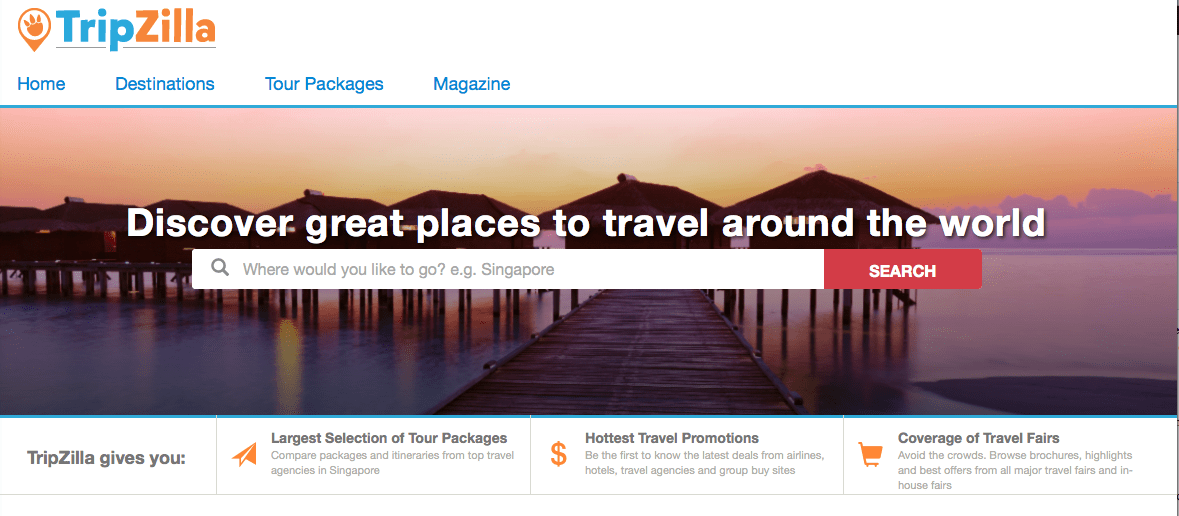
A lot of people are talking about mobile technology and we are involved in that as well, across different devices. In Asia there is an online/offline hybrid process where even though many people have smartphones, they still want a face to identify with – for that last bit of offline service.
Q: Have you encountered any challenges as a female entrepreneur?
Being a woman, there’s actually more going for me than against me. The tech industry is generally very supportive; when I speak at events or pitch at competitions, other women in the room will often give me a pat on the back.
I’ve also received a lot of very useful advice from experts in the industry – people who have been around for years are often willing to share their experience.
When it comes to building a business, everybody shares the common issue of talent. I want ethical people on my team: they need to believe in what we’re doing and share my vision.