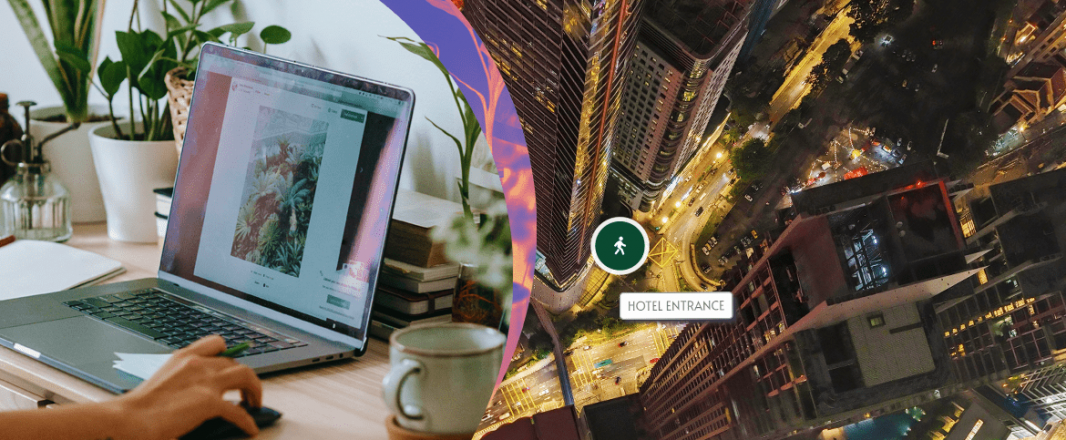
“Virtual tours are not an alternative to actual tourism – it’s a pre-marketing tool.”
When the pandemic first hit, one concept that gained popularity was virtual tours. With travel restricted, people turned to digital tours of popular destinations as an alternative. Some travel companies survived the pandemic by monetising their own virtual tours to satiate a collective wanderlust.
You’d think that with global tourism (in some parts) reaching pre-pandemic levels, that virtual tours would be seen as byproducts of a bygone era. On the contrary, says Rachael Lum, co-founder and Head of Marketing at Actsugi – a Malaysian company that specialises in creating virtual tours for businesses in and out of the travel space.
“I would say it’s getting more popular,” says Rachael. “When we first started developing this content, we were able to get clients who had some cash to spare. They allowed us to take their spaces and we were able to market them to their clients. Some of the guides that we were in touch with, like the KL heritage walks, were able to use this to ensure their audience were still able to experience Malaysia.”
“Now that travel is recovering, hotels have more budget to allocate for more marketing materials. A lot of them knew of virtual tours during the pandemic, but because of the MCO (Movement Control Order), money was quite tight, and they needed to prioritise other things.”
Gap in the immersive video market
During the pandemic, Rachael and crew noticed a gap in the market that they could fill with Actsugi – a need for more immersive content.
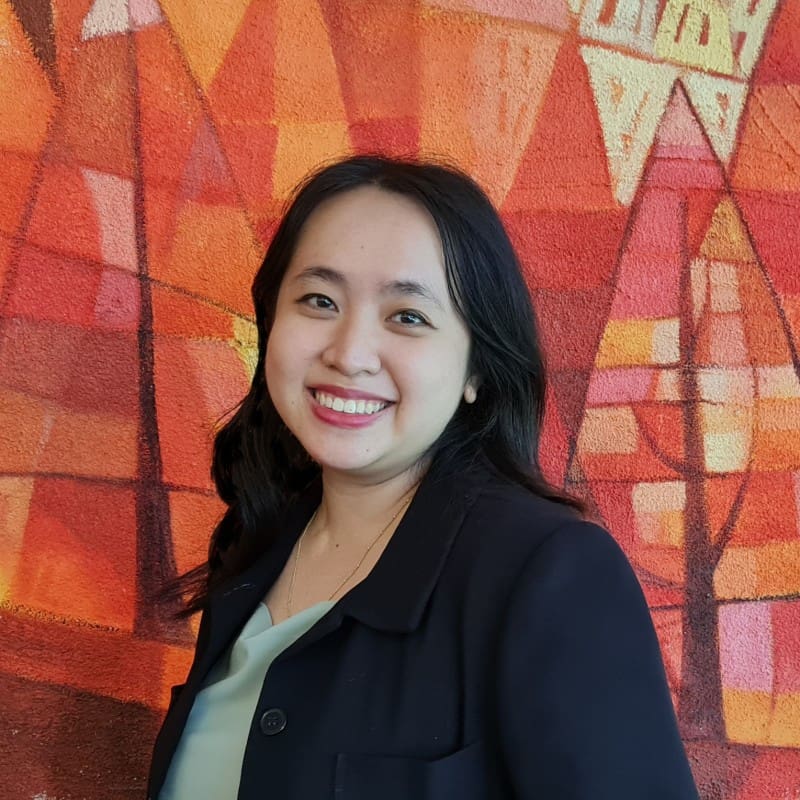
“In an environment where most content is either article-based or images, something like a virtual tour is refreshing to see and is able to give them a better sense of what a destination looks like.” ~ Rachael Lum, co-founder, Actsugi
Rachael says, “We wanted to find a way to digitise a lot more businesses, encourage adoption, especially in Malaysia where digital adoption, in some places, is not as widespread yet.”
“When we provided this service to companies in the past – whether hotels or travel attractions – they would tell us the margin was quite high. A lot of players find it hard to enter the market because of the price of virtual tours.”
Actsugi has a streamlined fee structure for all projects. ‘Basic’ and ‘Essential’ tiers go for RM5999 (USD1363) and RM9699 (USD 2204) respectively, with a Pro option allowing for customisation at a custom price.
Another factor that fuels the popularity of virtual tours is our collective love of video content. As Rachael explains, “It’s because of the new generation of travellers and how people are responding to travel marketing today. These are the people who look up travel destinations on their phone and do research online and are more open to new kinds of technology.”
Social media platforms like YouTube, Instagram and TikTok are now part of a traveller’s decision-making process.
She adds, “In an environment where most content is either article-based or images, something like a virtual tour is refreshing to see and is able to give them a better sense of what a destination looks like.”
The team at Actsugi capture 11-22K resolution HDR aerial and ground panoramas using DSLR photography, as well as 3D virtual staging with true-to-life CGI renders. Taken in wide angle, both horizontally and vertically, they ensure the images are as close as possible to the real space from any perspective. In their own words, “you could say that they are in 720°.”
Creating content for different industries
According to Rachael, “A lot of the projects we do are B2B. We approach different clients from different industries and sizes. In the travel space, there are hotels and attractions, and even local governments or local councils that want to promote destinations.”
She adds, “We’ve been working with the Lenggong district council to digitise a lot of the local restaurants and places to explore in Lenggong, and turn it into a guidebook for travellers going to Lenggong Valley.”
“Moving forward, we’re also hoping to help smaller SMEs. We’ve rolled out an initiative to help a thousand SMEs digitise their business using Virtual Reality.”
However, one challenge that Rachael noted is the widening technology divide.
“While some companies we work with understand virtual tours immediately, others are a bit more conventional and need some explanation – that’s one [learning curve] we’ve noticed. We also work with different verticals – some in travel and some in the property market, education, manufacturing… where they do industrial tourism and virtual tours of their factories – these are traditional businesses so we need to lay the foundation for them to understand what Actsugi does and how we can support them.”
A quick glance at Actsugi’s website will tell you about some of the notable clients they’ve worked with, including Accor, ThinkCity, Marriott, Gamuda, Tourism Selangor, and Malaysia’s Ministry of Health (KKM). When asked about how the response has been to Actsugi, a company that’s technically only a year old, Rachael says, “In the past month, we experienced a growth rate of 89%, and tapped on 7 different industries such as hospitality, real estate, dining and retail. We recently launched SeniVR, a virtual art gallery by Yayasan TM which aims to support local artists in Malaysia through hybrid exhibitions in Muzium Telekom. We also rolled out an Virtual: 1000, a VR digitisation initiative for selected SMEs to help more business adopt this technology and ease their operations.”
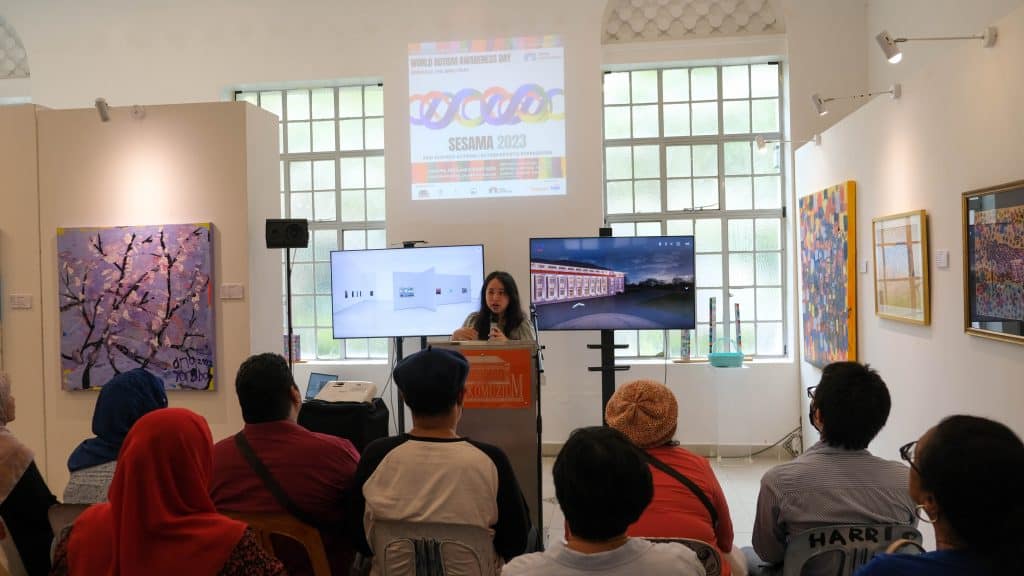
Rachael Lum at the launch of SeniVR
Some of the things Actsugi is looking into include virtual guidebooks for Malaysia, photogrammetry for architectural and historical landmarks, as well as Augmented Reality for arts and culture. They also plan to focus on Borneo, where the overall VR quality in the market has not reached the same level as Peninsular Malaysia.
“We are looking to tap into the Singapore virtual tour market by the third quarter of 2023,” adds Rachael.
Virtual tours and the replacement of travel
Of course, the million-dollar question when it comes to virtual tours has always been, “Do you think it will replace travel?”, to which Rachael’s answer is an emphatic “No”. While they may have been the only way to “travel” when lockdowns and movement restrictions were in place, the availability of virtual tours on a hotel or destination website has become more of an additional option for information gathering, so to speak.
“Virtual reality and virtual tours are definitely not an alternative to actual tourism. In many cases, it’s a pre-marketing tool,” Rachael emphasises. “You can take a look and get a feel of the space as part of your decision-making process. Whether it’s a neighborhood where you want to see what’s there to do, or a spa and what facilities to expect, it helps people decide how they want to plan their day and whether or not they’d like to stay at a hotel or destination.”
“With VR, there’s also the potential for people who are physically unable to be there – people who are older or not mobile – they can use VR as a way to experience a destination.”