Is paying RM20 to RM40 as departure levy flying out of Malaysian airports a deterrent to your travel? A question I put to a few friends who fly frequently for both work and play. All answered in the negative, as the amount is too small to affect their travel budget or stop them from taking holiday breaks.
This is the new departure levy that all travellers flying out of Malaysia will soon have to pay.
Malaysia’s Parliament passed the Departure Levy Bill 2019 on April 10, effectively making the tax a reality. Its implementation date and rate will be decided by the Cabinet and announced at a later date. However, when finance minister Lim Guan Eng tabled Budget 2019 in November last year he proposed to impose the tax from June 1 at a rate of RM20 (US4.80) to Asean countries and RM40 (US$9.70) to other international destinations.
The levy’s objective, the minister stated then, was to encourage the development of domestic tourism although its effectiveness in boosting this sector is debatable said many in the travel trade.
The departure levy is over and above the current passenger service charge (PSC) of RM35 and RM73 for outbound travellers to Asean and the rest of the world respectively. The PSC is paid to Malaysia Airports Holdings Bhd (MAHB), the airport operator, to manage the airports.
And therein lies the bone of contention for the country’s travel fraternity and travellers, as many feel that this is too much to pay on top of the PSC, fuel surcharge and a host of other ‘must pay’ fees when booking a flight.
A number Malaysians are against the fee and called on the government not to go ahead with the implementation, while some trade associations have asked the government to reconsider the levy or delay it so that air travellers and the travel industry can get used to the system.

The International Air Transport Association (IATA) has also urged the government to reconsider imposing the tax. In a statement released shortly after the bill was passed, IATA regional vice-president for Asia-Pacific Conrad Clifford said the departure levy has the potential to do more harm than good to the Malaysian economy, as it will dampen travel demand.
Based on IATA’s analysis, the introduction of the levy will reduce the number of international air passengers departing Malaysia by up to 835,000 per year, decreasing the aviation sector’s gross domestic product (GDP) contribution by up to US$419 million and see a reduction of up to 5,300 jobs.
“While the intention is to raise revenue for the government in the short run, it needs to be recognised that aviation is a catalyst for economic growth, and any action that dampens the demand for travel will also hurt the industry’s economic contributions to the country,” said Clifford.
He also cautioned the imposition of the levy would erode Malaysia’s competitiveness as a tourist destination in the region to the detriment of its economy.
In 2017, Malaysia’s aviation sector supported 450,000 jobs and contributed US$10.1 billion to the country’s GDP. The broader tourism sector accounted for 13.4% of GDP, which is significantly supported by air transport, according to IATA.
Clifford also points out the levy contradicts existing policies on taxation published by the International Civil Aviation Organization (ICAO).
“As an ICAO council member, Malaysia should demonstrate leadership in adhering to ICAO’s policies,” he said. “We strongly urge the Malaysian government to reconsider the levy and abandon the plans to introduce it,” he added.
IATA had, on November 23, 2018, submitted a paper to Malaysia finance minister asking the government to reconsider its decision and not proceed with imposing the levy.
However, not all share IATA’s view of a reduction in both inbound and outbound air travellers. Malaysia’s tourism, arts and culture minister Datuk Mohamaddin Ketapi said countries that have a similar levy or tourism tax for tourists, have not seen a drastic drop in tourist arrivals.
Singapore, Thailand, Hong Kong and a few European countries have some form of departure tax for travellers. Japan imposed a ‘sayonara tax’ of 1,000 yen (US$11) on departing visitors from January 7, 2019.
The minister added the departure levy would be beneficial for Malaysia, as it would “be used for the development of the country and the people.”

Hamzah Rahmat: Drop in tourist arrivals only momentarily and in the short term
Datuk Hamzah Rahmat, executive director of the Federation of Asean Travel Associations (FATA), while acknowledging there will be a drop in arrivals, said it will only be “momentarily and in the short term. There is no need for it to postponed,” he said.
Tunku Iskandar Tunku Abdullah, group executive chairman of Melewar Group, a Malaysian business conglomerate with travel companies in its stable, is of the same view: “I do not believe that there will be a sharp drop in inbound and outbound numbers although initially there will be some negative impact.”
He said the level of the levy is not “prohibitive and while there will be some initial adverse impact, it will become just a ‘normal’ travel expense after a short time.”
It is estimated between RM900 million and RM1 billion will be collected from the levy once it comes into force. There is speculation that some of the money could be used to settle part of the government’s debt, reportedly to be about RM1 trillion.
Both Hamzah and Tunku Iskandar are quick to shoot this down.
“A big NO for the government to pay its debts with the levy collected,” is Hamzah’s response. “It should be used for the upgrading and enhancement of airports and passenger facilities. The main terminal at the KL International Airport (KLIA) is a 30 years old. Only recently it started to do some renovation and upgrading. It is absurd.”
He added that the levy should not be used for tourism promotion either, as there is the tourism tax for that purpose. “Nice, good and memorable customer/passenger experience at both the KLIA and klia2 is badly needed.”
For Tunku Iskandar it is “a matter of principle that travellers, especially foreign tourists, must not be penalised or taxed to pay for a country’s debts, and therefore it will be much more palatable if the levy is tagged as a tourism promotion levy.”
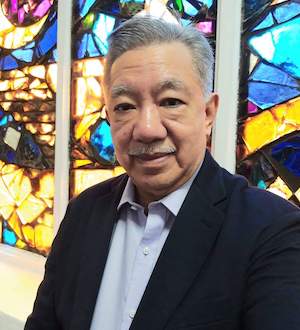
Tunku Iskandar: Important that travellers’ and tourists’ money do not become the low-hanging fruits for plucking whenever the government needs some extra money
He opined: “It is important that travellers’ and tourists’ money do not become the low-hanging fruits for plucking whenever the government needs some extra money.
“They are already paying the passenger service charge (airport tax), foreign travellers tax at hotels, additional hotel taxes charged by Penang, Melaka etc. Any additional line items charged to them will have that psychological negative impression that Malaysia uses travellers and tourists as the easy way out to get more money.”
Tunku Iskandar also wondered about the mechanism for collecting these taxes and levies as “each transaction has a cost of collection, reporting and managing and it will be transparent if the government will report on how much is collected and, what are the costs associated and where these funds are being channelled to.”
Malaysia’s tourist arrivals for the past three years have remained almost unchanged. According to statistics from Tourism Malaysia, 2016 saw 26.76 million arrivals (tourism receipts RM82.1 billion), dropping to 25.95 million in 2017 (receipts RM82.2 billion) and a slight decline to 25.83 million (receipts RM84.1 billion) in 2018. For this year, however, Malaysia hopes to pump up arrivals to 28.1 million with tourist receipts set at RM92.2 billion.
The tourism ministry has also declared 2020 as ‘Visit Malaysia 2020’ with the ambitious target of bringing in 30 million tourists and RM100 billion in receipts.
“The Visit Malaysia 2020 campaign is founded on Vision 2020 and focuses on promoting the sustainability of tourism, arts and culture,” is how the ministry describes the special year.
With 2020 round the corner the announcement of the levy is, in a way, bad timing for the visit campaign, said FATA’s Hamzah.
It’s anyone’s guess if the levy will affect the targets set for the special year.
• Featured image credit: narin_nonthamand/Getty Images