
The Malaysian ringgit may be tumbling, prices of essentials in the country may be rising, and many in the country’s population of 31 million may be cutting down on spending, but one thing hasn’t changed – travel.
As one friend said: “I can reduce the number of dresses I buy or stop upgrading my mobile phone every time a new model comes out, but don’t ask me to stop going on holidays. I need them to rejuvenate, to destress and to recharge.”
This basically sums up the importance of travel to most Malaysians, as vacations are an essential part of their life albeit now with a change in their pattern of travel due to the weak ringgit.
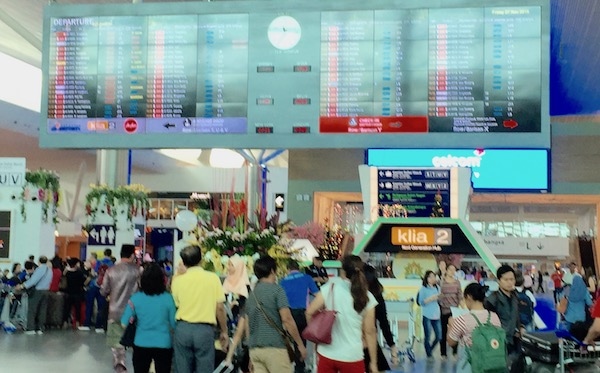
Malaysians still travelling despite tumbling ringgit (Image credit: Corinne Wan)
This hunger for holidays is evident in the large turnout at the recent travel fair in Kuala Lumpur organised by the Malaysian Association of Travel Agents (MATTA).
The recent bi-annual fair, held over the March 17-19 weekend in Kuala Lumpur, saw an estimated 103,000 visitors thronging the show to hunt for bargains.
Total sales from the three-day show were estimated at RM200 million (US$45.1 million), MATTA president Datuk Hamzah Rahmat told WIT, and it was as good as the 2016 March fair .
The March fair in terms of visitor turnout and sales turnover are about the same every year, although last year March fair “was very exceptional with the highest ever visitor turnout of 113 visitors,” he revealed

Hamzah Rahmat: Outbound travel still strong.
The second fair in September each year is comparatively lower in turnout and sales with last September’s recording 92,500 visitors and RM180 million in sales.
Other statistics of the recent fair were equally impressive: occupied seven halls at the Putra World Trade Centre, 1,299 booths, 26 kiosks, 142 tour and travel agents, 14 NTOs, 47 hotels, 11 state tourist offices, one cruise company (Royal Caribbean), eight theme parks, 24 travel related service and three CSR organisations.
Hamzah said the strong turnout, good sales, and strong support from the travel trade for the event was a testimony of the continuing popularity of outbound travel among Malaysians despite internal and external factors, as well as economic uncertainty.
Changing travel trend for destinations nearer home
The fluctuating ringgit (trading at US$1 to RM4.41 at press time), while not dampening travel among Malaysians has, however, led to a change in travel patterns – a preference for destinations nearer home.
“Domestic destinations top the chart at the fair followed by ASEAN countries. This is not only because of the falling ringgit but aggressive marketing by the tourism sectors in Malaysia and the ASEAN players, aw well as affordable packages,” said Hamzah.
The numerous attractive offers by ASEAN tour operators as part of the ‘Visit ASEAN @50: Golden Celebration’ further enhanced the demand, he added.
The exception is Singapore where demand is soft, as the high value of the Singapore dollar against the ringgit (S$1 = RM3.17 at press time) makes the city state an expensive destination for Malaysians.
ASEAN destinations to the fore

Tunku Iskandar: Stronger interest for Korea, Japan, Macao and China
Most travellers WIT spoke to said they now prefer to holiday within ASEAN. Attesting to this trend is Tunku Iskandar Tunku Abdullah, group president of Mitra Malaysia Tours & Travel.
“Indonesia has already been a much-in-demand destination for the past two to three years, and similarly for Thailand as well as Vietnam and Cambodia. We are also looking forward to heightening of demand for the Philippines with Philippine Airlines’ introduction of daily flights from this June.”
North Asia rising in popularity
Tunku Iskandar observed a stronger interest for Korea and Japan, the latter enhanced by the recent opening of the Japan National Tourism Organisation (JNTO) office in Kuala Lumpur, its first in Malaysia.
“China too all on the back of many new routes launched by numerous carriers including AirAsia, Malindo Air and Malaysia Airlines.”
Macao has been aggressive in marketing to Malaysians, and several travel agents have ready packages selling Macao as both a mono destination and as part of a package involving other Pearl River Delta destinations.
“We were able to track actual sales of packages to Macao through redemptions of free gifts, which totalled about 350 redemptions of a variety of gifts such as travel electrical adapters, luggage straps etc.,” said Tunku Iskandar.
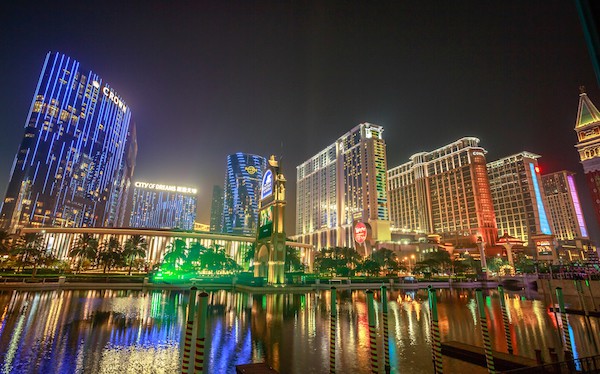
Hotels in Cotai Strip, Macao – popular as mono destination. (Image credit: bennymarty/iStock)
As for long haul destinations MATTA’s Hamzah said, “Demand for Europe and the UK are still strong especially among first time travellers who want to venture beyond ASEAN. The US will never be as strong as before, especially now.”
Future of Malaysia’s outbound travel
Tunku Iskandar opined the drop of the ringgit value against the US dollar, euro and British pound would see demand for travel flat for this year. “However, we had already seen that impact in the Q3 and Q4 of 2016.”
Regardless, both Hamzah and Tunku Iskandar believe outbound will still flourish with more and more travellers opting to holiday at home and within the Asia Pacific region.
Mastercard in its the Future of Outbound Travel in Asia Pacific (2016 to 2021) report, released in January, also painted a positive picture of Malaysia’s outbound travel.
According to the report, the forecast international outbound trips from Malaysia will reach 14.2 million by 2021, ranking sixth highest among emerging markets. China topped the chart with 103.4 million trips (40% of all Asia Pacific outbound travel) followed by South Korea (25.6 million), India (21.5 million), Japan (19.4 million) and Taiwan (16.3 million).

In 2015 there were 11.1 million outbound trips from Malaysia and last year the numbers rose to 11.9 million (estimated)
Mastercard predicts Malaysia will record the highest outbound travel ratio in outbound travel in relation to the total number of households with 198.7% by 2021 from 178.4% in 2016.
“About 46.1% outbound trips are by Malaysian households earning above US$30,000 (RM132,820) per annum in 2016, an income range that accounts for 24.4% of all households.
“This put the concentration ratio at 1.9, second lowest among higher income households of emerging markets after Thailand at 1.8,” the report said.
• Featured image credit: beer5020/iStock