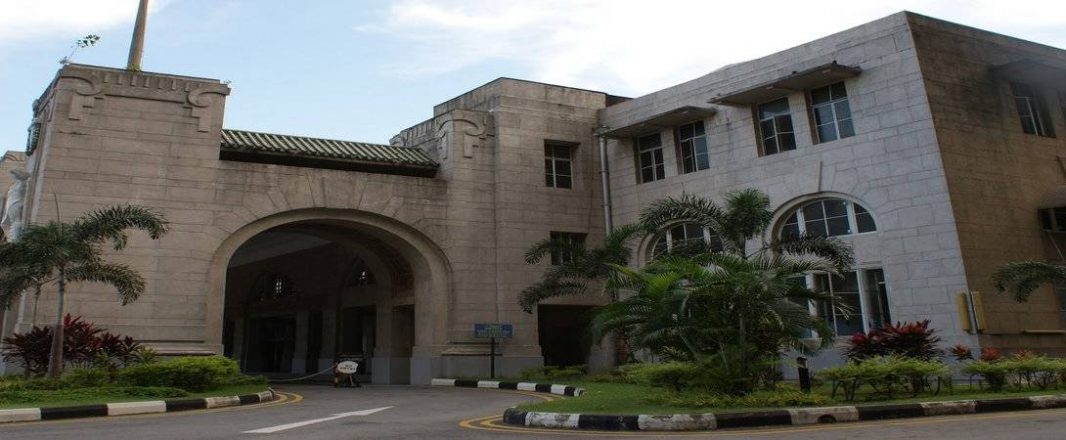

After years of negotiation, often to end in stalemate, the Malaysian and Singapore governments have finally come to an agreement on the site and rail operations to this station will cease end of June.
The building will be conserved, reports say, and the site will be integrated into future developments in the area. Rail services from Malaysia meanwhile will stop at the Woodlands Train Checkpoint from July 1.
Stepping into the railway station even today makes you feel like you have entered Malaysia without a passport. There’s something in the air that tells you this is a foreign country.
We were catching up with Wotif’s three executives – (pictured from left, Robbie Cooke, Sean Simmon s and Dave Tomlins – and we wanted to show them another side of Singapore, a “longtail” aspect of the city that few visitors see.
After all, at the last WIT conference, Cooke had said longtail was the future of travel and I wanted him to get a taste of it – that even in tiny, ultra-urban, highly-modern Singapore, you can still find groovy places.
The night before, the three of them, being patriotic Australians, had been to Salt, Luke Mangan’s restaurant at the Ion. You couldn’t have a better contrast than that – liquorice and lime parfait at Salt followed by beef rendang and teh halia (ginger tea) at the Restoran at the railway station.
Around us were hordes of people taking photographs of the station, and of course, plenty of locals having their lunch. This is one of the best spots for nasi padang (Indonesian-style rice) and Malaysia’s famous Ramly Burger is also found here.(Syaz and Adil from Forget Boundaries, also pictured, were in charge of the food orders.)
 Ever since news that rail services would cease at this station, bookings have jumped. KTM, which runs the services, reported an 80% surge in online bookings. This is often the case in Singapore – the best way to drum up business is to close down.
So the curious and the nostalgic have come out in droves to experience the rail rides before they end.
This was where I arrived on my first trip to Singapore from Penang back in the 70s. I travelled with my parents and grandmother to visit my brother who had moved to the Big City.
We stopped in Kuala Lumpur and stayed at The Majestic Hotel. I remember having cockroaches in the hotel room. It was also my grandmother’s first trip outside Penang. My grandmother had never left Penang ever since she came to the island as a young child bride of 16 onboard a boat from Hainan via Hong Kong.
My father was so excited about being in Singapore to see his eldest son he left the train without taking his luggage. We had to buy a whole new wardrobe for him. I think I picked up this habit from him.
Watching the three Wotif executives perspire as they ate and drank like locals, I felt a strong sense of nostalgia for yet another relic of the past to be gentrified and integrated into modern anonymity.
The railway is one of the biggest missed opportunities between Singapore and Malaysia. A high-speed rail network between the two countries would have done wonders for trade and friendship between the two countries.
Low cost carriers would not have been able to take off on this sector if rail had got its act together. And we would not see the high incidence of accidents on the highways that we see today.
Alas, that’s not to be for this station, and on the last day of June, that last train out of here will take a sentimental journey to the end of the line.