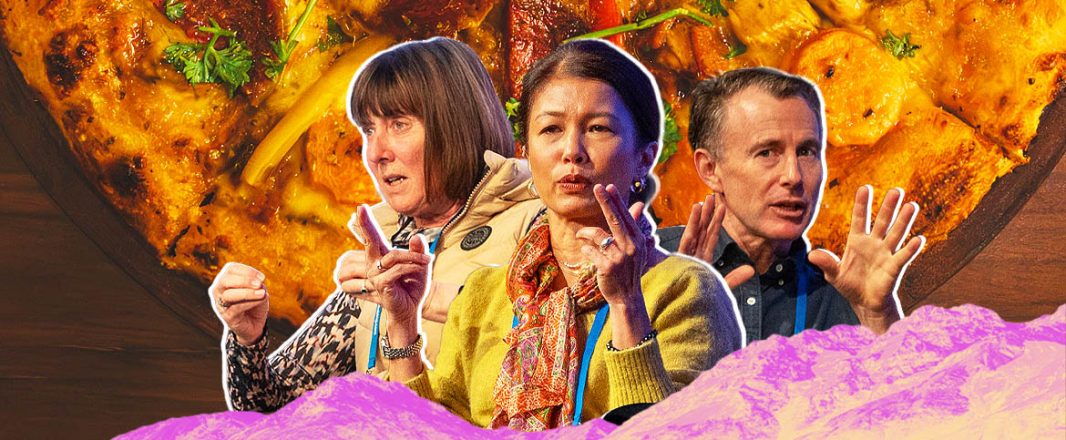
A soil scientist by accident, a MasterChef alum turned custodian of culture, and a data analyst who’s read 1,300 diners’ minds walked into a Queenstown pre-lunch session – and ended up agreeing on the same verdict: New Zealand’s food story is still “emerging”.
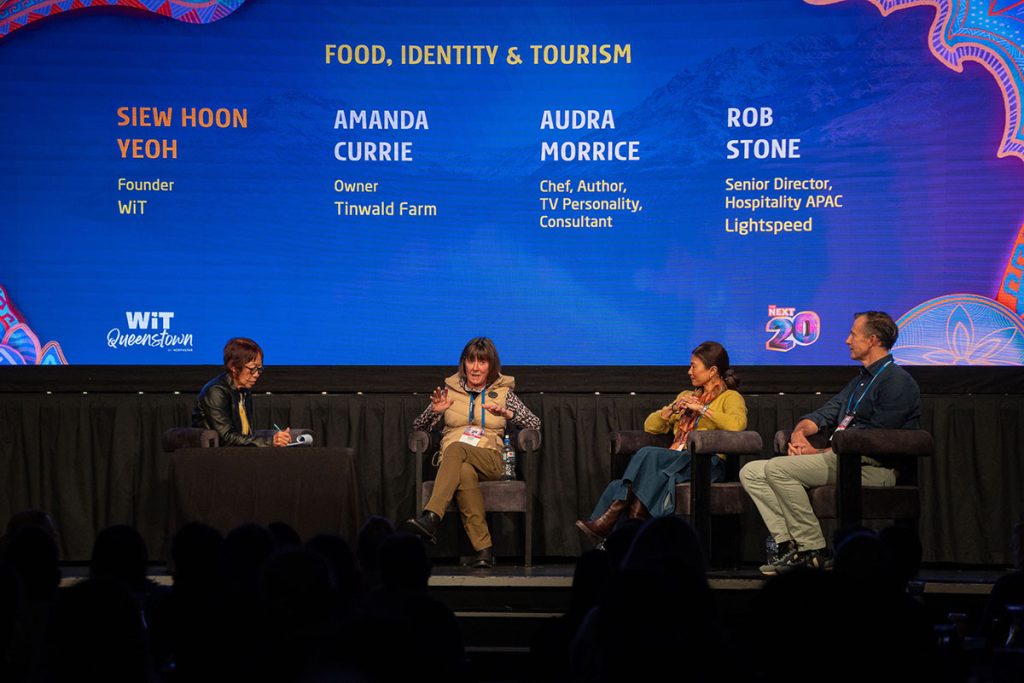
That was the key takeaway from the panel on “Food, Identity & Tourism” which featured three different perspectives – Amanda Currie who runs Tinwald Farm in Central Otago, Audra Morrice, chef, author, MasterChef Australia alum, and Rob Stone of Lightspeed).
The farmer who found the soil was alive
Amanda Currie’s route into the session’s central metaphor – that food identity is grown, not branded – started with her own farm. In 2019, faced with a choice to change how the family property in New Zealand was run, or shut it down, she decided she’d learn to farm it herself.
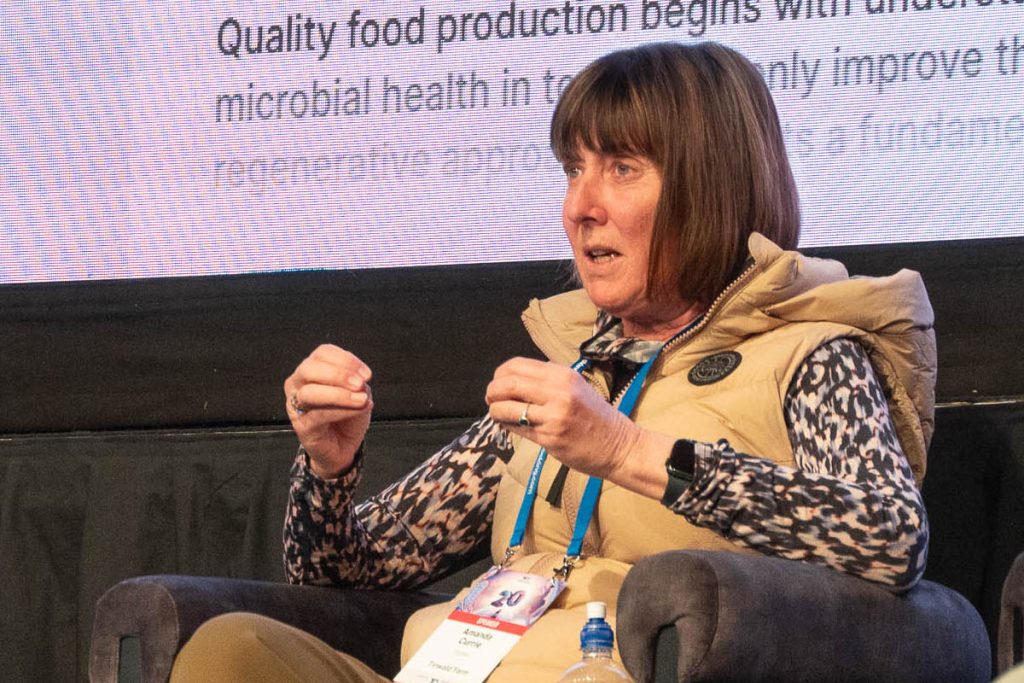
“I decided that I could farm it, because it couldn’t really be that difficult,” she said, drawing a laugh. What followed was a genuine shift in worldview: “I found myself looking at soil under a microscope. And when I did that, I realised the soil was really alive. That changed my entire perspective around farming.”
Tinwald now runs sheep, beef, chickens and Clydesdales, but Currie’s real focus has moved underground, to the microbial life in the topsoil. “We breed microbes, which sounds weird, but we do breed microbes – and we protect them, because that topsoil is protecting the whole planet, not just running the farming system.”
From economist to “custodian of culture”
Asked how an economist ends up a chef, Morrice didn’t dodge the stereotype: “How do you make a million bucks in the restaurant business? You start with two.”
But underneath the jest was a genuine mission statement. “It’s always been about cooking food with my culture,” she said. “I think culture is something that’s really unique to each and every one of us, and I see it disappearing very quickly, because we’re developing so fast… I feel like I’m one of the few people that wants to slow it down a little bit and at least acknowledge that culture is you, is all of us – and that’s what makes travel quite unique.
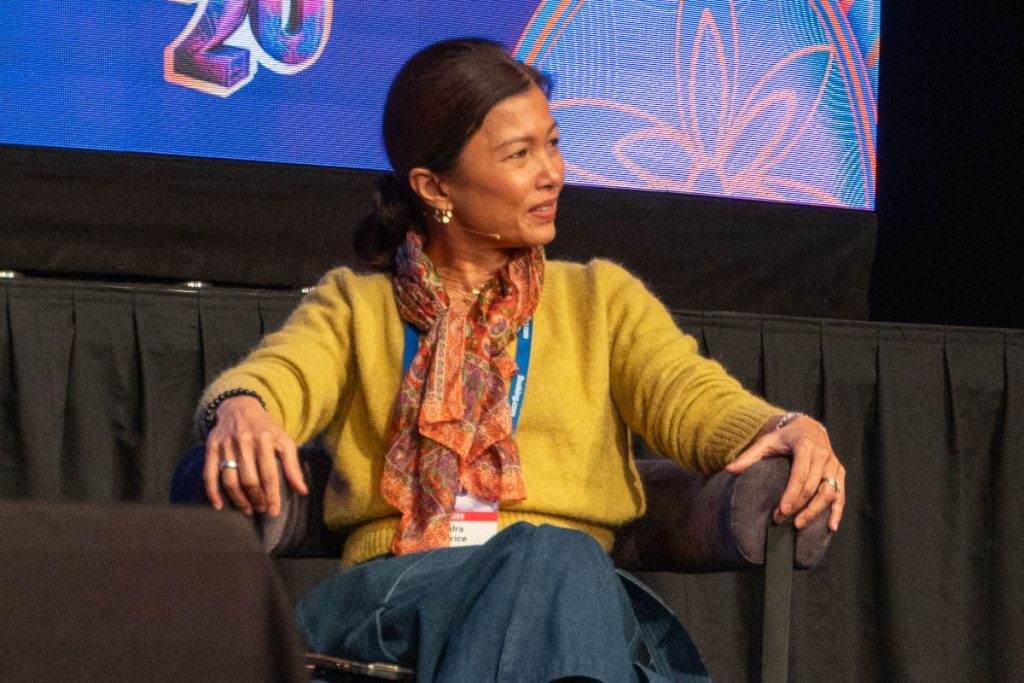
“Why would you want to travel to Indonesia to get a cup of coffee you can get in Melbourne?”
That mission turned into a business case. Morrice recounted a three-year courtship of the Sarawak Tourism Board’s CEO, culminating — memorably — in a conversation sitting barefoot in the Wadi Rum desert outside Dubai in December 2023. “She said, ‘Audra, how do we do this?’ And I said, you trust me – when you’re ready, call me.”
The result was Audra’s Eat, Roam and Relish, a six-part series built around her own childhood memory of eating laksa for breakfast in a Kuching coffee shop.
The pitch to Sarawak, she said, was a rejection of box-ticking destination marketing: “I want consumers to see more, not just where do I go, but to peel off the layers, into the community.”
The numbers backed the bet: Sarawak recorded roughly a 46% increase in international travellers year-on-year following the series, which has since been picked up by the Asian Food Network and ABC Australia and distributed across Asia, Australia, North America and the Middle East.
The data: diners are more confused than health-conscious
Rob Stone brought Lightspeed’s hospitality data into the room, drawn from a survey of roughly 1,300 consumers across the region. The standout finding, he said, cut against instinct: younger diners registered as markedly less health-conscious than older generations, with Baby Boomers and Millennials showing up as the most careful eaters of the cohort – a reversal of the usual “young people are all about wellness” narrative.
Stone shared his formula for what actually builds a destination’s food identity: “You have taste, you connect it to place, and then you multiply it by the experience – and experiencing always comes back to the people.”
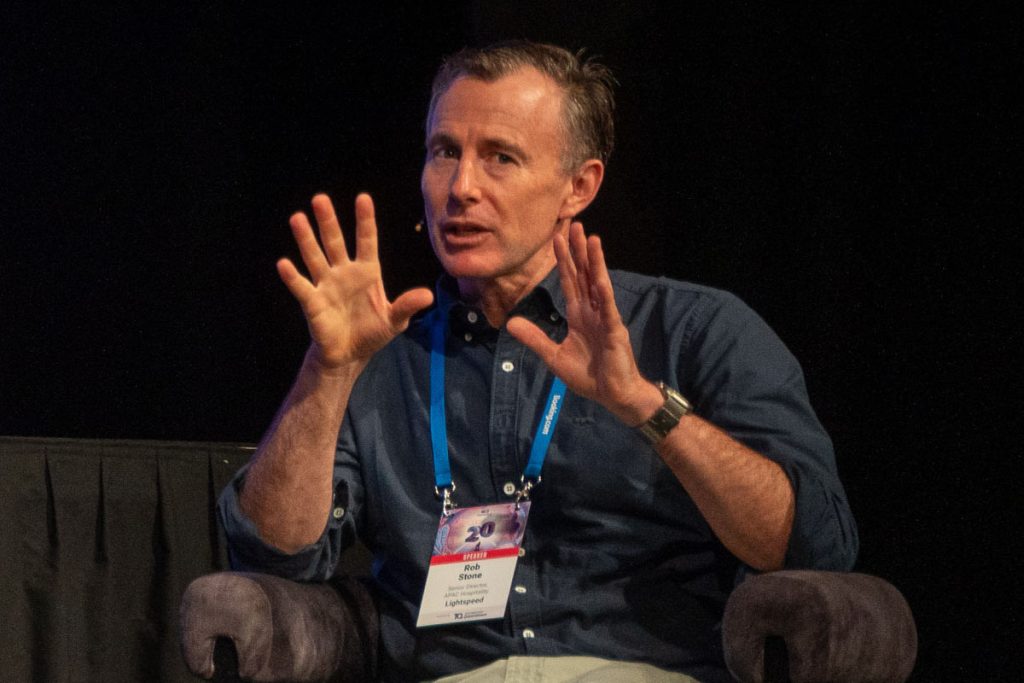
He also flagged a live anxiety: the risk of “cognitive surrender” to AI recommendations –plausible, convincing, and wrong often enough to matter, with one panellist citing research showing four in five people follow AI travel advice even when it’s flawed.
The irony, noted the panel, is that AI-generated recommendations tend to funnel travellers toward the same handful of places: “You all end up in the same place.”
New Zealand’s own food story: “Quite limited”
Asked about their impressions of New Zealand’s good story, Morrice, on her first Queenstown visit in six years, didn’t soften her assessment. “The food choices are very limited as a traveller. Either you go by a private chef… or the rest of it is just kind of tourist fare – a tuna melt sandwich, or bagels, and that’s things I can find anywhere.”
Currie’s response: New Zealand is a small producer nation that exports most of its best output, leaving a domestic dining scene still catching up to the raw material. “The arrival of Michelin recently, I think that’s a focus for what we do but it is very much a work in progress. Most visitors would tell you they’re blown away by the food options in other countries. I agree – it’s a little bit limited.”
Asked what a genuinely authentic Kiwi food experience would look like, the panel converged on the same starting point: the land, and Māori relationship to it.
“Good food starts from the land,” Currie said, echoing her own soil philosophy. Morrice drew a direct parallel to Sarawak’s tribal culture, while flagging the accessibility gap that keeps native-ingredient dining out of reach for most visitors: “Not everybody can afford it, and let’s be honest, fine dining is not cheap.”
She’d tested the question directly, stopping strangers on Queenstown’s streets that weekend to ask what young travellers actually wanted. The answer wasn’t degustation menus. “Good vibes. Delicious, accessible cuisine that isn’t just plain – but can be popular, like tacos with a bit of punch.”
Japan, Sarawak, Paris: what “doing it right” looks like elsewhere
Turning the question outward, each panellist nominated a destination that gets food identity right, and for different reasons. Stone chose Japan, for the way even simple street food communicates confidence and craft: “You get a train of food, you see the craftsmanship in the preparation and presentation… it tells the whole story in a bowl.”
Morrice, unsurprisingly, returned to Sarawak and its forage-based indigenous cuisine – “we built a home lunch out of foraging the food in the afternoon… when you experience something like that, it changes you as a person.”
Currie picked Paris, less for the food itself than for the dignity attached to the profession serving it: “Operators in the business are so often overlooked – the whole career, front of house to back of house, until you retire. I’d like to see more pride around that as a profession.”
Rapid fire: “New Zealand’s food story is… emerging”
I closed with a round of one-line prompts. Asked to complete the sentence “New Zealand’s food story is—”, Currie answered simply: “Emerging.”
Asked what travel marketers could do better in promoting food tourism, Stone’s answer looped back to his own formula: taste, place, experience, told through people.
Morrice used her dream-documentary prompt to pitch the next chapter of her own format: “Eat With Relish, South India” and, notably, “Eat With Relish, New Zealand.”
On the very last question – pick the single most important ingredient in a destination’s food identity: the produce, the people who cook it, the history behind it, or the person who tells you about it, Currie said, “All of the above. The people who tell you the history of the food, and then take you to go and see it – that’s what matters.”