How do we strike the balance between always remaining visible to our friends and loved ones, but not too visible to everyone? Are we more or less protected if we simply ‘get off the grid’? Marissa Trew debates the pros and cons of visibility and safety on the web.
Growing up, I was always told that the Internet was a dangerous place. I heard countless nightmare anecdotes about young girls meeting ‘nice strangers’ in chat rooms only to later discover they were predatory adults, attempting to lure them from beyond the safety of their Windows ’97 computers.
Nowadays, we consider the Internet vital towards our security. If the opportunity to ‘be connected’ is there, we take it. It takes more mental deliberation to stay out of the loop than it does to automatically log into it. Now, being logged in is the default and its rarer, almost strange in fact, to be disconnected.
Whether it’s sending a direct message about our whereabouts or simply ‘checking in’ to a café as you hook into their Wi-Fi, deliberately or unintentionally, we have a habit of leaving a leave a trail of markers. Seems like Hansel and Gretel were onto something with their breadcrumbs idea. While I may not carry a stale loaf of ciabatta in my purse every time I go out, I actively subscribe to this idea whenever I send my father my taxi’s license plate details, to have it on record, just in case!

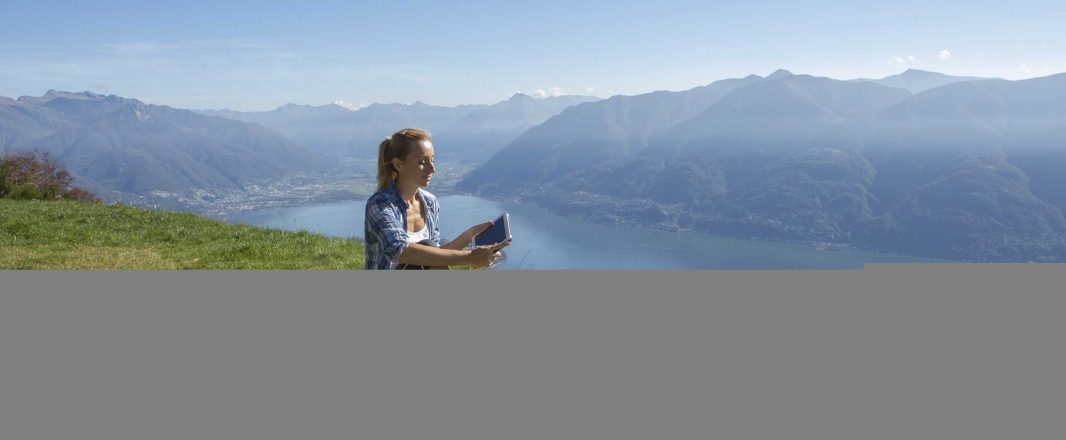
How do you balance between visibility and safety when travelling alone? Photo: iStock
But does that mean that the Internet is no longer dangerous? Being able to mark our movements and track our whereabouts is by no means just a force for good and our own protection. While it has the capacity for so many great things, it can easily be used for something more insidious.
For example, a colleague of mine, a young woman like myself, ventured out on her first solo travelling experience. Proud of her independence, she instagrammed a selfie, hashtagged #lonetraveller and stamped the photo with her location so we knew everything down to the name of her hotel.
Soon enough, another #lonetraveller, an unknown male, sent her a private message, relaying a similar story to hers and asking if they could meet up and get to know each other.
There is every possibility that this person was simply looking for social company. However,, as young women in the 21st century, we are raised to feel the need to be on guard all the time, particularly when alone. Immediately realising that she had freely and inadvertently published her hotel address online, she recounted how she immediately tested her bedroom door’s lock, anxious about the possibility of someone tracking her down and breaking in.
Though nothing came of the incident, it was enough to highlight how the same apparently innocuous actions can serve to protect but also endanger us.
The question this poses is, how do we strike the balance between always remaining visible to our friends and loved ones, but not too visible to everyone? Are we more or less protected if we simply ‘get off the grid’?
While I usually adopt the principle of ‘hope for the best and expect for the worst’, now I can’t decide which danger is more threatening – the potential of information getting in the wrong hands or to not being traceable at all.