
Just as diverse leadership will improve your bottomline, the converse is also true – a homogenous workforce will have a detrimental effect on your company’s performance.
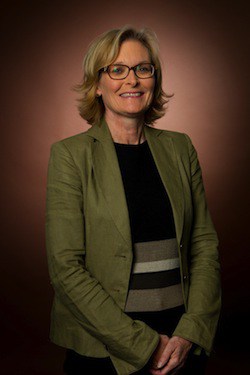 Said Mary K Farmer, director of Glion Online MBA, “It’s the same with anything – if you are not fast or quick enough, eventually you won’t survive. It’s imperative hospitality companies get the gender balance right in their leadership, don’t wait for legislation to bring in the very tool that’s good for business.”
Ms Farmer, who will be visiting Singapore to conduct a workshop on “New Trends in Hospitality Management” on May 21, said while the gender issue in hospitality is not a new one, it’s taken on more urgency in 2013 because of the growing power of the female dollar.
“Why aren’t things more marketed to women?” she asked. “It’s an old issue yes, and we breathe this in, we grow up with it, we see what we believe and we continue with it without questioning why.”
Ms Farmer’s reasoning is that companies that are diverse in their leadership have a better chance of profiting from this segment of travellers. “You see more and more now female-only floors and female amenities, I appreciate it so much – I sure as hell don’t want a hairdryer attached to the wall.”
And she believes the current lack of women in senior positions in hospitality is more of a systemic issue, than sexism at work. “If there was one sexist person in HR, we could overcome this easily but you need real organizational culture change and leaders that are brave to break down the barriers.
“This is about organizational culture and processes – it’s woven into every recruiting policy, who gets into the high potential programs, who gets the star projects, who’s evaluating performance – you need a more balanced slate of people evaluating performance, then you get more objectivity.”
Ms Farmer disagrees with the notion that the lack of women leadership in hospitality may be due to the fact that some women find it hard to have a full-on career when they enter their 30s and have families, and may not wish to move around if they make it to general manager level.
“Many women enter the industry when they are single, around 24-25, and they still don’t advance as fast as men – they may not fit in with the organizational expectations of the long hours, drinking with clients, schmoozing –even in 2013.
“I don’t believe women are afraid of working harder, it’s more of an organizational issue. Careers for women are not nearly as robust as those for men because the opportunities are simply not given. A lot of women burn out with disillusionment after seven to eight years, they realize they have reached a plateau.”
As for the issue of general managers who typically need to move around, Ms Farmer said hospitality, like other industries, was stuck on the old model – where benefits are only given to the working person, but not their accompanying partner. She cited certain multinationals (such as Unilever) which give accompanying partners a sum of money each year for skills development. “This whole piece, with a few exceptions, is missing from hospitality. In particular the industry has to be ready to support the male partners of female general managers if they want to put them in place.”
She applauds initiatives such as the Women of Accor Generation (WAGG) which aims to have 35% women general managers by 2015. “They are putting it out there and saying, we want women managers because we want women customers.
“I think these companies are genuine in what they want to do, the challenge is changing systemic processes – to allow equal opportunities for women and men.
“I am not buying the argument that it’s the women, that they don’t show ambition, that they don’t know how to fit in. I think there’s an unconscious bias – bottomline is, when many organisations look for leaders, they don’t see it wearing a skirt.”
And to date, the bottom-up approach hasn’t worked particularly well, “assuming you can make a difference at your level – a lot of women fall for that trap, senior leadership has to buy into the idea”.
Ms Farmer, who specializes in organizational behaviour and HR, said another new trend is how the industry can prepare for Generation Y both as employees and as customers.
“In hotels, you have the double whammy of long hours and low pay – how do you attract and retain talent – and here’s another thing, the majority of graduates in many countries are now women, so we need to find a way to grow this next generation.”
In terms of what Gen Y customers want, Ms Farmer said a strong trend is that design matters. “Dark paneled bars with hunting pictures on the wall, they run away from them. Some hotels are introducing cutting edge events – meet and greet for younger guests.”
Ms Farmer, who comes from a fourth generation of women working fulltime, said she was brought up not to see a man as a financial plan. “For us, it’s like breathing – working and doing what we can in the workforce.”