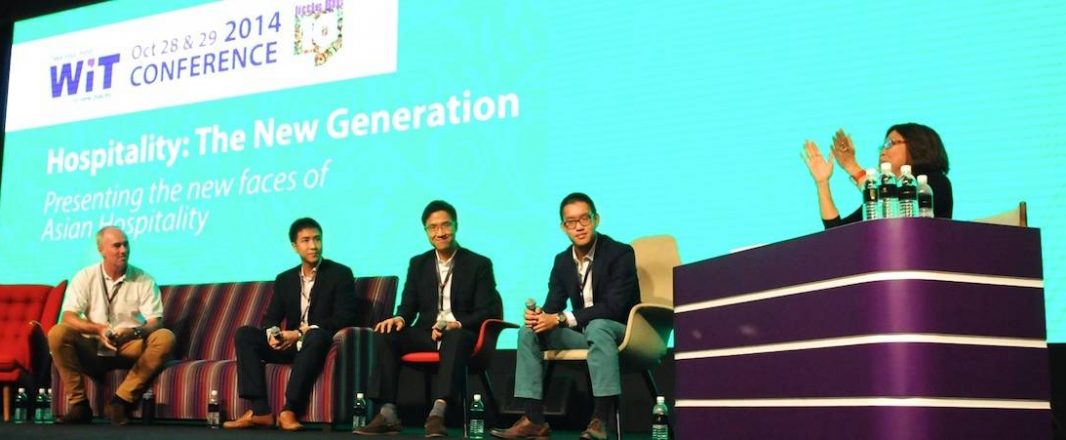
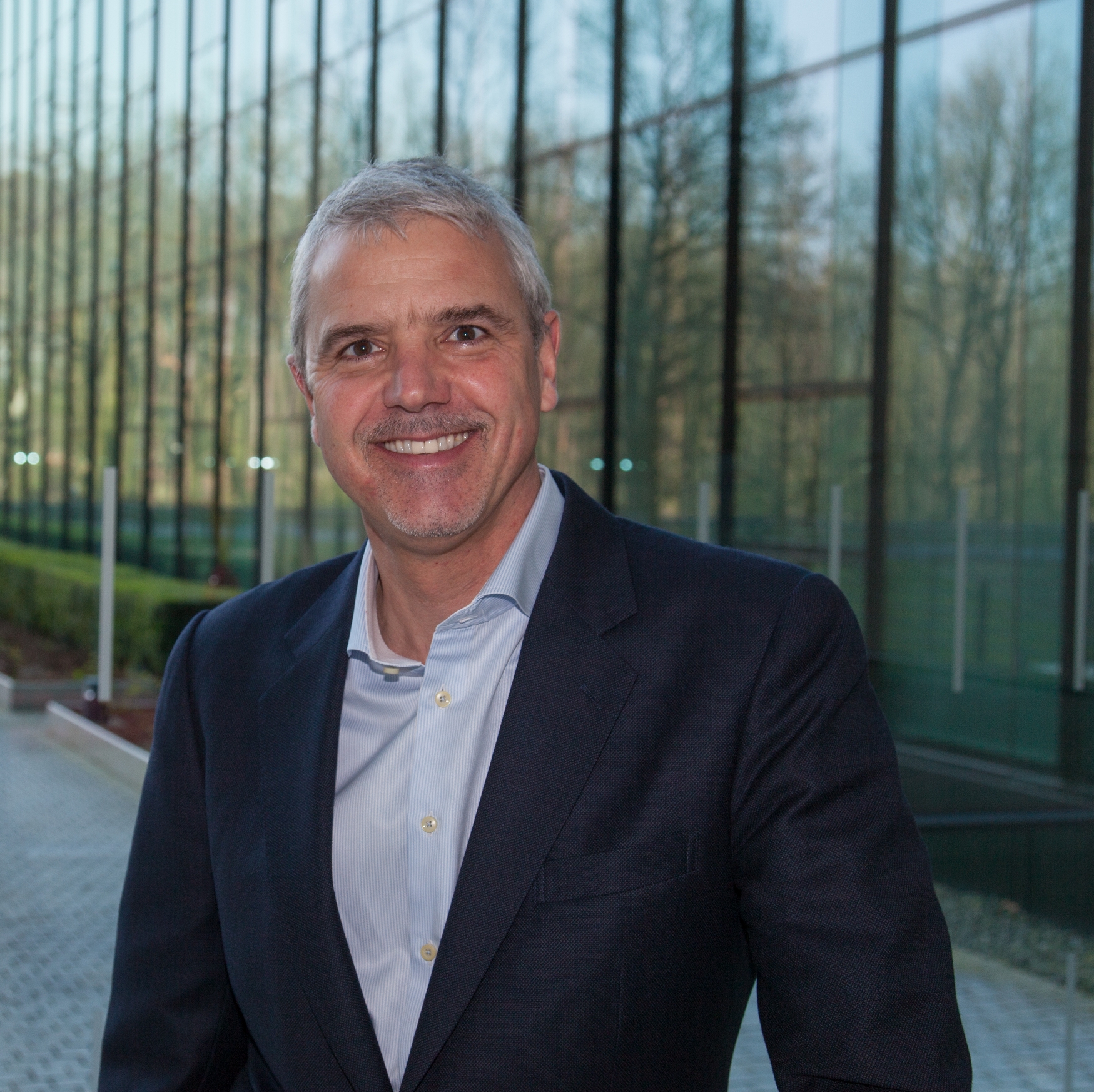
 The morning Steve Rowley (pictured left), chairman of IHS, took to the stage at the WIT Conference, he had just broken the news to his employees that the group was in negotiations to buy fastbooking.com.
While he couldn’t disclose details during his time onstage, he did say it was part of IHS’ plan to expand its geographic reach. Buying Innlink in the US gave it a US spread, Fastbooking would give it the Asian footprint. The news came as a surprise to Fastbooking’s employees as it had just undergone a reorganisation under new chairman Jean-Gerard Galvez.
Rowley, who was put in to run IHS after Battery Ventures acquired the group which owns Trust International, Worldhotels and Nexus, is part of the new wave of executives and investors out to transform the hospitality sector with technology.
In June, Oracle Corp bought MICROS Systems for approximately $5.3b. That same month, Priceline Group acquired Buteeq, a cloud-based digital marketing platform for hotels, allowing it to become a tech provider for the independent hotels it sells.
In September, Alibaba Group paid $457 million to buy a 15% stake in Beijing Shiji Information Technology that provides hotels with technology software and services. That same month, SAP SE announced its bid to acquire Concur Technologies for $8.3b, its biggest purchase ever.
Before these acquisitions, there were these as well – the US$30 million investment into Australia-based hotel booking company SiteMinder by Palo Alto-based Technology Crossover Ventures in January; Vista Equity Partners’ acquisition of US-based Lanyon, provider of SaaS-based software solutions for the hospitality industry and, of course, the acquisition of IHS by Battery Ventures in July 2013.
Rowley said these investors, who are putting money into the industry, in a planned and determined way saw opportunities in making change in an industry that’s highly fragmented and relatively traditional in technology adoption.
While he sees Trust as focused on the bigger chains, it is clear that Fastbooking will fill the gap where Trust is weak – faster cheaper connectivity for the independent and smaller hotel companies, which form the bulk of supply in Asia. This is also the major market for Worldhotels which has been growing rapidly in the region.
Beyond traditional hospitality, Rowley also sees opportunities in the sharing accommodation space and picked out onefinestay, the high end version of Airbnb, as one company he’d be keen to invest in, if he were thinking as a personal investor.
Barefoot and bamboo the new luxury?
From left: Andrew Dixon, (Nikkoi Island) Pongsak Pattamasaevi & Kittisak Pattamasaevi (Montara Hospitality Group), Siradej Donavanik (Dusit Thani Group), Yeoh Siew Hoon (WIT)
Another aspect that’s changing hospitality in Asia is the entry of new players out to make their own mark.
Andrew Dixon is an example of a former banker from Australia who decided to build at first an island home for family and friends and which then grew into the Nikoi island resort, a highly popular getaway for travellers seeking an alternative to traditional resorts and villa stays. His is barefoot-in-the-sand luxury because he realised that the new luxuries in life were time and space for busy executives (like himself).
“I relaxed within 10 minutes of landing on the island,” a CEO friend told me after she visited Nikoi after the WIT conference.
Up to 98% of Nikoi’s business comes direct through his website, and he only works with one OTA. Simplicity is clearly his mantra, and now he is building another resort in the same cluster of islands off Bintan, Indonesia and it will be built entirely of bamboo and no kids allowed. Dixon is imagining a new kind of future for luxury, and building for it.
Fathers and sons, building on the past and creating a new future
In contrast, we had Kittisak and Pongsak Pattamaseavi, the two brothers who’ve inherited the running of Trisara and Boathouse in Phuket (under Montara Hospitality), and Siradej Donavanik, grandson of Thanpuying Chanut Piyaoui, who built the Dusit Thani group from scratch with her first hotel, the Princess in Bangkok, in 1948.
Both groups are based on the Western traditional hotel model – built for longhaul customers looking for international standards and luxury in Asia hotel experiences. Their challenge today is to remain relevant to a changing set of customers in a new marketplace.
Western-educated, these young Thai executives want to make changes in their own way. Kittisak and Pongsak want to ensure the ultra-luxury Trisara Resort their father built is attractive and affordable to new customers, who stay shorter and pay lower rates, and yet remain true to their traditional customers from longhaul markets.
They’ve managed to increase online sales from 14% to 30% (September 2013 vs September 2014) and Trisara.com direct business has gone from 8% to 17%. As a result, offline has dropped from 82% to 70%.
Pongsak, the creative and marketing half to Kittisak, who looks after operations and finance, said social media was one channel he was actively working on to increase direct engagement with these new customers.
Their objectives are to consistently maintain top 2 positions on TripAdvisor and they are also using more Facebook advertisements. “Younger guests in new markets, for example China, are more comfortable with booking online,” said Kittisak.
Pongsak, the younger brother who came later into the business, said he decided to join the family business “because the world is increasingly becoming a visual culture that consumes media 24/7 thanks to the rise of smartphones. It opens up a grand new frontier of brand communications.”

Sunset at Trisara
“I saw an opportunity to employ my creative passions in marketing communications in a different industry,” he said.
Kittisak said his father and his partners had the “experience, vision, and the energy to turn extraordinary real estate into something never before seen in the region. They created a new market, but now the market is becoming crowded. Guest expectations and behaviors are changing.”
So what he and his brother want to be credited with is “creating our own definition of luxury that would appeal to our target customers over the next 10 years, then translating that to an innovative product much like the “private pool villa” had been during the past 10 years”.
Siradej’s father, Chanin, has the credit for taking the group global – it has more than 57 hotels under development in various parts of the world – and Siradej is now working in projects and investments, helping with the expansion.
The change he wants to make is to diversify the business and build future Thai talent. “Traditionally we’ve been focused on hospitality/hotel as investor and operator. However in 1994 my grandmother started our education division with Dusit Thani College, first as a way to train our staff and something to give back to society.
“That has grown solidly into over 15,000 students across 6 campuses in Thailand and Philippines under our direct curriculum. This is an area I am incredibly interested in developing, especially the social and economic transitions that are happening in today’s world like the ASEAN Economic Community.
“I would really like to expand this area further, as well as growing our company in a responsible manner – not that we are not, but one can always do more, especially for society and for environment.”
The Thai sons agree though it can be a challenge working for family.
Said Siradej, “The problem is that no matter what your dad is ‘always’ right. Of course naturally there are a lot of disagreements because our approaches are different even if we have the same goals. It takes a lot of patience as with family business, there’s always myriads of ‘tradition’.
“Some like values I mentioned are valuable to this day but some we have to leave behind. The difficult part is not about finding new solutions, but it’s really about departing from the old ones.
“But there’s also a lot of positivity to it. I even think disagreements are healthy, it puts us out of our comfort zone and make us question our approaches. So my father and I we talk a lot. And I get to learn a lot from him and from our top level executives, in meetings and decision making process where I wouldn’t have access to had I been working in other organisations.”
For Kittisak, the biggest negative is the “need to prove self to people who have known me since young” while the biggest positive is “rewarding because we can make a difference quickly”.
The contrast between the freedom of Dixon who basically has a blank canvas to paint on and the more restricted operating environment of the Thai sons is stark – it is hard to innovate with one hand tied behind your back but a blend of wisdom and naivete is good if both are allowed to co-exist respectfully.