If you ask someone to see his or her passport, there’s always that nervous flinch that comes from them just before you flick open their information page, followed by a mad rush of excuses as to why their photo is so terrible. “I was mid-blink!” “They don’t let you smile anymore!” “I was only 15! How was I supposed to know bangs are always a terrible idea?”
Letting someone see your passport before embarking on a school trip was an exercise in determining the playground hierarchy. The elite was decided by who had a passport from the most exotic country, the coolest cover and the most decent photograph (because let’s face it, they were only ever going to be decent at best).
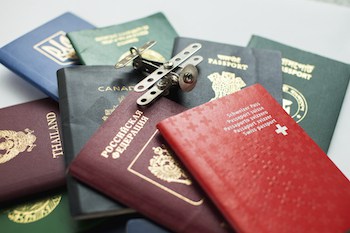
Have passport, will travel (Image credit: IraEfremova/iStock)
With the recent announcement of Norway’s new passport design, with landscape scenes of the Northern Lights under UV light, covers as colourful as the iPhone 5c and ID photos of one of the most notoriously attractive people in the world, I think we can now all agree who will be on top of the hierarchy for a while yet.
However, there is one more ‘coolness’ criterion that I feel is often overlooked – the beauty of the passport stamp. Nowadays, most passports remain blank except for a few pages dedicated to work or specific travel visas to mark the places we most frequently visit. A lot of immigration has gone digital, and for very good reason. It is more efficient, identity verification is more secure because of things like eye and fingerprint scans and it is, as far as I understand, a much stronger method of keeping tabs on people’s movements in and out of a country.
I, for one, love arriving home in Singapore and knowing I can skip the queues at the manned desks and head straight to the automated clearance lanes. Yet, I do feel nostalgic for the days when the pages of my passport were filled with funky little stamps from all the places I had visited. Without a stamp, it felt like I had nothing to show for my travels. It is a souvenir in its purest form, an effortlessly maintained scrapbook of adventures. Plus, there are obvious boasting rights when you get stamps from obscure countries like Djibouti or Vanuatu!
Of course, I know plenty of people who would dream of a more automated system. A friend of mine held no romantic notions when it came to arriving at immigration desks in first world countries with her third world passport. Her identification page at the back was handwritten, the photo was faded and the booklet itself looked more like a pamphlet than an official travel document. Needless to say, her trips through the immigration line were inefficient at best and purgatory at worst as immigration officers dangled her travel document with disdain like a crumpled receipt.
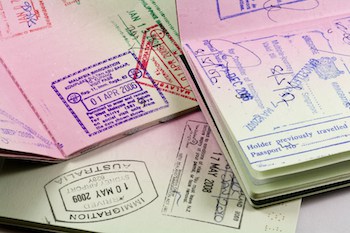
Souvenirs of adventures (Image credit: angeloNZ/istock)
As we progress technologically, perhaps passports may even become a thing of the past. Maybe, within our near future, we will filter in and out of a country’s borders without need for an official printed document. Instead, maybe we will rely on just a database of our information embedded in a microchip on yet another plastic card stuffed into our wallets. It would be great in terms of the fluidity of travel but sad if it means that we have to give up the one of the things that keeps the romance of travel alive.
Norway’s release of their new passport design is certainly creative and may spur other countries to be more colourful and even artistic in the immediate future. Heaven knows many countries could use a little imagination here. Unfortunately, I cannot help but think that Norway is a blip in the headlong rush to digitise everything. We might find ourselves stranded between those two automated barriers, struggling to scan our micro-chipped cards with the familiar frustrations of standing at the supermarket self checkout!
So when in years to come, when we want to look back fondly at all the journeys we have undertaken and all the memories that passport stamps evoke, what then friend, what then? We are going to lose those precious memory triggers that come with a well-worn little booklet filled with multi-coloured stamps, visas and the occasional stain that could actually visually show that we had been somewhere.