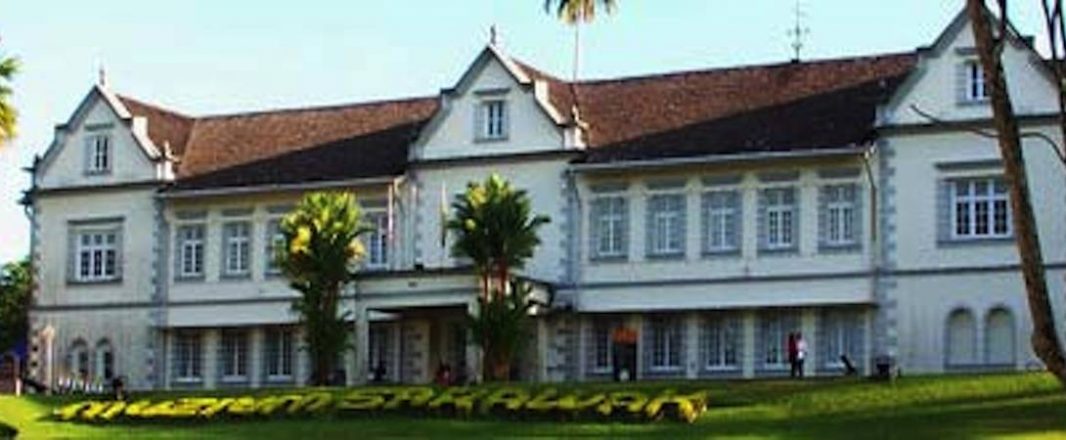
A few years ago when you visited Kuching, Sarawak, you didn’t have much choice as to where to stay.

Batik Boutique Hotel
There were the international chain hotels – Holiday Inn or Hilton and now the Pullman and Four Points – and a few local hotels, and not much of anything else that was interesting or with the kind of character you’d want from a place that gives you the feeling of being in “exotic Borneo” with its rich history of myths, tribes and culture.
Well, I am glad to report that in the past couple of years, several entrepreneurs, seeing a market opportunity, have come up with alternative accommodation for visitors seeking something different from the standard hotel experience.
Walking around Kuching, as I did for three days last weekend with a lot of time to kill – boredom is a luxury these days – I saw evidence of businesses that have popped up to cater to a new kind of traveller.
I spent time at the Batik Boutique Hotel, a converted shophouse with 15 rooms. I like the batik motif throughout the place – from the lobby to the rooms (priced about RM250 per night, includes breakfast and wifi) – and the staff were friendly and charming. A very personal experience.

Jacqueline Fong
It’s the first hotel venture by Jacqueline Fong who’s still doing her day job as a banker (“to pay the bills,” she jests) but obviously it’s a pet project as is a songket weaving venture she’s taken on.
At Tanoti House, she trains girls straight out from school in the ancient art of Sarawak songket weaving, and each piece is handmade and therefore unique.
Batik Boutique meanwhile is doing pretty well with individual travellers, especially those from Europe and Australia.
At the entrance are several TripAdvisor stickers – the hotel’s won a couple of awards and gets good reviews and rankings.
This is one of the biggest changes I’ve noticed of late as a traveller – the ubiquity of TripAdvisor logos on hotels and restaurants everywhere. A few years ago, you saw maybe Lonely Planet or Conde Nast but today, it’s like TripAdvisor has become the de facto brand that customers look for when they choose hotels.
Not sure what I think of that, but it’s a fact of life. And it’s something this new breed of hoteliers recognise. The web has certainly made it much easier for small places such as these to be discovered by travellers.

The Ranee.
I was also shown around The Ranee. a newly-opened boutique hotel along the Main Bazaar. It’s a new-build shophouse over two lots, slightly higher end than the Batik Boutique Hotel.
I found it a bit dark and cold personally but the owner has been very generous with space with each room and with the superior room going from RM250, it’s pretty good value.
For something humbler, there’s the Kuching Waterfront Lodge, billed as “an exclusive bed & breakfast stay”. I liked the use of wood in this place, makes you feel like you are in Borneo, for sure.
Then there’s the Planet Borneo Lodge which is a detached bungalow converted into a dormitory-style place (RM50 a bed). The public area is spacious with a dipping pool, a common courtyard and huge kitchen. I can see this being very popular with students, families and trekkers.
Opened by Gracie Geikie, formerly chief executive of the Sarawak Tourism Board, it’s certainly found its niche in the market. Gracie (sitting here in the lounge of the lodge) said she decided to open the lodge after years of working as a tour operator in the Mulu Caves area and she couldn’t find the kind of accommodation that she knew would suit this market.
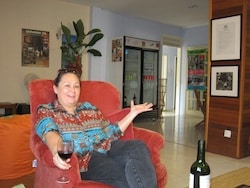
Gracie Geike
Talking to local industry friends, the concern is actually there may be too many such places opening up – there are certainly lots of b&bs opening up, as well as homestays, and often you can’t tell the difference between the two.
But I think these accommodation options have opened up a whole new vista for travellers to Kuching. It adds depth and breadth to the customer experience.
Dining has also improved. Other than, of course, the local coffee shops serving Sarawak laksa and kolo mee (my two favourite dishes in Kuching), there are lots of seafood restaurants. See Good is pretty good. Top Spot Food Court is pretty touristy but it’s still a great place for atmosphere and good fare.
On the last evening, I went to the Dyak restaurant, which offers authentic food by the main tribe in Sarawak. The food is delicious by the way (again rated highly by TripAdvisor). Vernon Kedit, a Dyak, opened this place to honour his late great grandmother whose picture adorns the walls (left). He’s created an amazing place with lots of Dyak artifacts and art.
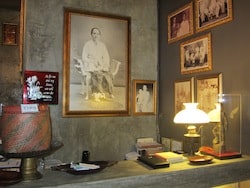
Dyak restaurant,
He pointed to a sword that sits above our table. “You see those holes on the left of the sword? Each hole equals one woman’s head,” he said, just as I was about to dig into my chicken bamboo soup.
“Usually they didn’t take women heads but if the women took up arms to fight and defend their village, then they become fair game,” he explained of his headhunter ancestors.
I counted six women heads and about 20 men heads on the sword. There are moments when you just don’t want sexual equality.
Anyway, next time you are in Kuching, try out some of these new places but remember Kuching works on its own time, not yours.