
The car has broken down. We are stuck in Kuala Selangor, a small town in Malaysia I’ve only heard about but never visited. We are two hours away from our destination, Lumut, where we’re supposed to take a ferry to Pulau Pangkor to stay at an artist’s retreat called Tiger Rock on the island.
I’m dreaming of waves crashing on the shore and wondering if I’ll get there by tonight. The mechanic has come on his motorbike. He says, “Wait, wait till your engine has cooled down. Perhaps you pushed it too hard? Where have you come from?”
He’s as curious about us and our road trip as we are about our vehicular malfunction.
Meanwhile, there’s nothing to do but wait. AI won’t fix a mechanical problem like this.
I’ve just spent the night in Malacca, a four-hour drive from Singapore. Like Penang, it was bestowed World Heritage City status in 2008. My last visit was almost two decades ago. The heritage heart of the city, with the Portuguese and Dutch forts, has become almost unrecognisable – it’s overrun with tourists, mostly from one market.
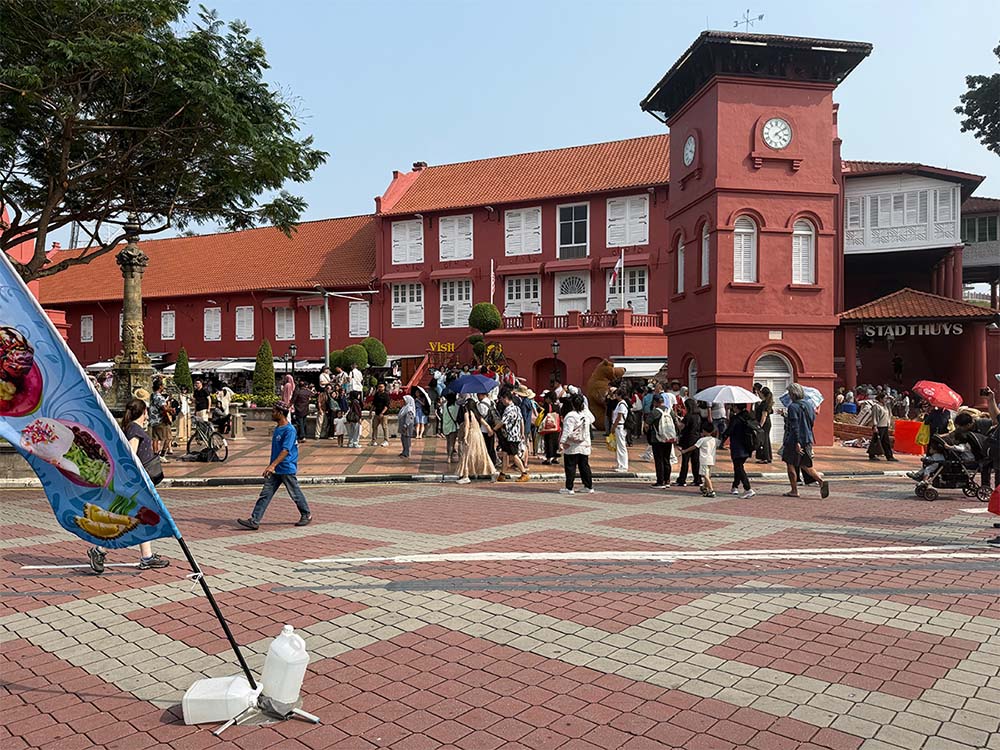
When mass tourism arrives in a small place like Malacca, it’s overwhelming. When the mass tourism is from one predominant market, it’s even more so – because local character gives way to overt commercialism catering to one sector.
Trishaws are decked with Hello Kitty caricatures, blaring hip hop music, as they pedal Chinese tourists around. Chinese women dressed in traditional Nyonya attire walk the streets, the same way they do in Kyoto – there are studios set up just for “costume tourism”. At the Jonker Street Night Market, stalls sell trinkets and food items obviously catering to Chinese tastes – mostly, mala anything and bubble everything.
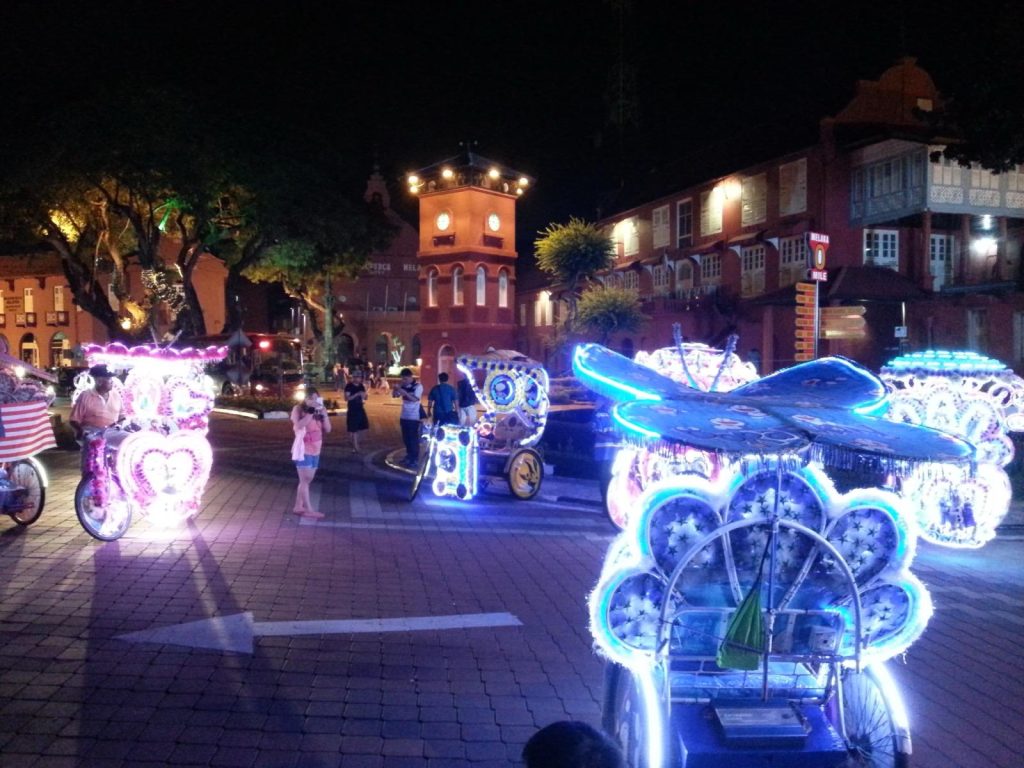
There were times I had to do a double take because I thought I was walking through a night market in China. There was very little of the Malacca I knew – to find that, you have to go beyond the main tourist zone where local residents live. I imagined what I would feel like as a local resident to have my history so over-run by tourism.
It’s by no means the fault of the traveller but surely, it’s the responsibility of local tourism bodies and industry to ensure a balance in how the product and experience is developed, marketed and. promoted so that it doesn’t just surrender itself to one easy market of volume, but a diverse mix of visitors.
At WiT Singapore, as much as there was talk about the changing front door of travel and how agentic AI would change up the travel value chain, there was also talk about how travel in the new beginning should address this very thing – a balance between travellers and local communities.
Matt Benson, director of Think City, Malaysia, reiterated his point that in the old days of the Grand Tour, travel was meant to transform people; today it transforms places.
Malacca reminded me that as much as we obsess about how we use tech to improve the traveller experience when planning and booking travel, we need to obsess even more about the actual experience on the ground.
Here are the key takeaways from WiT Singapore which I gathered from the several Coffee Chats I hosted over the two days.
-
Travel deserves its own agent
The question hanging over both days was simple. When general-purpose agents like Instinct and Muse can search, compare and pay, what is left for travel brands? Agoda’s answer was that travel is too complex to be a side job for an everything-assistant.
“Travel deserves its own agent,” the Agoda duo of CEO Omri Morgenshtern and CTO Idan Zalzberg said. “You come to me when you want to talk travel. I’m not going to say, by the way, do you want to buy a new gadget?”
They are also deliberately slower to take the credit card. Added Zalzberg, “When you do millions of transactions, even if you make a mistake one in a million times, that’s still actual people that get impacted.”
The approach: trust first, visibility after.
Klook’s co-founder and president Eric Gnock Fah made the same point from the experiences side. Agentic commerce works best for standardised products, and a dive trip is nothing like a visit to an elephant sanctuary. More than 60% of experience merchants don’t even have a website. “If they are not online, the agent can’t even get to them.”
Klook is now putting fewer resources into the perfect UI and more into its chatbot, which will soon be able to complete purchases.
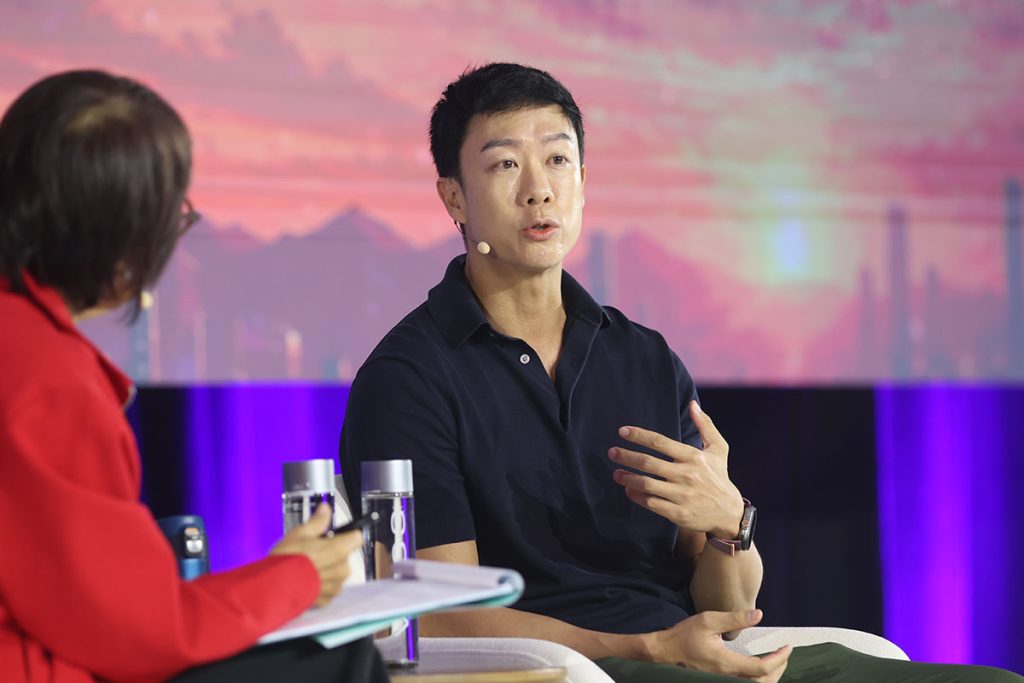
Klook’s co-founder and president Eric Gnock Fah said agentic commerce works best for standardised products, and a dive trip is nothing like a visit to an elephant sanctuary.
AirAsia’s co-founder and chairman of Capital A Berhad, Tony Fernandes, was blunter. A generic agent “still has to get travel content, and travel content is in the hands of airlines and hotels.” Apps won’t disappear, he said; they will morph, as they did when search arrived.
Meanwhile, Jazeera Airways’ CEO Bharathan Pasupathi expects AI to make airline distribution more direct.
Skyscanner CEO Bryan Batista doesn’t believe the end game is a phone with every app deleted and a single assistant left. Friends send him screenshots of bookings made by Instinct or Muse. “I asked, did you get the best price? They have no idea.” That’s fine while it’s new and fun, he said, but people will soon want the best price and the most relevant route on top, and that’s where trusted vertical assistants come in.
Skyscanner’s own path runs from search to answers, then to recommendations, then to action. When agents start talking to agents, there has to be a fair value exchange. “If there’s no value exchange, then who will create the content?”
The route to the customer is shifting too, and brands, he said, now have to invest across social, short video, partnerships and brand, because demand is spreading out.
-
The front end is up for grabs. The money is in the back end.
Etraveli Group’s CEO Mathias Hedlund was the most humble voice on agents. Consumer research tells you how people think today, about the options they know today. But he has seen “nothing real” to suggest LLMs will solve the deep back end of flights: sourcing from airlines and GDSs, pricing each ticket, fulfilment and customer service.
Etraveli bet hard on that “dirty work”, which he admitted was “more luck than skill”.
He explained how Etraveli works with Booking.com’s flights business. Booking designs the front end, picks the ancillaries and decides how much money it wants to make each quarter. Etraveli does everything behind it, under an eight-year contract signed after Brussels first blocked Booking Holding’s bid for the company.
After the second block, he said Etraveli has moved on and will probably IPO in a couple of years, adding that he runs on margins of 20%, the envy of many travel brands.
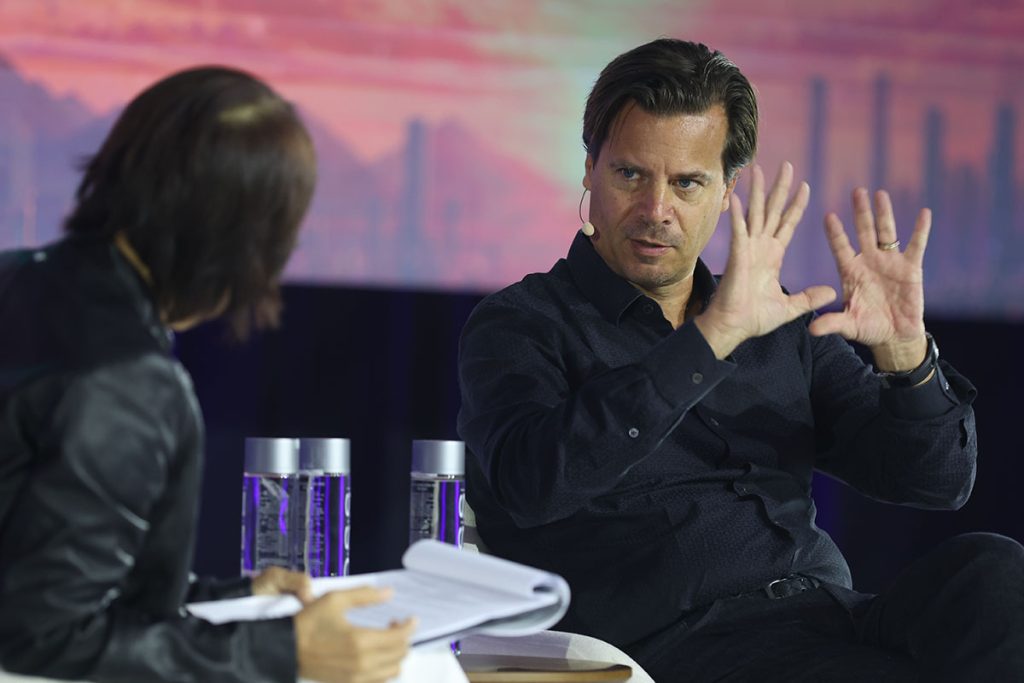
Etraveli Group’s CEO Mathias Hedlund said he has seen “nothing real” to suggest LLMs will solve the deep back end of flights: sourcing from airlines and GDSs, pricing each ticket, fulfilment and customer service.
In an agentic world, he argued, price matters less than “the absolute best content globally”, bookable with quality and speed. “I’m not afraid of other storefronts coming” because Etraveli will be there, powering them.
AI is already changing his own cost line. For a decade, Etraveli’s revenue and costs both grew about 20% a year. This year, for the first time, they have split: the company keeps growing without hiring more people, swapping administrative roles for B2B and AI talent. B2B, not B2C, is where he sees growth ahead.
His pet peeve is fraud. Most of the industry runs it as a separate function that rejects too many legitimate, often highly profitable customers, then buys paid traffic at lower margins to hit its growth targets. Etraveli now sells its fraud engine, Precision, as a module; for one OTA, he said, it was worth €15 million.
-
Don’t bolt AI on. Rebuild from zero.
ixigo’s co-founder and group co-CEO Rajnish Kumar warned that incumbents with 500 people and 20 years of legacy “end up slapping that layer of technology on top instead of reinventing themselves from the bottom.”
His fix at ixigo was a “Newco inside the old company”. He carved out 40 to 50 of his 500 staff, cut them off from Slack and the shared calendars, moved them physically, and said anyone caught talking to the old company would be sent back to it.
Four months later, ixigo had rebuilt its app from scratch. Every screen is now readable by AI. Agents check you in the moment check-in opens, watch for a cheaper fare, and call Indian hotels 24 hours ahead to reconfirm your booking.
The hardest part, he said, was creating “a fake sense of urgency” while the sun was still shining. “If I was starting today, I would just forget about everything that I built in the last 20 years.”
Mews founder Richard Valtr went further inside the organisation’s chart. Product managers, designers and engineers are now one role, the “product builder”, which he said has delivered an eight-fold productivity boost while others chase 10% to 15% efficiency gains.
Agoda’s Morgenshtern and Zalberg reached for a squash analogy. Be fast, and position yourself in the centre of the court so you can reach the ball wherever it lands.
“We’re not trying to guess,” said Zalzberg. The request may come from an agent, a user, “or who knows where”; the job is to be ready for all of them.
-
Planning: the joy or the chore?
Booking.com’s managing director, Asia Pacific, Laura Houldsworth argued that travel has become a vitamin, not a dessert: a necessity for wellbeing rather than a treat people are willing to give up.
Booking.com’s own research found that more than 70% of travellers enjoy the planning, and she challenged the room to push that to 90%. Its research also shows 64% of APAC travellers already use AI to plan trips. But AI doesn’t replace the need to see. “People still need to see. You need to feel in advance.” Travel, she said, “starts with intent, not a destination.”
Ixigo’s Kumar countered that OTAs were never in the planning business. They sit at the bottom of the funnel, serving people who already know where and when. Yet he thinks every OTA should now move up the funnel, because it will dramatically cut customer acquisition costs.
On one thing they both agreed: travel is visual, and a pure text conversation won’t scale.
Skyscanner sees the top of the funnel up close. More than half its travellers arrive not knowing where or when they want to go, and “a search box is not enough” for them, said Batista. Its Explore with AI tool answers in natural language. It compares destinations side by side and can suggest going later in the year, when it’s less busy. Skyscanner is also moving into B2B: Longtail puts its 20-plus years of flight search data in the hands of airlines, to help them decide on pricing and route timing.
-
Crisis is the operating environment, not the exception
AirAsia’s Tony Fernandes went to bed on February 28 with jet fuel at US$85 and woke up to almost US$200, with tickets already sold at the old price. AirAsia now budgets for US$160 oil, and the first thing he does each morning is check the price.
It’s cut capacity by 20%, while its airfares have risen 30% and ancillary revenues are up 40%. The demand is holding, he said. AirAsia had a record sales day three days before he came on stage.
His crisis playbook goes back to the Bali bombing. Everyone else cancelled flights. He refused, and put out 5,000 free tickets instead. “This is when they need us most, and this is when they’ll remember us forever if we stand by them.”
Jazeera Airways’ Bharathan Pasupathi described running an airline in a war zone. Kuwait’s airport was shut for 57 days. Jazeera moved its aircraft to Saudi Arabia and ran up to 150 buses, eight times more buses than planes, to carry around 300,000 people across the border.
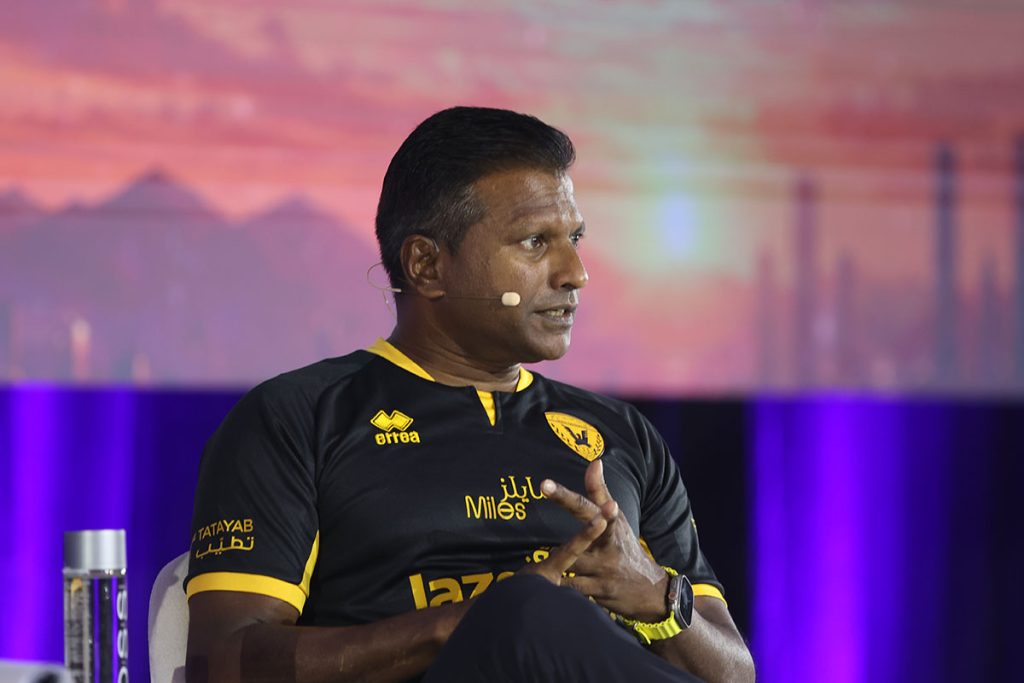
Jazeera Airways’ Bharathan Pasupathi said Jazeera moved its aircraft to Saudi Arabia and ran up to 150 buses, eight times more buses than planes, to carry around 300,000 people across the border.
Having said that, he expects more airline closures and consolidation to come if the situation in the Middle East continues and fuel prices continue to rise.
Klook’s Gnock Fah listed the shocks Asia has thrown at him in the 12 years of Klook’s journey: protests, cross-strait tensions, China-Japan and Japan-Korea spats, a new one every year or two. Diversifying across destinations is how you survive. What did the cycle teach him? “To be Zen.”
Skyscanner’s Batista says travel leaders like him have never led through a period like this one: a global health crisis, economic crises and “technological change unlike any we see in our lifetime”. His answer is “firm plans, held loosely”. The three-year plan you put in a drawer and execute is gone. “You’re setting almost weekly plans right now.”
-
Make new markets, not market share
One thing people don’t realise about AirAsia over its 25-year history, Fernandes said, is that 60% of its routes had never been flown before. It flies to Shantou more than Shanghai, and was the first airline into Bandung. Malaysia Airlines’ and Singapore Airlines’ traffic never went down; AirAsia created new flyers, a whole new market.
Next, he wants to connect secondary cities directly to each other rather than through the main hub of Kuala Lumpur International Airport (KLIA).
He is applying the same logic to the group’s OTA, AirAsia MOVE. “We can’t be another Trip or another Agoda. That ship has sailed.” He left the music business 25 years ago because the labels wouldn’t back Napster, and he sees the AI moment the same way: “Someone’s gonna make a bold move.”
Hotel 101 Global’s CEO Hannah Yulo-Luccini borrowed the low-cost airline playbook too. Southwest, she pointed out, didn’t just eat into the legacy carriers’ market. It ate into the bus market. Similarly, she sees her hotel group creating a new market of hotel guests.
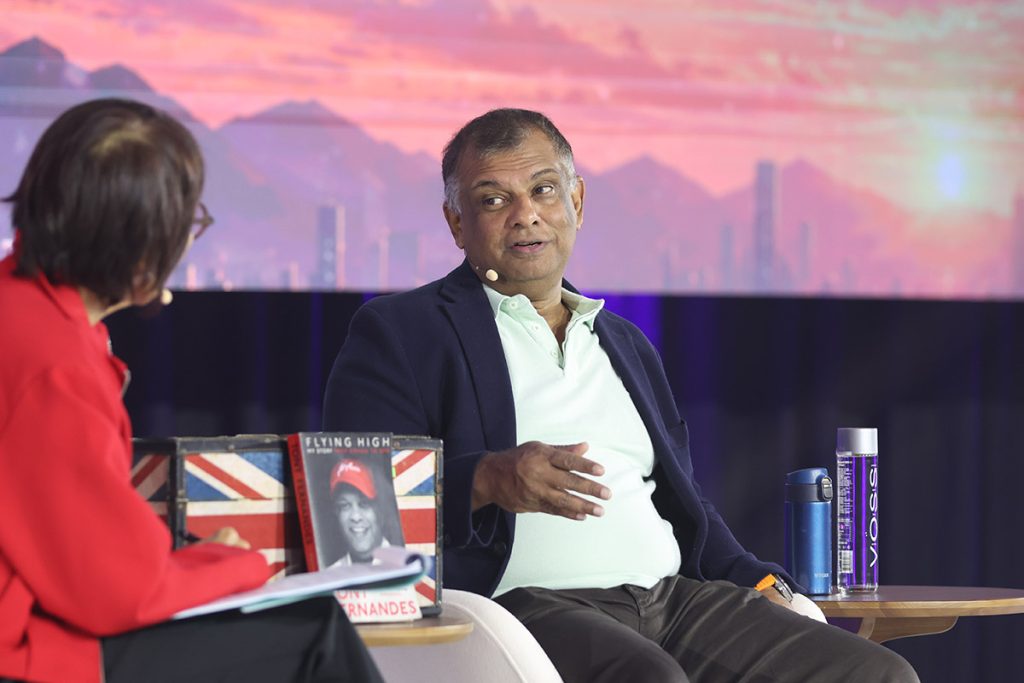
One thing people don’t realise about AirAsia over its 25-year history, Tony Fernandes said, is that 60% of its routes had never been flown before.
-
Secondary destinations need more than a flight
On the destination panel, Rod Cuthbert, a board member of Tourism Tasmania, poured some cold water on the dispersal dream. OTAs, he said, don’t move people anywhere; they come into play once the destination is chosen. For a secondary destination to scale, it needs airport capacity, transport, enough beds and restaurants, “and the locals have got to want it, which is often not the case.”
A once-in-a-lifetime visitor to Japan is not going to swap Kyoto for Kanazawa.
Shifts are possible, though. Tasmania turned its cold winter into a draw with new messaging and winter festivals. And climate change is doing what the industry never would. Europe’s peak summers are “just too damn hot”, pushing travellers to the shoulder seasons. “Climate change has done it for us,” he said.
Think City’s Matt Benson suggested dispersal can start small: stay one day longer. From George Town, Lenggong’s nature sites are two hours away and the 2,000-year-old civilisation of the Bujang Valley is 45 minutes away.
The panel agreed that AI-driven personalisation will make dispersal easier rather than make the honey pots more efficient. Their closing advice to travellers: stay longer, do fewer things, and talk to the locals.
-
Tourism is part of the city, not a separate pillar
Why would a sovereign wealth fund invest in heritage conservation? Not for tourism returns, said Think City’s Matt Benson. “We see tourism as a part of the urban system, not a separate economic pillar.”
His formula: invest in culture and you invest in liveability. Liveability attracts industry and talent; in Penang, heritage complements the electronics industry. Culture also builds trust, and trust drives economic growth: “I trust you, I do business with you.” And people who feel ownership of a place take care of it.
On short-term rentals, his test was practical. Alternative accommodation should “solve a problem, not create a problem”: fill vacancies in a city, yes; disrupt a neighbourhood, no.
Then came the line that sent me back to Malacca. The word “museum”, he said, is about educating and inspiring. “Unfortunately, I see these have become amusement. We need to shift back to learning from a place, its people and its culture, ‘not go in there and have everything run nicely for us’, take a few pictures and leave,” he said.
-
From digital transformation to human transformation
JTB chairperson Eijiro “Eddie” Yamakita said the industry for the past two decades has talked too much about digital transformation and forgotten what humans actually do at the destination. His gift to the industry for WiT’s 21st birthday: a renaissance. “We need to be reborn by maintaining the original essence of tourism, but transform the way of behaviour.”
In Japan, he said, local communities want to welcome visitors. JTB sees its role as connecting the two, and Japan is now raising the bar for DMOs, many of which were set up without the capability to deliver.
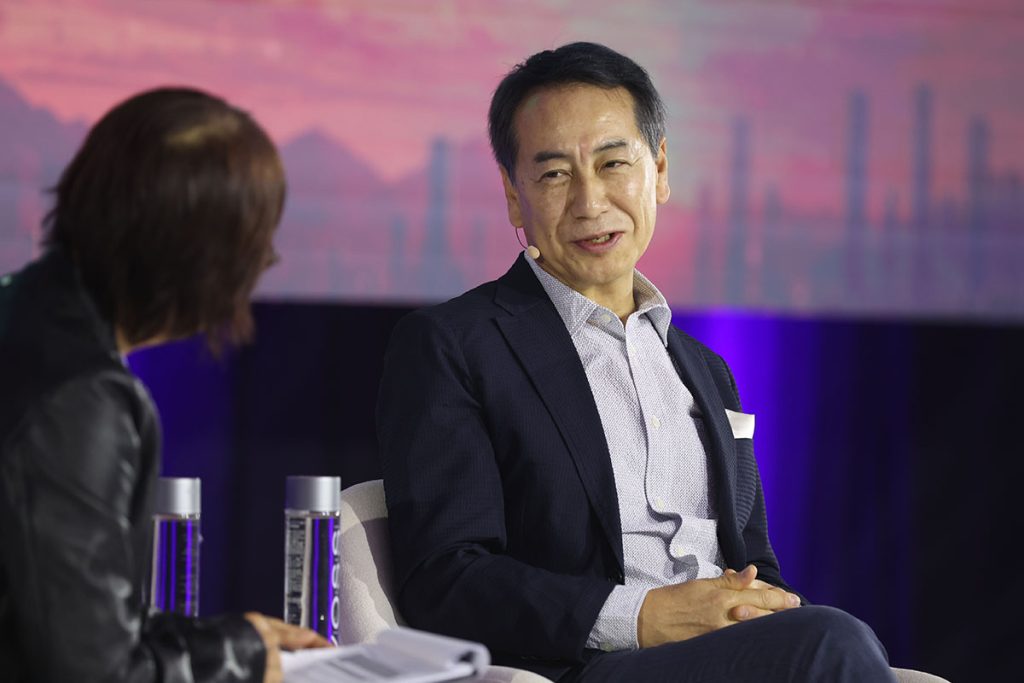
JTB chairperson Eijiro “Eddie” Yamakita said the industry for the past two decades has talked too much about digital transformation and forgotten what humans actually do at the destination.
His bets are human ones. Spirituality and wellness: he did a three-day fast at the Relabo Medical & Wellness Retreat in Aomori, built by Japan Railways and run in partnership with a medical institution, and says it changed his life. Gastronomy: JTB took a stake in a restaurant-led villa outside Fukuoka without expecting a return, because “somebody needs to support gastronomy development”.
Omotenashi, the spirit of Japanese hospitality, he said, is not a process. It is a mindset, and any country can adapt it. JTB’s secret to 114 years? Human capital.
Mews’ founder Richard Valtr named the hotel industry’s most embarrassing teenage habit: “We call it a check-in and not a welcome, we call it a check-out and not a goodbye.”
Hoteliers, he believes, lost their mojo under decades of centralisation that treated them as standard objects. Agentic distribution could give it back, as well as the growing trend in independent, boutique hotels providing experiences beyond the room.
-
Heart and soul, at a profit
Shinta Mani Hotels in Siem Reap began as staff housing and a training school for young Cambodians, in a country where basic hotel skills were scarce after the genocide. Today, founder Sokoun Chanpreda keeps the hotel and the philanthropy separate. The hotel pays 100% of the foundation’s administration costs, so every donated dollar goes to the programmes.
And it never asks guests for money: no “$1 for the poor” on the bill at check-out. The result is more giving, not less. The foundation has raised more than US$2 million over 15 years, and one guest handed over a credit card at reception and gave US$20,000 on the spot. A Saudi developer picked Shinta Mani for a luxury project, Sokoun believes, because of its “philantrophy as a strategy” model.
Co-founder Bill Black described how hotels moved from “build it and they will come” to product, and now to experience. Growth, he said, should be slow and selective.
Kittisak Pattamaseavi, who runs Trisara’s parent Montara Hospitality, put the case for humans in the AI era. “Data and knowledge doesn’t necessarily transfer to change. It takes a human to actually make another human change.”
Deep human connection isn’t scalable by copy and paste, he said, but it is scalable in reputation which is why Montara maintains its “culture as a strategy” model, never mind the changing tech.
Sokoun has a simpler rule: his managers are no longer allowed to use AI to reply to emails. “It’s so inhuman, in the end, it will be your agent replying to my agent. What kind of world is that?”
-
Two roads to scale: the Big Mac and the 17 brands
Philippine brand, Hotel 101 Global runs on fast-food principles: one room type, everywhere. It even has one type of light bulb, from guest rooms to the car park. Its 680-room Madrid hotel directly employs just 30 people, focused on guest touchpoints, and has drawn more than 8,000 reviews rated 9.1 to 9.4 in under six months.
Investors buy individual rooms freehold. Owners get 30% of gross room revenue, pooled and shared equally, so “nobody can argue about revenue.” About 90% of bookings come through OTAs, and CEO Hannah Yulo-Luccini is fine with that: “Our commission to the OTAs is our marketing.” Her model is Uniqlo, whose motto is to completely ignore fashion.
Singapore’s Ascott took the opposite road. Chief commercial officer Tan Bee Leng described its shift from owning 99% of its properties to 1%. Instead of launching new brands for every owner’s vision, Ascott now stretches existing brands across formats: long stay, business, full service and resort.
Its second transformation is AI, starting with an orchestration layer so inventory, reservations, payments and loyalty systems finally talk to each other.
The audience vote split down the middle as to which model would thrive in the new beginning. Tan put the common ground best: whatever the model, hospitality is “the voice for the human”.

Chief commercial officer Tan Bee Leng said instead of launching new brands for every owner’s vision, Ascott now stretches existing brands across formats: long stay, business, full service and resort.
Back on the road
Meanwhile, back in Kuala Selangor, we’re still waiting for the engine to cool, and I have no idea if I am going to hear the waves crashing on the shore that night. I keep thinking about the mechanic’s two questions. Perhaps you pushed it too hard? Where have you come from?
They are good questions for an industry running at AI speed. And they are the questions a good host asks a stranger. An agent didn’t ask them, but a man in a small town did, because he was curious about us.
That, in the end, is what travel is about.