
In the news: Focus on MasterCard-CrescentRating Global Muslim Travel Index, Golfasian Indonesia, and Hotels.com Hotel Price Index
Malaysia and Singapore top destinations in the world for Muslim travel
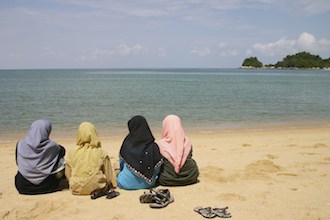
Pangkor Island in Malaysia is a popular destination for Muslim travellers. (Image credit: leopardi/iStock)
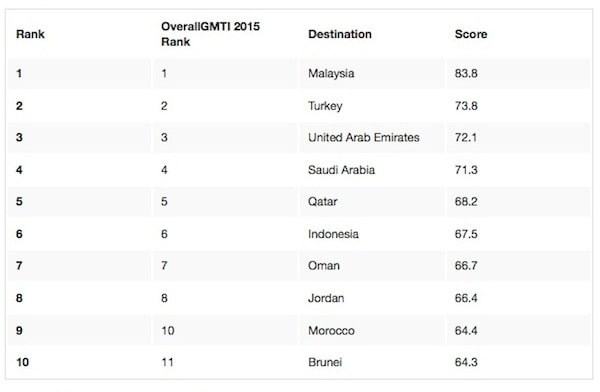
Malaysia is the number one destination across the globe in the Muslim travel market according to the MasterCard-CrescentRating Global Muslim Travel Index (GMTI) 2015, heading the list for the Organisation of Islamic Cooperation (OIC) destinations.
Turkey, UAE, Saudi Arabia and Qatar followed, making the top five in the OIC category.
Singapore leads in the list for non-OIC countries, which also included Thailand, UK, South Africa and France.
The GMTI, considered the most comprehensive research ever released on the Muslim travel market, looks at indepth data covering 100 destinations, creating an overall index based on a number of criteria. It provides travellers, governments, travel services and investors with a number of important criteria to track the health and growth of this travel segment.
The study also revealed that in 2014 this segment was worth US$145 billion with 108 million Muslim travellers representing 10% of the entire travel economy.
This is forecast to grow to 150 million visitors by 2020 and 11% of the market segment, with a market value projected to grow to US$200 billion.
All 100 destinations in the GMTI were scored against a backdrop of criteria, which included suitability as a family holiday destination, the level of services and facilities it provides, accommodation options, marketing initiatives as well as visitor arrivals. Each criterion was then weighted to make up the overall index score.
Malaysia scored an Index score of 83.8, followed by Turkey at 73.8 and UAE at 72.1.
The overall average GMTI score for the complete 100 destinations is at 43.8. From a regional perspective, Asia Pacific destinations lead with an average GMTI score of 54.
Fazal Bahardeen, CEO of CrescentRating & HalalTrip, said the research has provided invaluable insight into how the halal-friendly tourism sector is growing and developing from a global perspective.
“CrescentRating has seen a recent huge shift towards more destinations targeting this sector like Japan and Taiwan, and it is a trend we expect to continue,” he added.
CrescentRating positions itself as the world’s leading authority on halal-friendly travel. The company uses insight, industry intelligence. lifestyle, behaviour and research on the needs of the Muslim traveller to deliver guidance on all aspects of halal-friendly travel to organisations across the globe.
The full report is available here.
The top 10 OIC destinations of GMTI 2015
New golf partnership tees off in Indonesia

Golfasian Indonesia driving golf tourists to the archipelago. (Image credit: floridastockiStock)
Asia World Indonesia, one of Indonesia’s leading DMC, and Golfasian, Southeast Asia’s largest dedicated inbound golf tour operator, have joined forces to form Golfasian Indonesia to drive golf tourists to the archipelago.
Based in Asia World Indonesia’s office in Bali, the new entity aims to increase the number of golf tourists to the archipelago, concentrating initially on inbound golf tourism to Bali, where there are four high-calibre courses.
Currently, Bali’s main inbound golf tourism markets are Australia, New Zealand, Japan and Korea.
Indonesia’s inbound golf tourism market is small, dwarfed by the 700,000 who visit Thailand each year, and is well below numbers visiting Malaysia and Vietnam.
Mark Siegel, Golfasian’s managing director, said there is great potential for growth. “The number and quality of courses in Indonesia, service standards and infrastructure mean there is huge potential to grow the market.
He described the new venture as “a perfect combination”, with Asia World Indonesia’s on-the-ground operational capabilities and Golfasian’s sales and marketing expertise.
“Last year, Golfasian hosted 15,000 foreign golfers in Thailand, Malaysia, Vietnam, Cambodia, Laos and Indonesia. I believe the arrangement with Asia World Indonesia will increase this number substantially,” added Siegel.
Renato Domini, Asia World Indonesia’s managing director, agreed saying that “we know the destination and Golfasian knows golf. This is a perfect combination. Golf in Indonesia is growing rapidly and I’m sure there will be strong demand for golf tours here in the next few years.”
Golfasian Indonesia will host 60 international golf tour operators in Bali after the Asian Golf Tourism Convention, which will be held in Jakarta in late April – the first major golf tourism event in Indonesia.
Rise in global hotel prices in last five years, Singapore rates dips 9%

Five years of steady rise in hotel rates. (Image credit: Artistan/iStock)
The average price paid for a hotel room around the world rose by 3% in 2014 compared to 2013 according to the latest Hotels.com Hotel Price Index
The report stated that overall hotel prices have experienced five years of steady rate rises since they plummeted during the financial collapse of 2008/9. This is due to the overall global economic recovery, and consumers becoming more confident in raising their travel spending.
The global HPI stood at 113 at the end of last year, a 13-point increase since its launch in 2004. While this number was on par with its 2008 level, it remains four points lower than its peak at 117 in 2007.
Out of the six regions covered in the HPI the Index rose in four namely North America, the Caribbean, Europe and the Middle East, as well as Latin America. Asia was the only region to experience a fall, while the Pacific remained stable.
Singapore hotel prices, which have seen a steady decline, dropped by 9% between 2013 and 2014. Last year demand for hotel rooms fell due to geopolitical tensions and a series of aviation incidents.
The continued fall in local hotel rates on the island republic, deemed one of the more expensive cities in Asia, is good news for global travellers as the country becomes an increasingly affordable destination.
Katherine Cole, regional director of Hotels.com, said the popularity of Singapore as a stopover point made it highly susceptible to any changes within the region.
“Demand for hotels here fell last year as travellers sought alternative destinations during the period of Thailand’s martial law, and also as the number of Chinese visitors to the country dropped. However, we expect to see increased demand for travel to Singapore in 2015, especially as the Chinese and Russian travel market continues to boom, and as the city-state gears up for its Golden Jubilee and the Southeast Asian Games this year.”
More than 1.1 billion travellers ventured abroad in 2014, up nearly 5% over the previous year. Tourism is a fiercely competitive and resilient industry with countries vying to attract valuable inbound visitors by improving infrastructure, expanding hospitality and entertainment options, as well as relaxing visa requirements, added Cole.
“We expect Asia to continue riding high on Singaporeans’ travel agenda, especially as traditionally hot destinations like Japan and Thailand regain travellers’ trust.”