.jpg)
Last night, the WIT 2012 journey ended with us raising close to S$35,000 for the Island Foundation of Indonesia. The funds go towards raising English and IT literacy among rural kids in Indonesia’s Riau province.
Our thanks to everyone who contributed prizes – what an amazing assortment of prizes we gathered between Circos Brand Karma and ourselves – and to those who put in their bids.
Most of all, to Martin Symes, our champion debator who not only won the WIT Great Debate again yesterday but outdid himself to increase by almost 50% the amount raised last year for Living Dreams of Japan.
Thanks to Nazar Musa of Escapes Asia LivingSocial who put in the winning bid of S$6,000 and Brand Karma for matching it for the “Unplugged” painting drawn by Gregory Burns, Paralympian and Artist, one of our WIT speakers and who did the painting in less than 24 hours.
At WIT 2012, we heard about how new technology was going to change the way we travel, the way we learn and the way we communicate. Prof Adrian David Cheok said the Internet would disrupt education the way it has travel.
“Universities are dinosaurs. One day, kids will do all their learning virtually and then come together in real life only for group discussions and project work. Thus, live learning has to taken to a higher level.”
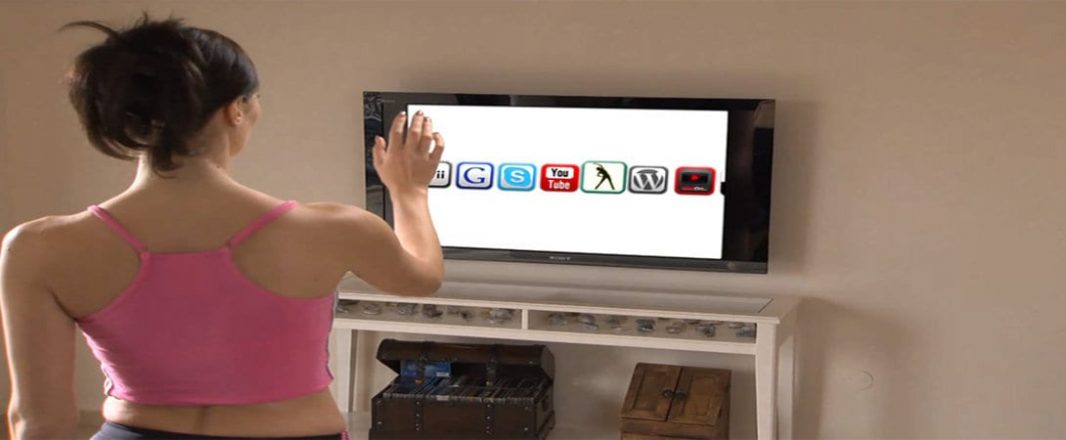
At the closing session yesterday during “The Future of Content: Beyond Words, Even Reality”, he talked about the Internet of the senses where we could one day touch, hug, kiss and smell virtually. “Humans like multi-sensory experiences and the Internet will one day allow us to experience all that,” he said.
We could even one day send “robots” of ourselves out to places while the real us stayed at home because travelling is such a hassle these days, he said.
Because people can one day smell the fragrance of French wines and immerse themselves in virtual worlds – a more multi-dimensional world than we can ever imagine right now – people may not travel as much as before, he reasoned.
His words got me thinking at two levels – one, how we in travel need to become smarter and more creative about how we inspire people (especially the younger generation weaned on the web) to get off their butts and get on a flight and two, how we need to make the real even more real, more extreme, so that people will say, I’d never have experienced this sitting at home.
The first point relates to content and George Mitchell, co-founder of Circos Brand Karma, a self-professed Hollywood junkie said travel could take story-telling lessons from the movie world – to make stories so real that customers become obsessed with characters that they even create Twitter accounts under fictitious handles.
And in fact, he says, travel is uniquely positioned to become even better story-tellers than Hollywood because unlike the movies, everyone who travels is a story-teller. In today’s social age, everyone is sharing stories and images. So how can we harness this mass of user generated content and create a giant storyboard of travel?
With social networks, everyone is capable of creating an image of themselves – everyone is a Mad Men. So how can we in travel facilitate our customers to create images of themselves – create their own storyboard as it were – as they travel with us?
With every traveller carrying a smartphone – a personal story-telling device in their pocket – this becomes possible. At the “Next Gen, New Wave” panel where we featured students in their early 20s, one of them said a dream app would allow her to share at every stage of her trip – plan and share, book and share, arrive and share, experience and share, and return home and share.
Sharing has become as essential to travel as eating, it appears.
At WIT, we also heard how images convert better than text – in China, in particular, people love images – and Melissa Yang, CTO & co-founder of Tujia, a vacation rental site, did an experiment where she put a listing for the same apartment on her site. She put a higher price on the listing with professionally-taken photographs. That one sold better than the one with amateur photographs, despite both having the same price.
Ali Bullock, head of communications of World Wildlife Fund, also said that dogs that are professionally photographed are adopted faster.
Then of course videos inspire and convert better than photos – and hotel groups are only beginning to understand the power of videos in story-telling.
Of course, it depends what sector of online travel you are in. If you’re a website that only want people to book and pay with you, then your content challenges are different from say a tourism board’s – but then you could argue is there any need for a tourism board to have its own website these days?
Prof Cheok’s second point about education – about how kids will do all their learning virtually and then only get together in real life for group work – applies as much to travel as it does to conferences.
Even with current technology, customer expectations as travellers and delegates are already high. Before we get to a hotel, we already know what it looks like, what other people have written about it. Before we get to a destination, we already know about the places we want to see and get a sense of the things we want to do. Similarly, before we get to a conference, we already know the subjects pretty well, we have researched the speakers and communicated with fellow attendees.
Thus when we get there, we expect everything to be as good, if not better, than what we already know.
The theme of our eighth WIT was “Unplugged: Journey With WIT”. What we tried to do was to unplug the Asian story, unplug the different elements of online travel and unplug new voices and blend them with voices of experience and take our customers on a journey of the Asian online travel world.
We also tried to unplug a conference by experimenting and introducing new elements – pacing the programme, mixing it up – different formats, diverse voices – and injecting unexpected elements.
If our experiments worked, it is thanks to our speakers, sponsors and delegates who allowed us to do that. And let’s face it, we would never have been able to raise close to S$30,000 if this had been a virtual auction – being able to smell the wine will never be as good as drinking it for real.
After an intense three days, we walk away with this clear message from all our speakers. We’re on a journey of accelerated change and the only way any of us can survive and remain relevant is to keep executing but faster, seek out new niches and opportunities – whether it’s Indonesia and its booming e-commerce sector or the women’s market, keep experimenting, failing fast and trying again and thinking anew.
Because whether you’re an established brand like Priceline Group, which sells more than 500,000 room nights a day, or a start-up like Japan’s Trippiece, which won our Start-Up Pitch; an OTA or a meta-search; an independent property or a global hotel group; a low cost airline or a traditional network carrier, everyone should be paranoid because anyone can be disrupted and it is those who are prepared to take risks faster and make the bets boldly that will win.
Welcome to Extreme Reality.
• Click here for #WIT2012 storyboard