
Hiding away in my private villa in Bali after our WIT Indonesia conference, I couldn’t help but reflect on how much travel has changed. Everyone who had flown in to Bali for the event was secreted away for the weekend in their own villas of choice, whether booked directly, OTAs or through private home sites like Airbnb and travelmob.
Thanks to the web, powered by the twin forces of social and mobile, tourism in Bali has truly dispersed beyond the big hotels into the community. Travellers are savvy, they know what they want and they know where to find it and book it.
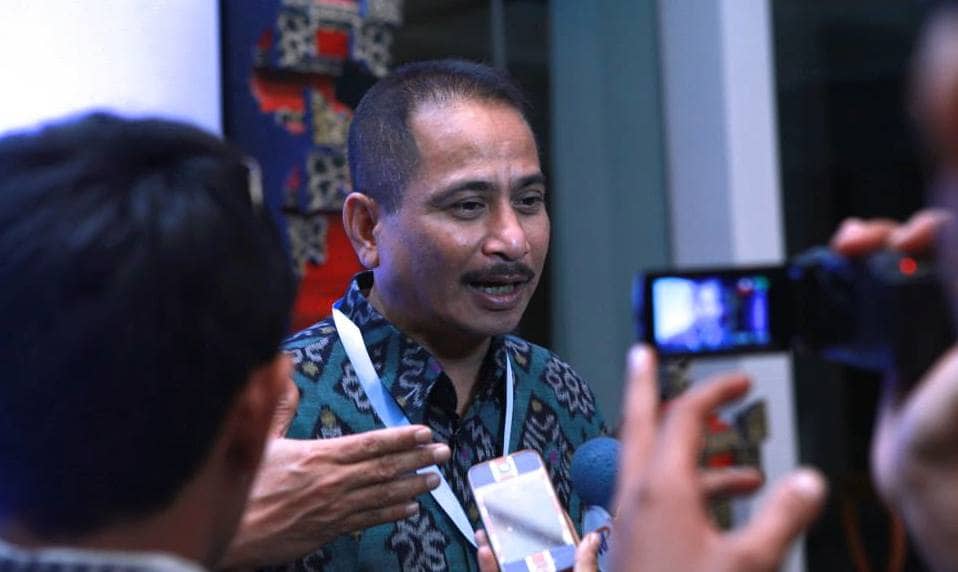
Minister of Tourism, Arief Yahya, speaking to media after the closing of WIT Indonesia
In line with these changing customer trends, the newly-appointed Minister of Tourism, Arief Yahya, who closed the conference, said Indonesia has to go digital too – as such, 50% of its marketing budget of US$77 million over the next four years will be spent online, using media, social influencers, particularly in China, and travel start-ups. Half of the total budget will be spent in ASEAN.
His mission is to make tourism the top economic pillar for the nation in five years – from the current 4% contribution to GDP, he wants that number to grow to 15% by 2019. That means from 9m international tourist arrivals and 250m domestic tourist trips in 2014 to 20m and 275m respectively.
Online travel in Indonesia has also evolved – while you wouldn’t say it is matured yet, it’s certainly evolved a lot in the last year. From three years ago when we launched our first event in Jakarta, when everyone was still rather tentative, I sensed a greater sense of confidence among the leading online travel players. And why not indeed?
They’re sitting in APAC’s third fastest growing economy and it will be APAC’s second fastest growing market by 2016, growing 34% from 2012, to reach US$14.4 billion of travel gross bookings, according to Chetan Kapoor, analyst at Phocuswright. “Online travel is firing on all cylinders,” he said and between 2012 and 2016, online gross bookings will grow by 274%, reaching 18% market share, from the 7% in 2012.
However two thirds of the market belongs to mainly low cost airlines and 60% of supply is associated with longtail, fragmented market. And this explains the intense price competition in the market.
“Nothing’s changed,” said Kohei Nakajima of Pegipegi. “It’s as competitive as ever.” The good news is, it’s growing. “As consumers get satisfied with online, they won’t go back.”
The discussions on stage showed that each had worked out their strengths and niches, were more willing to share and speak up and were executing furiously – all signs of growing maturity and confidence.
Ferry Unardi of Traveloka said “a lot of trends are happening very fast in a short period of time“. It’s “go hard, go fast, go big” approach – rumors of its spending on traffic acquisition have become the stuff of legends – is certainly raising eyebrows in the market and making its competitors uncomfortable but one should see it in a positive light – it’s growing the overall pie. The more people know about online travel as a way to book, the better for everyone.

From left, Chetan Kapoor, Phocuswright, Eric Tjepjep, Ezytravel, Edwin Subowo, GOIndonesia and Hans Tjandra, Panorama GroupTrying to move fast too are the online offshoots of traditional travel powerhouses – Ezytravel (Dwidaya), Panorama and GoIndonesia (KAHA) – whose advantages are deep roots, content and offline distribution (retail outlets).
Trying to move fast too are the online offshoots of traditional travel powerhouses – Ezytravel (Dwidaya), Panorama and GoIndonesia (KAHA) – whose advantages are deep roots, content and offline distribution (retail outlets).
Their disadvantage is that their DNA is travel, not technology, said Hans Tjandra, vice president, e-commerce, Panorama Group, and the challenge is making that transition. “Going online is a different thing, it takes investment in IT, you have to change your model, and thinking.”
Mobile though is the big game changer for everyone. There are more active cellphone accounts – 280 million – than there are Indonesians (257 million). Up to 60% of travel search queries on Google are on mobile. It’s not only mobile first, but mobile only in some segments.
Facebook’s head for Indonesia, Anand Tilak, said that mobile has changed Indonesia. “It’s the first thing they look at when they wake up and the last thing they see before they go to sleep. People are more engaged with mobile than people.”
He said Indonesians were trendsetters in mobile and social. Share of device – at 45% for mobile – is higher than the global average and emerging markets as well. One out of every four minutes on mobile is spent on Facebook. Sharing the stat that 41% of people use Facebook while watching TV with the number higher for mothers, 61%, he said, “Primetime is all the time in Indonesia.”
Well, by the speeches made by the Deputy Minister for Resource Development, Ministry of Tourism, Igde Pitana, at the opening and Minister Arief Yahya at the closing, it would appear that Indonesian tourism has entered primetime as well.
Here’s to wonderful Indonesia as it powers up its tourism industry and digital travel market.