
Corporate travel is no longer just about getting from A to B at the lowest available fare. It is about getting the right traveller to the right place, within policy, at the right level of comfort, with the right approval, data and sustainability target — preferably without making everyone wait 30 minutes for a manager to click “approve”.
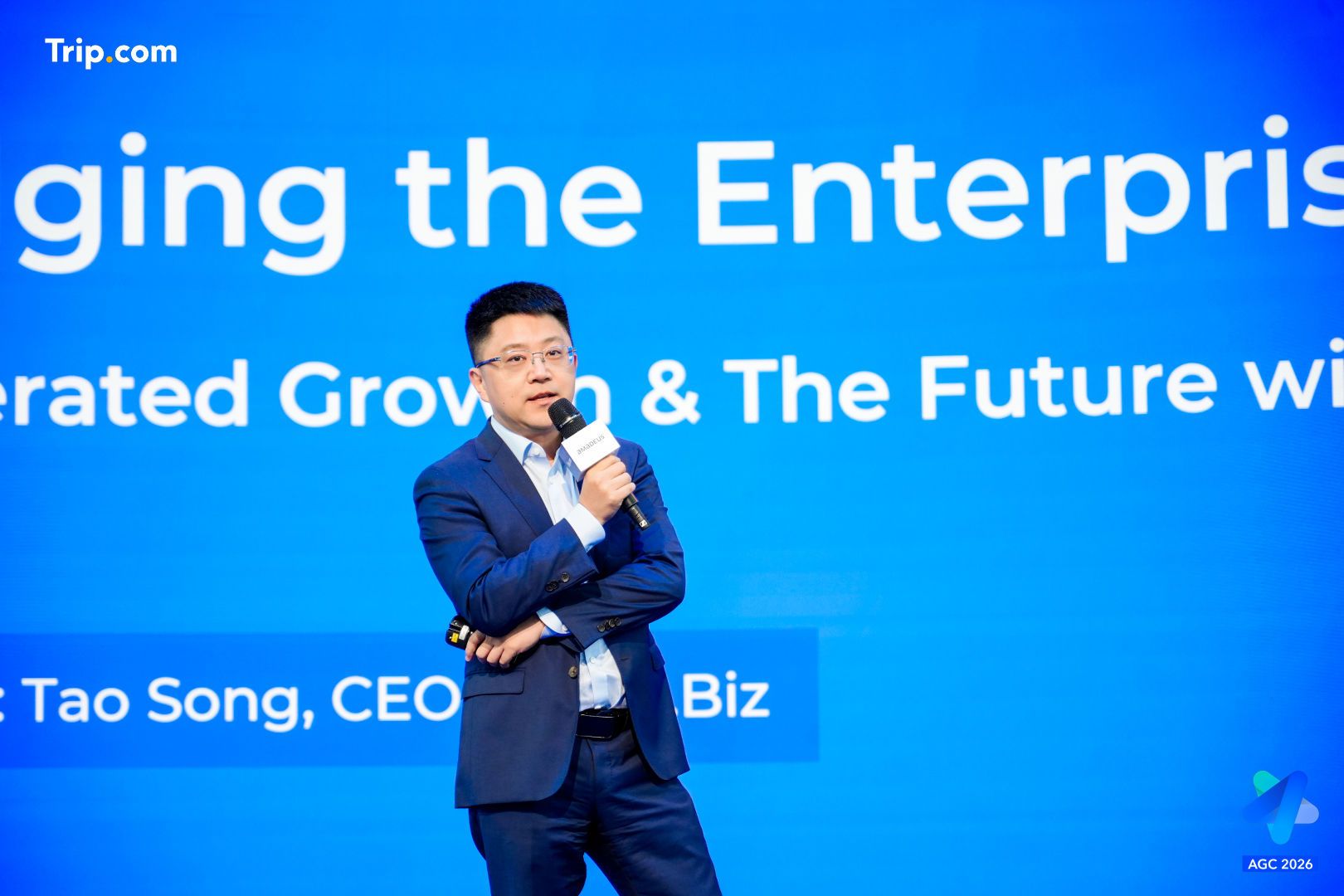
That was the core message from Tao Song, CEO of Trip.Biz, Trip.com Group’s business travel division, who set the tone by reminding the room that Trip.Biz is “not a new TMC from nowhere”.
“It’s a trustworthy partner,” he said, tying the point neatly to the Airline Global Conference’s wider conversation around trust and partnership. “We are talking about trust and partnership today, right?”
And in corporate travel, trust may be the real product — trust in the fare, the policy, the data, the AI, and the service layer that knows what to do when something goes wrong.
A Top TMC Inside A Travel Giant
Tao began by positioning Trip.Biz within the larger Trip.com Group ecosystem. Trip.Biz is “one of the top 3 TMCs” in its context. He also pointed to the consolidation happening in the travel management space, joking that Trip.Biz may move up the rankings depending on “how fast our competitors will just acquire each other.”
The humour landed because the industry is moving. Corporate travel is becoming bigger, more consolidated and more complex. Scale matters, but so does the ability to serve enterprises that are no longer looking at travel as a simple procurement function.
Trip.Biz, Tao said, brings 20 years of experience, has more than one million enterprise clients, and has expanded into Europe through the acquisition of Key Travel, extending its footprint across six markets. Its APAC business, he added, has been growing at more than 100% year-on-year, with overall booking growth “beyond 27%”.
In other words, Trip.Biz is not knocking on the door of business travel. It has entered the room, read the policy, and started working on the workflow.
The Corporate Traveller Wants More Than Cheap
One of Tao’s most useful distinctions was also the simplest: business travel is not leisure travel.
“Cost saving may not be the major factor,” he said, when it comes to enterprise travel management.
According to GBTA industry data, more than 56% of enterprises want to adopt the latest innovations to boost efficiency and productivity, he added.
The data also shows that business travellers are 48% more likely than leisure travellers to choose higher flight classes, including premium economy and business class, where company policy allows. They tend to prefer direct flights and seek a balance between cost and comfort.
Tao, who previously designed OTA engines for Trip.com, explained why this changes the booking logic.
The OTA engine, he said, is built largely around cost saving because leisure travellers often compare direct flights, flights with stops and overall price. But a TMC engine must factor in company policy, traveller preference and historical behaviour.
“If they prefer business class, we will put business class on top. If they always direct flight, then we will put direct flight on top,” he said.
That may sound like a product design choice. It is really a statement about the future of managed travel: personalisation, but within policy; comfort, but with control.
Corporate Travel Is Moving From Volume To Value
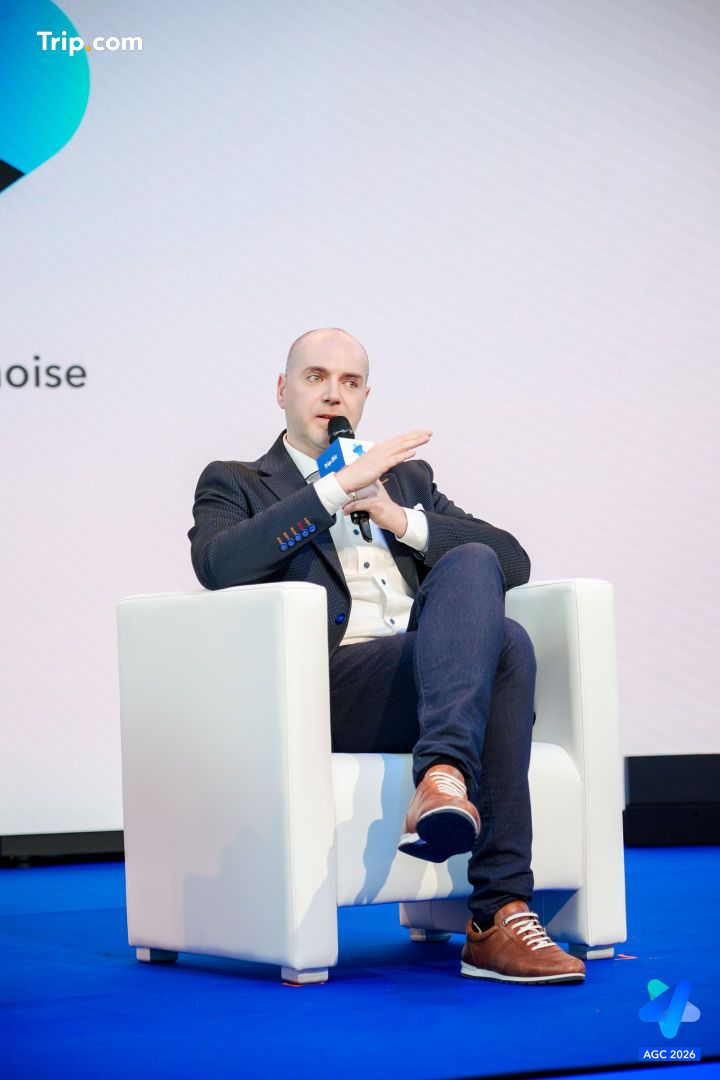
If Tao provided the strategic vision, Tommy Hameleers, Senior Corporate Transportation BD, EMEA & North America, Trip.Biz, Trip.com Group, gave it a useful reality check from the ground.
Tommy described corporate travel as moving from post-pandemic recovery into “strategic intentionality”. In Europe especially, he said, companies are thinking less in terms of trip volume and more in terms of value. Where a traveller may once have taken separate trips to Paris, Madrid and Berlin, those trips may now be combined into one journey.
The number of trips may go down, but total travel spend may rise. Bleisure becomes part of the conversation. Policies need to become more flexible. Duty of care becomes sharper because geopolitics is “not a background concern anymore”. Companies are also more careful about where they hold corporate events, seeking safer or more neutral destinations and avoiding markets with high visa-rejection risks.
Tommy also pointed to Europe’s “rail first movement”, noting that routes such as London–Paris and Amsterdam–Brussels are already heavily used by train, while airlines are partnering with rail operators to cover journeys where a meeting may be an hour’s train ride from the airport.
In short, corporate travel is no longer just about flights, fares and approvals. It is becoming a more complex mobility ecosystem — part productivity tool, part duty-of-care programme, part sustainability exercise, part traveller experience.
Flexible Spending: The Upgrade Without Breaking Policy
One of Trip.Biz’s more practical innovations is flexible spending.
Tao explained it simply. If company policy only allows economy class, but the traveller wants to upgrade to business class, Trip.Biz calculates the difference. The company pays the policy-approved portion, while the traveller pays the extra amount personally.
“Think about if a company only allow economy class, but a traveller want to reward himself with a business class, then how much this traveller need to pay out of his own pocket,” Tao said.
The feature has already seen travellers cover more than US$4 million through flexible spending.

Co-payment was framed as a way to “bridge policy and comfort” while improving average revenue per traveller — a neat summary of the Trip.Biz pitch: more choice for the traveller and more upside for suppliers.
Tommy echoed the same point from a policy perspective, calling co-payment one of the ways Trip.Biz balances traveller comfort with corporate policy. It works for both air and hotel, allowing travellers to cover the difference between what is in-policy and what is out-of-policy.
He also made the case for more dynamic policy compliance. A booking may technically sit slightly outside policy, but if it reduces travel time significantly, lowers total cost, or supports a bleisure element, it may still be the smarter decision. He gave the example of flying back from Hong Kong a day later because the fare was so much cheaper that even with an additional hotel night, the company would still save money.
That is the new corporate travel tension: not policy versus preference, but policy with intelligence.
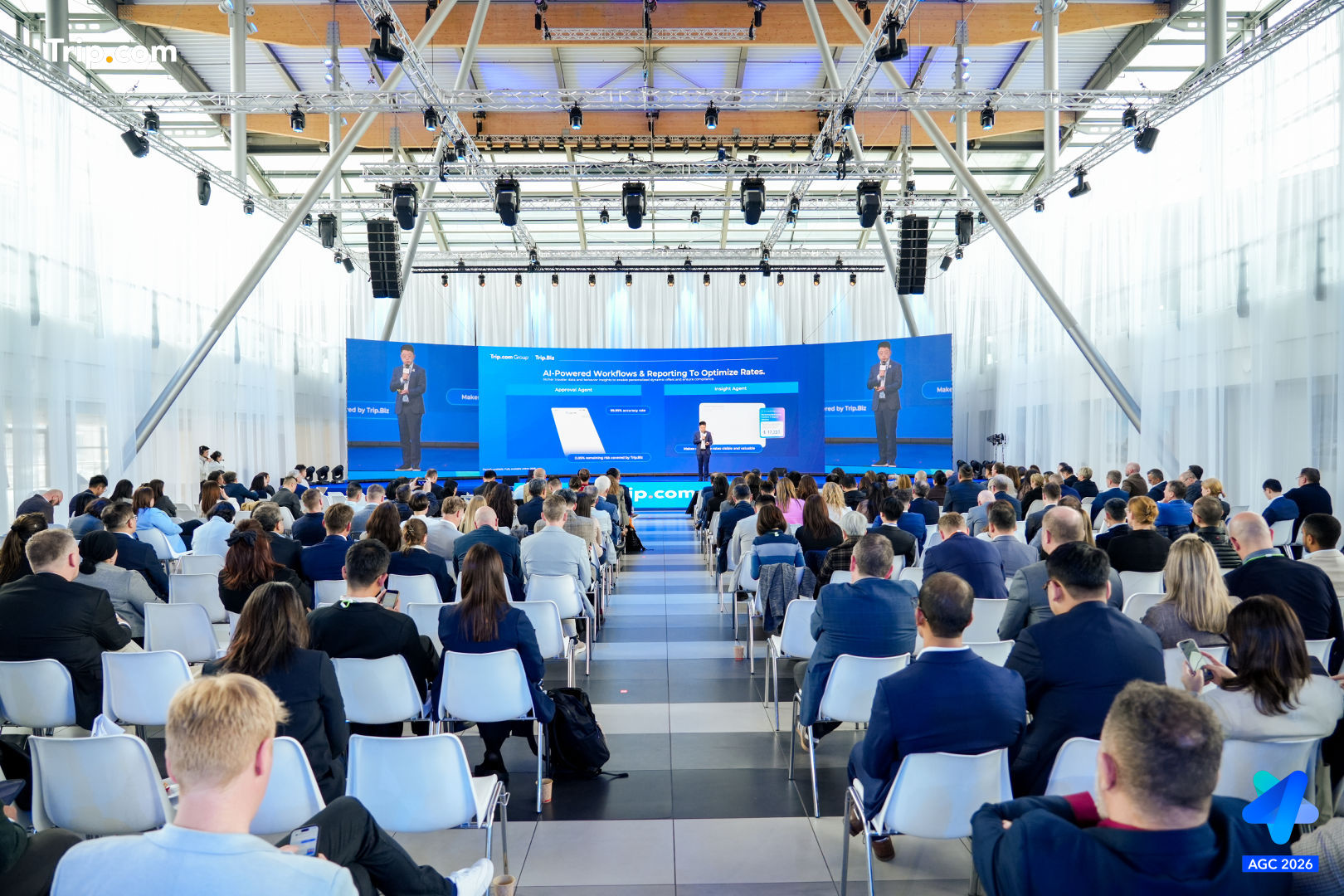
AI Is For Change, Not Replacement
Tao’s AI framing was refreshingly practical.
“AI is in place for change instead of a replacement,” he said.
Trip.Biz is applying AI across the travel workflow — from shopping and booking to travel management, approval, customer service and disruption handling. Its recommendation engine uses data and algorithms to recommend the best choices through chatbot interfaces, MCP interfaces and the Trip.Biz app.

Trip.Biz is developing planning and booking agents that understand business traveller intent — not just the “cheapest” or “fastest” option, but the most valuable flight within the corporate context.
But the bigger vision is workflow integration.
Tao imagined a future where budget management, approval systems, office automation and TMC platforms work quietly in the background. The user may simply create a calendar event, and the AI agent plans the trip, confirms the booking, handles payment and supports reimbursement.
That is the promise: fewer systems visible to the traveller, more intelligence operating behind the scenes.
Tommy, however, added an important reality check. He identified two current gaps in AI implementation: the policy gap and the AI-to-agent handoff.
The policy gap is more human than technical. AI may judge that spending slightly more to reduce travel time is a good decision, but companies may not yet be comfortable allowing AI to approve out-of-policy bookings autonomously.
And then there is the handoff gap. When AI fails to understand the traveller, the transfer to a human agent must be smooth. If the AI cannot summarise the issue correctly, the human agent has to start from scratch — and the traveller has to explain everything again.
Anyone who has ever repeated their booking number three times while slowly losing faith in civilisation will understand this point.
Smart Approval: The 30-Minute Problem
Tao’s favourite AI feature is smart approval, and it is easy to see why.
For companies with approval policies, each request can take more than 30 minutes to be approved. Yet the manager may spend less than three seconds actually reviewing and clicking approval.
“Each every request need to wait over 30 minutes. And how much time the manager will spend to review and approve? Just one click, less than three seconds,” Tao said.
Trip.Biz’s AI agent can automatically approve low-risk requests, with an approval rate of more than 99%. If it makes a mistake, Tao said, Trip.Biz will cover the cost.
That is where AI becomes real. Not as a shiny demo, but as a way to remove waiting time from the corporate travel process.
Tommy supported this vision in a disruption scenario. If a traveller’s flight is cancelled, he said, the system should not merely inform the traveller of the cancellation. In the same moment, it should already be able to say: your flight is cancelled, but we are holding a seat for you on this alternative flight; please confirm whether you are okay to take it. Depending on the cancellation, the traveller could also be offered a train or hotel room.

Tao also cited the 3.3 million cases solved, 87% directly resolved by Trip.Biz, more than 411,000 hours saved per year, and over 90% client satisfaction. In other words, the service layer is not just about answering calls; it is about reducing pressure before it reaches the airline.
That is not AI replacing care. That is AI accelerating care.
Knowing When The Human Should Step In
Trust becomes especially important when travellers are stressed, angry or stranded.
Tommy explained that Trip.Biz uses sentiment analysis to understand when AI should stop talking and a human should step in. The system can analyse tone of voice, volume, choice of words, exclamation marks, capitalisation and the traveller’s situation — whether they are travelling now, tomorrow or next week.
From there, the system can prioritise the case and decide whether to transfer it to an agent. AI summarisation then allows the human agent to take over with context, without forcing the traveller to repeat everything.
This is an important distinction. The future of corporate travel is not “AI everywhere”. It is AI where useful, human where necessary.
Or put another way: the clever system knows when to step aside.
Where Sustainability Meets The Booking Tool
Sustainability is another area where Trip.Biz is trying to move from rhetoric to operating system.
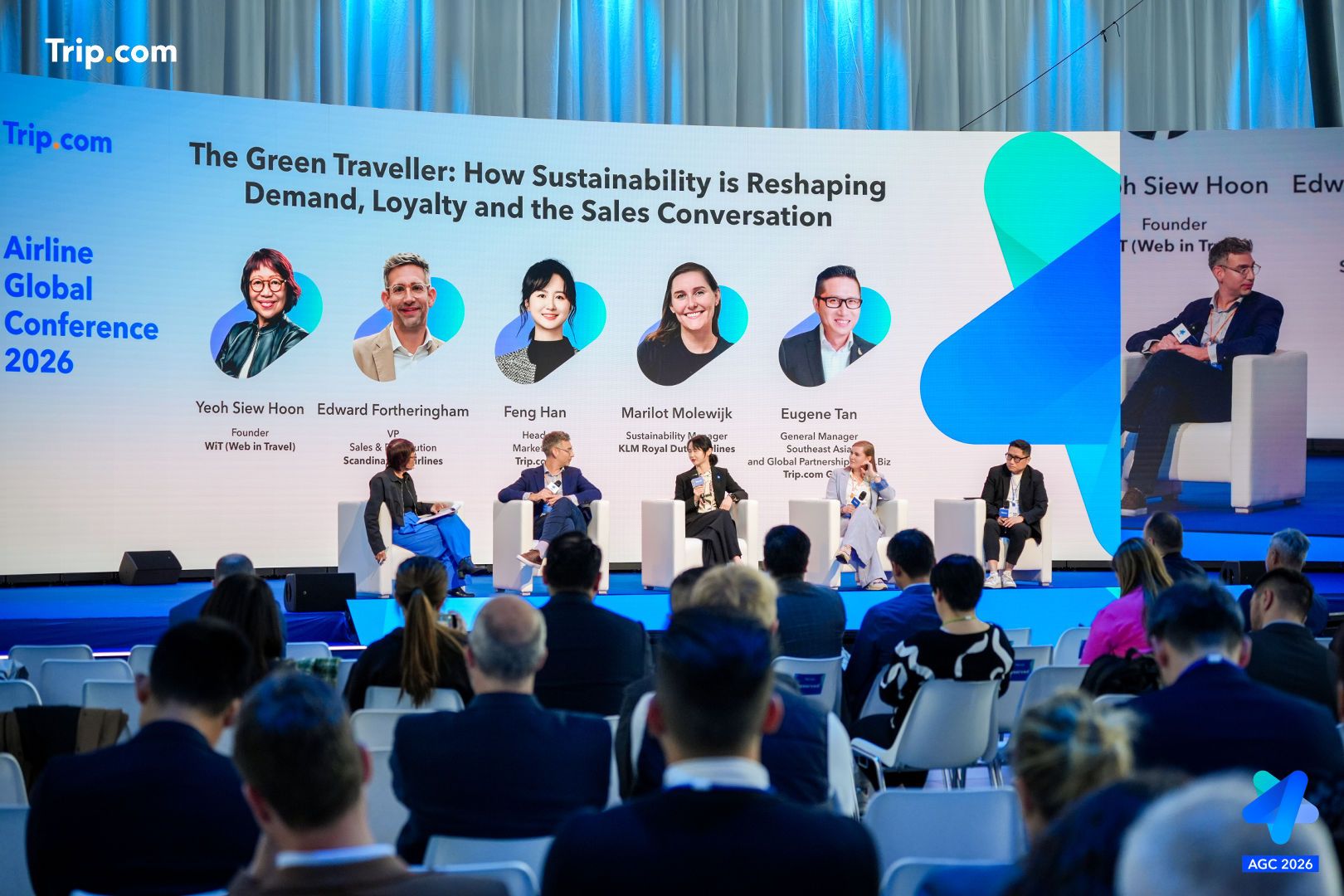
Tao spoke about Trip.Biz’s carbon budget feature, where companies can manage two budgets for business travel: a financial budget and a carbon budget. He also noted that 54% of companies have already included sustainability considerations in their travel policies, making carbon less of an ESG side note and more of a managed-travel rule.

This was expanded by Eugene Tan, General Manager of Southeast Asia and Global Partnerships, Trip.Biz, Trip.com Group, who explained that when Trip.Biz deploys a corporate booking tool, it can set a company’s carbon-emission budget at a granular level — even by traveller. When employees select flights or hotels, they can see their target for the year.
Eugene also pointed to a demographic shift. As millennials and Gen Z enter the workforce, business travellers are becoming more aligned with corporate sustainability strategies. Based on Trip.Biz data, he said these travellers are more likely to choose greener options compared with those who focus mainly on business priorities.
But he was careful not to reduce sustainability to a booking button. Trip.Biz works with travel teams and HR departments to connect travel behaviour with broader ESG initiatives. If employees participate in activities such as cleaning mangroves or picking up rubbish on beaches, they begin to feel the impact more personally. That, Eugene said, can trigger a change in how they behave when booking business travel.
His point was in the discussion: sustainability should not be “a niche activity or a transactional activity”. It should become part of how people think and act.
The Data Trust Problem
Sustainability also brings another corporate travel challenge: data credibility.
Eugene acknowledged that carbon-emission calculations vary because there are many different methodologies. Trip.Biz uses the Travel Impact Model, but a corporate client may use a different methodology.
To manage this, Trip.Biz works with corporate sustainability teams to map different variables. As a tech company, Eugene said, Trip.Biz uses API integrations and monitors the data end-to-end — from displaying the choice, to tracking, reporting and potentially supporting offset programmes.
That matters because corporate clients do not just want green claims. They want data they can trust, report and defend.
Eugene also made a practical point about Sustainable Aviation Fuel, or SAF. Some corporates may not subscribe to SAF because it is expensive. He estimated that SAF can cost about US$500 per tonne of CO2 emissions, compared with other offset programmes that may cost around US$50 to US$100, making it about five times more expensive.
His suggestion was to make sustainability feel more real and local. If Trip.Biz manages an APAC travel programme, it may encourage clients to complement SAF with offset programmes within the APAC region, so employees and management can see the relevance more clearly.
Sustainability cannot just be imported as a global corporate slide. It has to be local enough to feel real.
Not A Checkbox In The RFP
Eugene’s strongest line came near the end of the sustainability discussion.
“We cannot treat sustainability as an afterthought,” he said. “It cannot be an afterthought from a TMC perspective. It cannot be just the sales wanting to tick the checkbox in the Request for Proposal because I have a sustainability strategy.”
He added that corporates increasingly choose TMCs that share the same philosophy and DNA. Sustainability, therefore, is not just about offering a solution. It has to be something the organisation itself embraces.
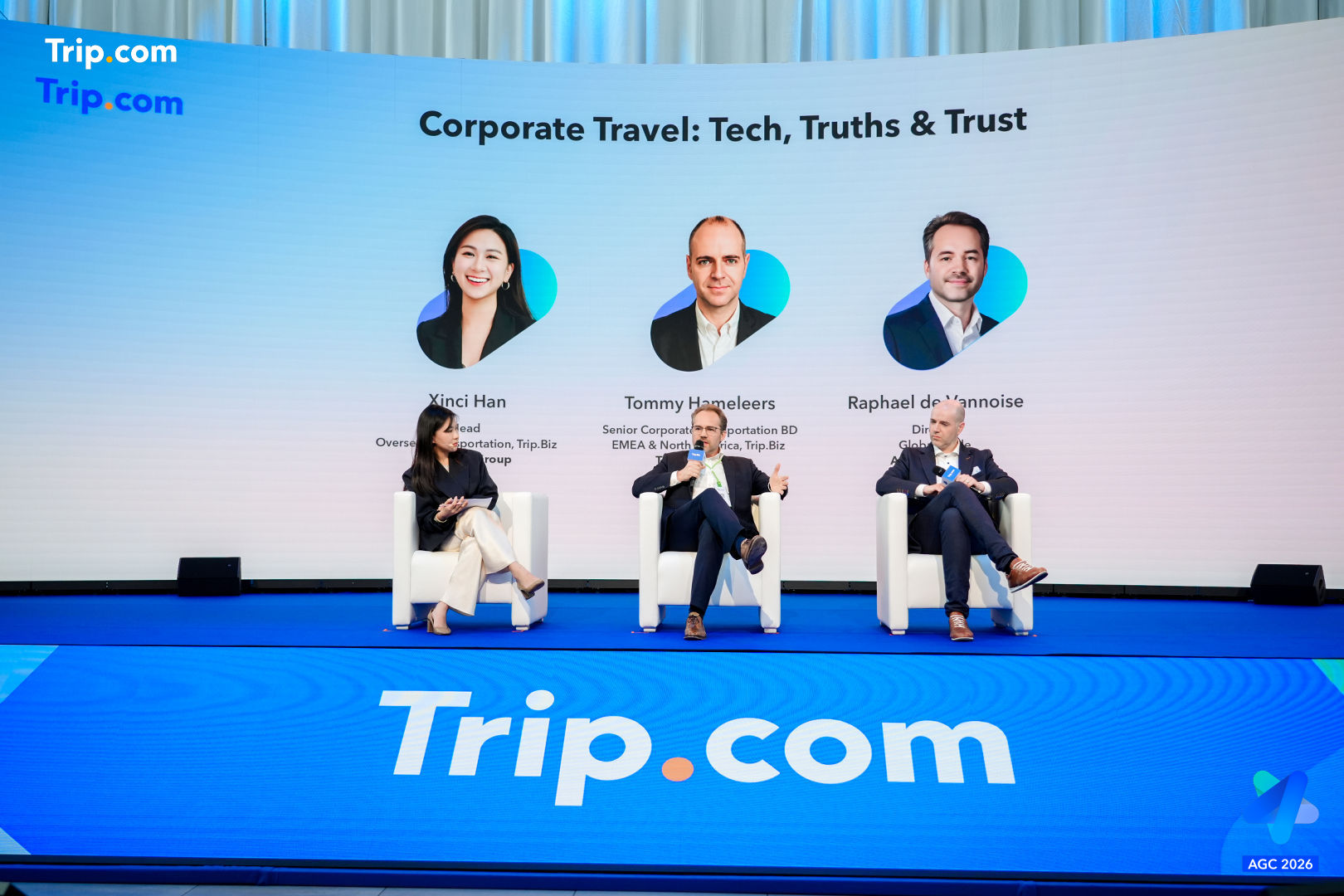
Airlines And TMCs Need To Act As One
Tommy also offered a vision of what a strong airline-TMC partnership should look like.
In his ideal world, TMCs and airlines would have an integrated data-sharing ecosystem that talks to each other and acts as a single unit, especially during disruptions. If a flight is cancelled, the TMC should know immediately and be able to hold a seat on the next flight.
But he said it should work both ways. The TMC should also share relevant policy information with the airline, so the airline can bundle fares according to what the traveller is allowed to buy — whether that includes extra legroom, lounge access, priority seating or Wi-Fi.
This is where the corporate travel conversation becomes less about distribution and more about orchestration.
The future is not just airlines selling and TMCs booking. It is airlines, TMCs, corporates and travellers operating through a more connected data layer.
If done well, Tommy said, it becomes a “win, win, win” for the client, the airline and the TMC.
When Change Is Slow, The Friction Matters More
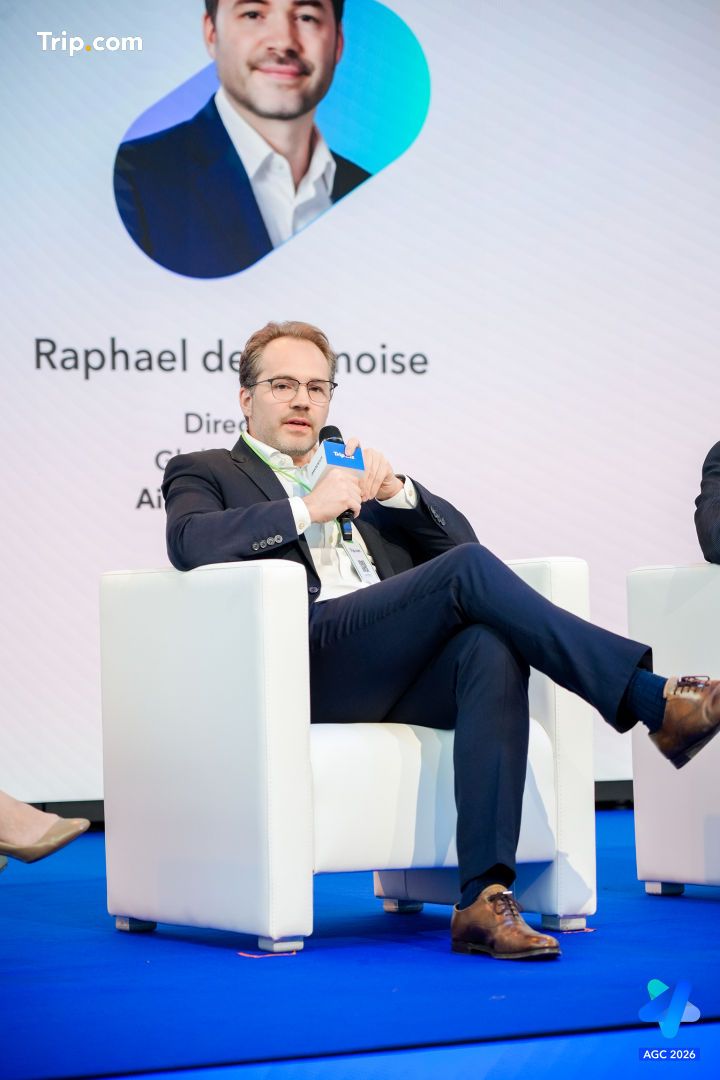
Raphael from Air France-KLM offered a useful reminder: corporate travel does not move at consumer speed. Global corporates, he said, rarely change TMCs — “less than 2, 3% per year maximum” — because travel programmes are deeply embedded in tender processes, long-standing relationships, online booking tools and internal workflows.
That makes the Trip.Biz proposition more interesting. If companies are not changing systems easily, then the question becomes: which parts of the existing journey can be made smarter first?
Song’s examples point to some of those pressure points: approvals that take more than 30 minutes when the manager only needs three seconds to decide; travellers who want more comfort without breaking policy; companies trying to manage both financial budgets and carbon budgets; and disruption moments where speed, care and trust matter most.
Tommy added the operational reality: AI can help, but only if it works with real-time inventory, policy rules and a clean handoff to human agents when needed. Eugene added the sustainability layer: better tools are not enough unless the data is credible and the behaviour change feels real.
So perhaps the real test is not whether corporate travel can change overnight. It is whether platforms like Trip.Biz can make each layer of the journey less painful, less manual and more trusted — until the case for change becomes easier to see.
The New Corporate Travel Promise
Business travel is not simply coming back. It is being rebuilt around productivity, policy, comfort, duty of care, data, carbon and AI-enabled service.
Song summed up Trip.Biz’s ambition clearly: “We know better about business travel and we want to use AI technology to make it even better.”
That may be the real corporate travel test in the age of intelligence, trust and partnership.
Not who has the flashiest AI demo.
But who can make the traveller move, the manager approve, the airline respond, the company comply, the carbon data make sense — and make the whole trip feel less like another process to endure.