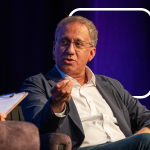

Oliver Hua: Travel still at Day 1.
Last year, Oliver Hua who had just joined Booking.com from Ebay as managing director for APAC said travel was just at Day 1 of the Internet and ecommerce. And as far as he is concerned, it’s still at Day 1.
“There are so many opportunities still for Booking,” he said at WIT Indonesia. While the brand’s been around in Europe for 15 years, it’s really only seven years old in Asia and it was just in the last two to three years that it started focusing in earnest on the region, he said. “There is still a lot more we need to do to build the brand and grow our business.”
But there is definitely no escaping the fact that Booking.com has been stepping up its activities in the region, hiring more key staff and opening more offices.
Expedia Asia is also ramping up in the region. Its increased stake to 75% in the Expedia-AirAsia joint venture, taking it to 75%, puts it in the driving seat and there has been a reorganisation which will see more resources committed to the region.
“My colleagues now think I have the coolest job in the world,” said Kathleen Tan, CEO of Expedia Asia. “For Expedia, technology is key, localisation is important. In the past, development would be US first, then Europe and Asia third. Things are changing.”
It’s hard to ignore these two global brands and what they are doing in the region. According to Phocuswright, in the last two years, Expedia and Priceline (which owns Booking.com) gained nine points of global market share and chief analyst Lorraine Sileo said that “assuming Expedia swallows all of TVLY and Orbitz customers (latter deal expected to close by late summer/fall), these two OTAs will own roughly 60% of the global OTA market in 2015.”

However to put things into perspective, the percent of travel actually booked by OTAs (using GOTO figures) is still small – up to 15% in the US (and 17% in UK), OTAs represent just about 10% in most other markets, said Sileo.
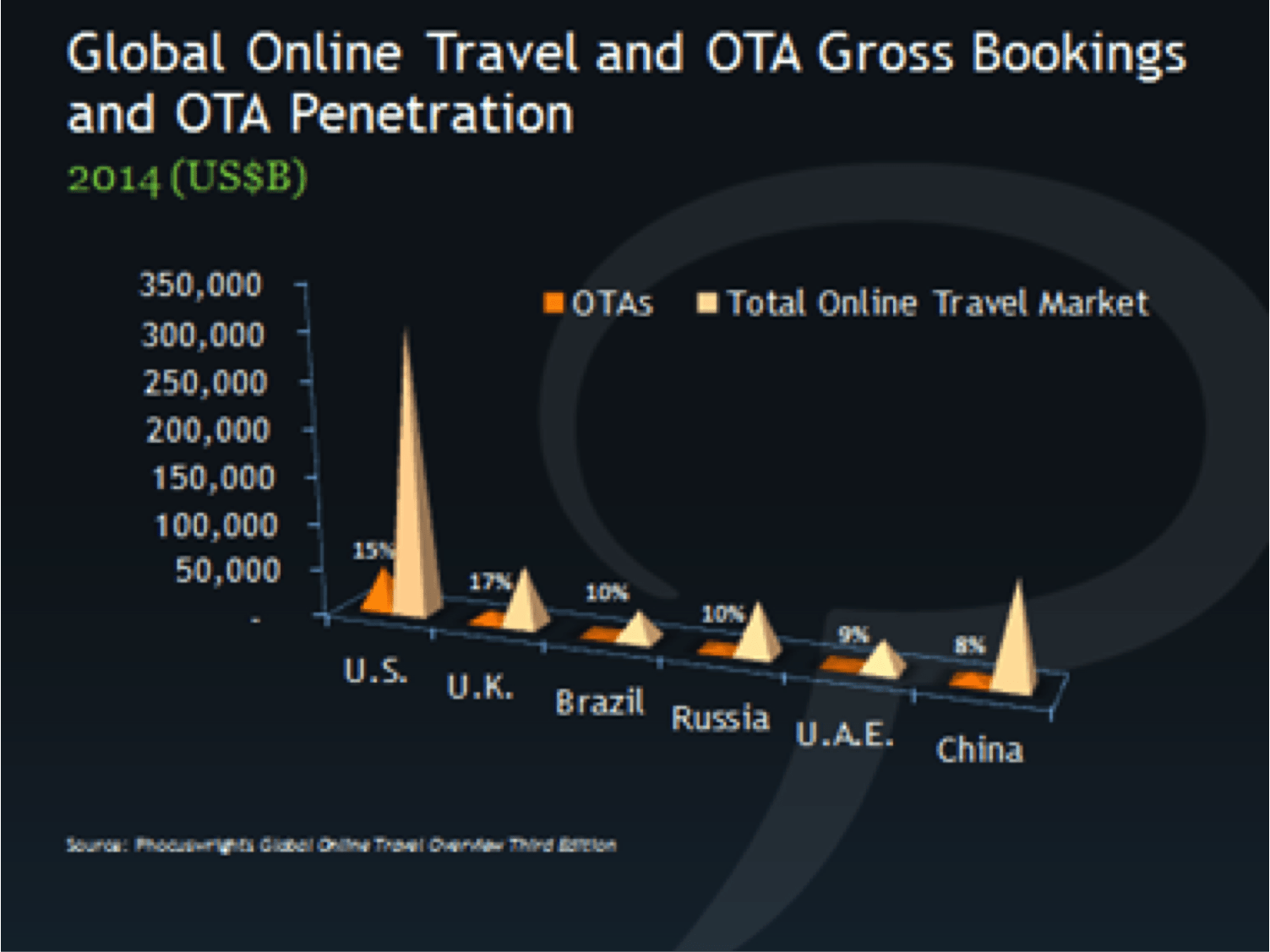
Which implies plenty of room still to grow for both Priceline and Expedia.
Mobile is a big thrust for both. Hua said the figure quoted by Priceline Group CEO Darren Huston in March that Booking.com had 100,000 transactions on mobile a day had doubled by now.
Its Booking Now app for bookings within 48 hours was seeing great traction. “From the start, it was designed to be simple – two swipes and that’s it,” said Hua.
He dismissed the notion that this app was aimed at eliminating the last minute booking apps, saying it was meant to simplify choice for the Booking.com customer.
Expedia has also been furiously developing mobile products and features. Said Tan, “We have 4,000 engineers worldwide working on mobile.”
New features allow customers the ability to give instant reviews through their smartphones to airlines and hotels, giving suppliers the opportunity to either do service recovery or to delight key customers.

Kathleen Tan: “My colleagues think I have the coolest job in the world.”
“We’re helping our partners get closer to their customer. Hotels can now know what their customers are saying about them instantly,” said Tan. “We are hiring 250 additional people to secure relevant hotel content for our Asian customers. We are working developing products for the Apple Watch.
“If you’re a hotelier, it’s hard for you to keep up with technology but working with technology companies like us, you can reach new customers on a global scale.”
Both have also been active in the B2B space. Following its acquisition of Buteeq and Hotel Ninja, Booking has launched Booking Suite, a one-stop solution for hoteliers who struggle with building scalable and bookable websites. The company is offering to build free websites for hoteliers in return for 10% commission on bookings.
Asked why hoteliers would accept it when they’re already complaining about being at the mercy of OTAs, Hua said, “This is not aimed at the big chains but at the independently-own and run properties. Hoteliers have always paid the middlemen. We can bring our experience to increase business for them.”
Expedia meanwhile is rolling out its tours & activities platform in Asia, the first market being Singapore. Its Expedia Affiliate Network and TAP (Travel Agency Programme) are both aimed at helping traditional agents go online with content and technology.
Both Tan and Hua said the overall objective for everyone should be to increase the overall market – to get more people to travel, whether it’s through online or offline means.
One thing OTAs such as Booking.com can influence is getting hotel partners to make wifi more accessible to customers, said Hua. “Wifi is the number one reason why people choose a hotel and if we make it easier for customers to get online, we can work together and expand the addressable market.”
That way, travel may get to Day 2 of the Internet and ecommerce.