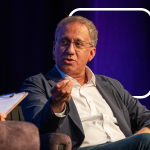
At the WIT Conference last year in Singapore, we recognised 11 individuals whom we felt have had the most influence on the development of online travel in Asia Pacific. This is the second article in a series of interviews profiling our WIT Warriors.
Rob Rosenstein’s love affair with the web started in the 90s when he was working at Dow Jones, recognising its power to change everything. Then he stumbled on the opportunity to invest in a travel start-up in Asia and the rest is history. He remains at the helm of Agoda, Asia’s largest hotel booking site, and has seen it through acquisition, integration and expansion.
 Q: Tell us your first memory of the Internet and what your thinking was at the time.
I first came across an early version of the internet in 1989 working at General Dynamics Space Systems, which made the Atlas space vehicle and other space related technologies. The internet was being used to connect space scientists and to share data, scientific and military. To be honest, at the time, it didn’t really strike me as anything different from a remote database that technologists were using and I wasn’t that technical.
A few years later in 1993, I was working at Dow Jones setting up video/audio on-demand systems for businesses. It was painful in that every time we upgraded the system, someone needed to visit all the clients and reinstall the software. We started to investigate client/server technologies to solve this problem and in our research, we started to focus on TCP/IP, then SGML which was the precursor language to the Internet language HTML.
We were immediately transfixed and looped in via online discussion boards with other people talking about the Internet around the world. Using UNIX command shell, we were transported into a world that connected universities, publishers, techies, and innovators. It was tricky to get connected, but once you were in, wow. That year, we got a function version of the Lynx UNIX-based text browser, and then the first release of Mosaic, the first graphical browser.
By the end of 1993, I was hooked. We moved all our tech to base it on the internet, and I couldn’t stop reading, thinking about how powerful it all was. Over the next few years, HTML+ came out and then tables which allowed us to build some really cool websites.
I got funding from Dow Jones to buy the world’s most powerful web servers, which we used to put up some websites, with audio and video. We were way too early, but it was very cool. Some people thought we were nuts, and it was all just a gimmick. A few people started believing.
And then it really started to take off in 1996. It wasn’t long before I left and started my own little firm, building websites and consulting companies on how to seek commercial opportunities on the net.
Q: Do you recall your first email? Who was it to?
It was probably in 1993 within my working group, testing out Delphi or Compuserve.
Q: What was the first thing you bought online?
A subscription to Delphi or Compuserve.
Q: What was the first thing you sold online?
We sold subscriptions to our audio service online in 1995 at Dow Jones. We didn’t handle payments though.
Q: How did you venture into online travel as an industry? What motivated you?
I loved travel and was already deep in the internet space, so when the opportunity came up to invest in a start-up in Asia, it was perfect.
Q: What was behind the thinking of the company you founded?
We knew that online travel was big in the USA and we saw the growing potential in Asian economies and e-commerce. So, we wanted to service that growing market and the hotel segment was the easiest place to do that.
Q: How did the name come about?
We wanted something that sounded Asian, and we liked the idea of having GO in the middle of our name. We really just stumbled across the name, researched it and we all liked it.
Q: What were the earlier challenges you faced and how did you overcome them? 
• Killing off our earlier brand which catered to Westerners travelling into Asia and starting over was our first and toughest challenge. It took planning and a wiliness to go backwards for a while.
• We used to buy all our inventory from 3rd party wholesalers which gave us great rates and margins. We decided we wanted to work with hotels directly to create a better customer experience and to offer more value to our hotel partners. That was painful for a while. It took determination and a tolerance for investment.
• It was hard to adjust to life inside a public company. Even though we were granted complete independence, public companies require a heightened commitment to reporting, accounting, compliance, security and communication that requires you to rethink people, processes. This took a lot of time and was painful, but we were able to adapt while retaining our culture. And ultimately, it made us a better company.
Q: What was the first major milestone/success achieved? How did you celebrate?
A few years back, our first billion dollars of annual bookings was a big milestone and we definitely celebrated and paid the price the next day.
Q: What’s been the biggest change in the online travel world in the last decade?
In the last 10 years, three things, one, the success of giant global players from the West (Expedia & B.com), the shift to mobile (all industries), and the flood of investment capital into the travel space, especially in China.
Q: What do you foresee will be the biggest change to come in the next decade?
There’s just so much competition in this space and a flood of newly funded companies competition sometimes desperately for market share. The biggest players in the world have at least announced a commitment to the space, Google, Priceline Group, TripAdvisor, Apple, Amazon, Alibaba, Expedia. Only a few companies are going to be able to rise to these competitive challenges, so I see a big shakeout in the coming years, especially for the smaller players and weaker domestics.
Q: Do you think online travel is a force for good? How does it make travel better? How does it make the world better?
Absolutely. We’ve always believed that the more people that travel and experience new places, cultures creates a more tolerant world with more sharing of ideas and best practices. The downside has always been the impact on the environment and uncontrolled development. The smart countries are already on top of this.
Q: Businesses are built by teams. Every team has a rock star and a steward. If you are the rock star, who’s your steward, the one who’s often behind the scenes making things happen?
There are literally thousands of rock-stars at Agoda. It’s a team that spans 25 countries and we are very selective. We also focus a lot these days on development and making better leaders internally.
Q: If you could give an award, what award would it be and to whom would you give it?
There are people who’ve worked with me for 10 years now. That’s an eternity in the internet space and they bring a unique perspective, and resilience through ups and downs which makes great companies. We do give out long service awards.
Q: Who were your earliest influencers?
My great-grandfather Branch Rickey, who I never met, has always been a role model. He was a very successful baseball executive who was known for finding great players and organising them effectively. He was highly competitive, innovative, and engaged, but always held himself to a high ethical standard. That example has always been a big influence on me.
Q: Who are your current influencers?
These days I’m largely influenced by my own team at Agoda. There are few times where they don’t force me to re-think things or present compelling counter-arguments or alternatives. Most decisions (and all the good ones) are consensus and evolve through this process.
Q: One thing you feel you have influenced in the business
I believe I’ve created a very high standard for the people we hire and focused on getting the most out of these people. That’s always been the key to success for us and for myself.
Q: Who and what do you wish to influence in the next five years?
I really enjoy working with the up and coming execs, especially the product owners at Agoda and even with some of the other execs at brands inside Priceline Group. It is amazing how relevant some of the technologies and learnings are for other businesses, even outside our core space. And we all benefit from sharing ideas and best practices.