Immersive marketing is now a thing. I first heard of it when HBO employed the hottest tech gadget – Oculus Rift – at SXSW last year to market the popular TV show, Game of Thrones.
Don a pair of virtual reality (VR) goggles and conference-goers could get a taste of life as a member of the Night’s Watch, replete with air vents blasting arctic winds and vibrating floors.
Long the domain of hardcore gamers, VR goggles are now entering the mainstream as a marketing tool.
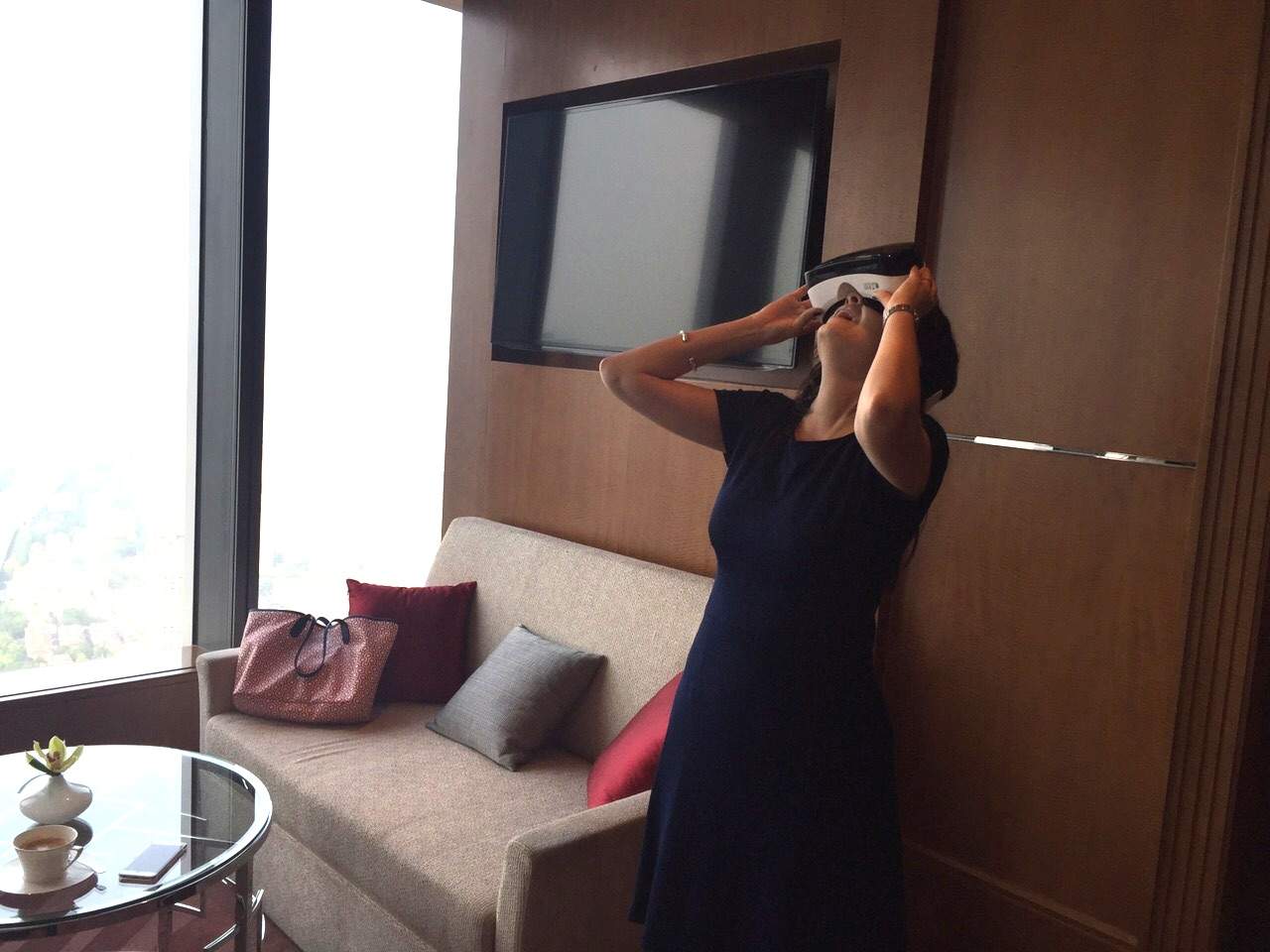
Virtual reality: The new frontier in travel and experiential marketing.
Today I had the opportunity to don a pair of Samsung VR goggles, courtesy of Morris Sim, CEO and co-founder of Brand Karma based in Taiwan. Sim is in Shanghai as a guest of Shangri-La Jing An, an early adopter of this technology across a number of its properties including Shangri-La Lhasa and Shangri-La Ulaanbataar, and he is demonstrating the technology at ILTM (International Luxury Travel Mart) in Shanghai.
VR goggles look remarkably similar to ski goggles, and while it may yet take a while before this type of wearable technology becomes commonplace, Samsung VR goggles are a detachable device attached to a far more ubiquitous item – the mobile phone, where VR content is stored and accessed.
This is the next digital frontier, something Sim refers to as new new technology.
What’s unique about Sim’s offering is that his firm helps operators and buyers alike craft a story that can, literally, unfold before your eyes. With VR goggles, you are transported to a different place and involved in the story in a way that no other form of media can offer. Throw creative storytellers into the mix and you get a thoroughly engaging experience.
“Lots of people can take really great photos on their phones now, but this technology helps you tell a really great story,”Sim agreed. With the advent of the Millennial traveller, Sim admits that the travel industry can no longer offer “boring”content like slideshows and images, as the new generation of savvy consumer expects content that is both unique and immersive.
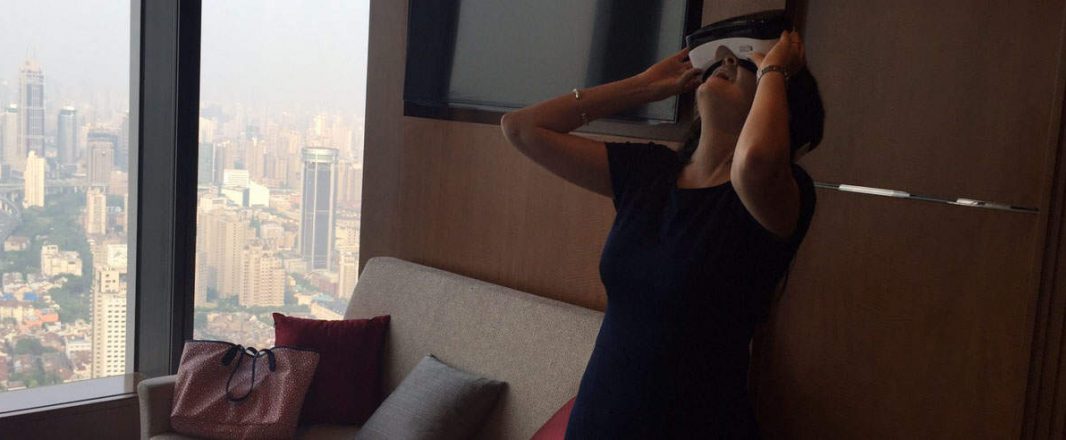
I can vouch for this – with the headgear on and viewing one of Sim’s more personal VR stories, I found myself reaching out into thin air, stepping back from a cliff in alarm and smiling at a Mongolian child.
And all of this happened while I was twirling in the middle of a business lounge in Shanghai.
This is the new frontier in travel and experiential marketing. As Sim says, “For people who are already used to an immersive [digital] experience, why would they expect anything less when they are making their travel choices?”