
Some people eat to live. Some people live to eat. All startups though live and die by solving the pain points they’ve chosen to tackle.
Which was how I kicked off the panel, “Local Grit, Global Impact: Kiwi Innovation in Travel & Hospitality Tech” at WiT Queenstown. I asked the question – what problem do you exist to solve – of Irik Anderson of Chomp, Richard McLeod of Loaded, Simona Turin of Planit and Erik Bradshaw of Ibis Technology who, between them, have more of 60 years of building travel tech out of New Zealand.
Anderson said Chomp exists because “food safety is a pain in the arse – why make it hard if we can make it easy?”
McLeod’s Loaded grew out of running his own hospitality group and watching beautiful bars and restaurants curdle within months of opening, not because the food or the service slipped, but because “that creative person running that fantastic hospitality got punched in the face by payroll, by bills, by suppliers changing prices.”
Turin’s Planit exists to rebuild trust in trip planning – “confirming and integrating” a journey that too often falls apart between booking and boarding pass.
And Bradshaw’s Ibis Technology, the elder statesman of the group, solves a more visceral problem: how does someone actually book the bungee jump, the jet boat, the skydive, without the operator drowning in e-commerce and back-office admin no adventure company was built to handle.
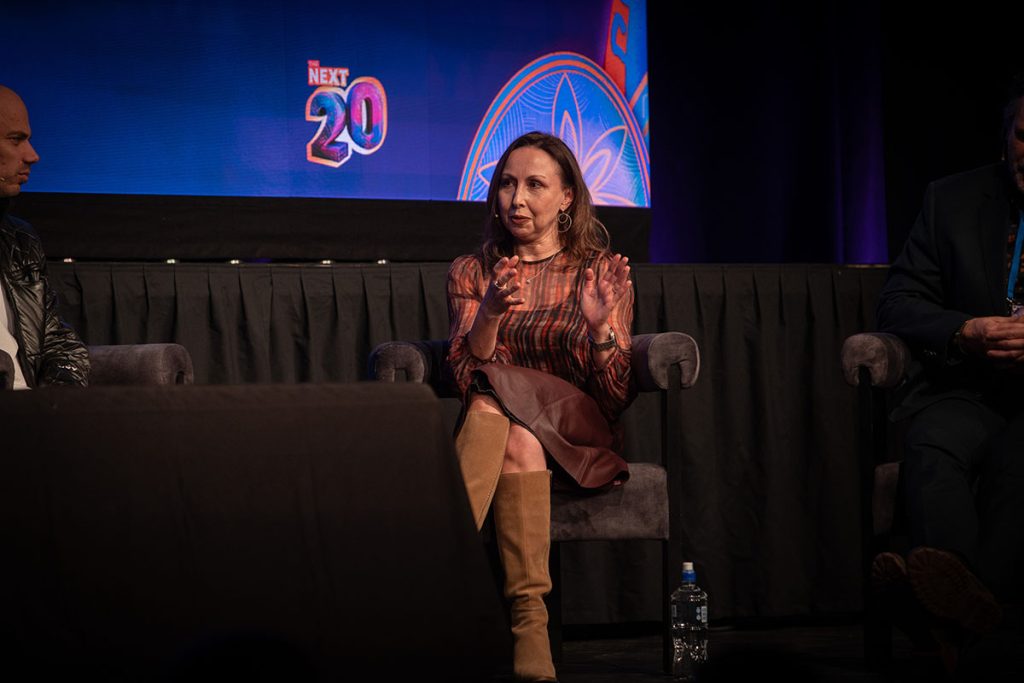
Planit’s bet is a personalised, human-assisted itinerary that replaces 40 open browser tabs with one confident answer, said Simona Turin.
The moment it got personal
Each founding story had its own spark. For Anderson, it was a friend – a restaurant owner – who cornered him at the pub and complained for over an hour about New Zealand’s food safety regulations. “I guess it was a quick theory that he had completely fallen in love with the problem,” Anderson said. There was no solution on the market, so he and his co-founder built one and found their first 15 customers before the product existed. All 15 paid a year and a half in advance.
McLeod’s reckoning came in 2008, four bars and restaurants deep, with the bank owed money and no revenue in sight. “You start to really understand the economics of your business because you’re forced to,” he said. Food, beverage, labour and inventory – nobody was managing any of it in real time. Fixing that for himself became Loaded; fixing it at scale improved his own margins by around 11 cents on every dollar taken in.
Bradshaw’s business, older than the others by two decades, nearly came undone not at founding but mid-life. Thirty years in, roughly 15 years ago, Ibis tried to leap rather than evolve – “we tried step change, we just ended up too fractured, too complicated” – and lost its largest customer in the process. “It’s easy to make something new,” he said. “It’s hard to keep it working well.”
Turin’s path ran through Air New Zealand, where she led digital transformation before walking into travel-planning land, often considered the graveyard of travel startups. The insight that prompted her move: getting a traveller from London to Queenstown is a 15-step journey, and airlines and OTAs abandon them at the baggage carousel, right when the real decisions, and the real anxiety, begin. Planit’s bet is a personalised, human-assisted itinerary that replaces 40 open browser tabs with one confident answer, she said.
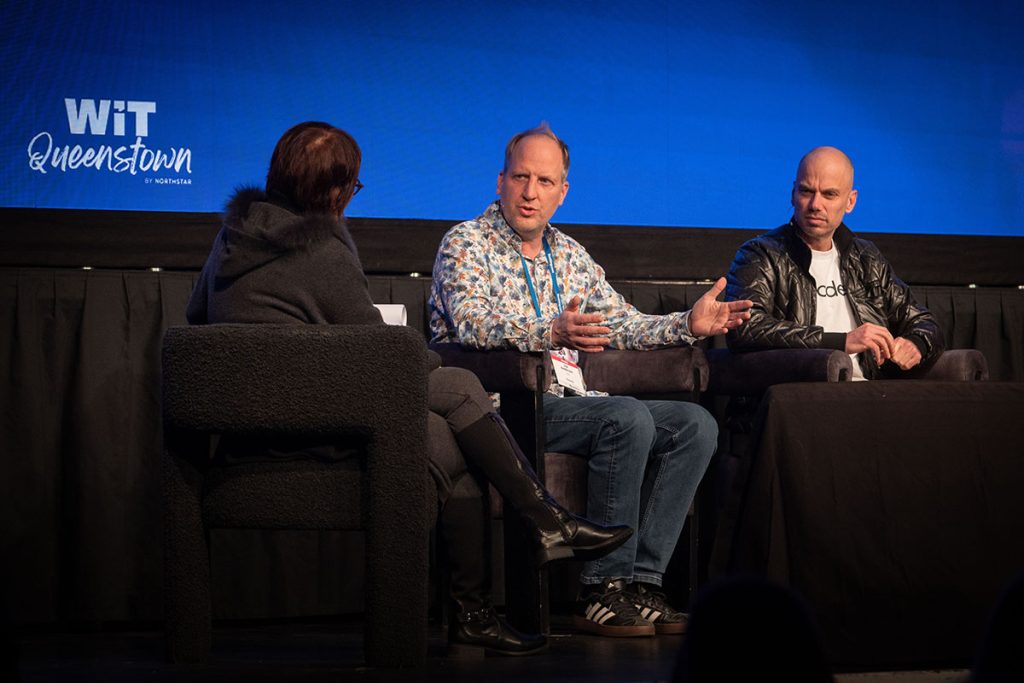
Irik Anderson said Chomp exists because “food safety is a pain in the arse – why make it hard if we can make it easy?”
Bootstrap now, raise later – or don’t
Asked whether they’d bootstrapped or raised, the room split roughly along company age. Bradshaw’s answer, three decades in: “Bootstrap is always the start… funding comes along after, and funding makes some things easy and other things hard.”
And he confessed, “I sometimes feel like if I had more money, I would have just made bigger mistakes.”
Anderson’s Chomp has drawn on grants – $300,000 most recently. McLeod bootstrapped Loaded for years before raising $3.5 million three years ago.
Turin, visibly less comfortable naming a number in public, confirmed a recent bridge round in the millions.
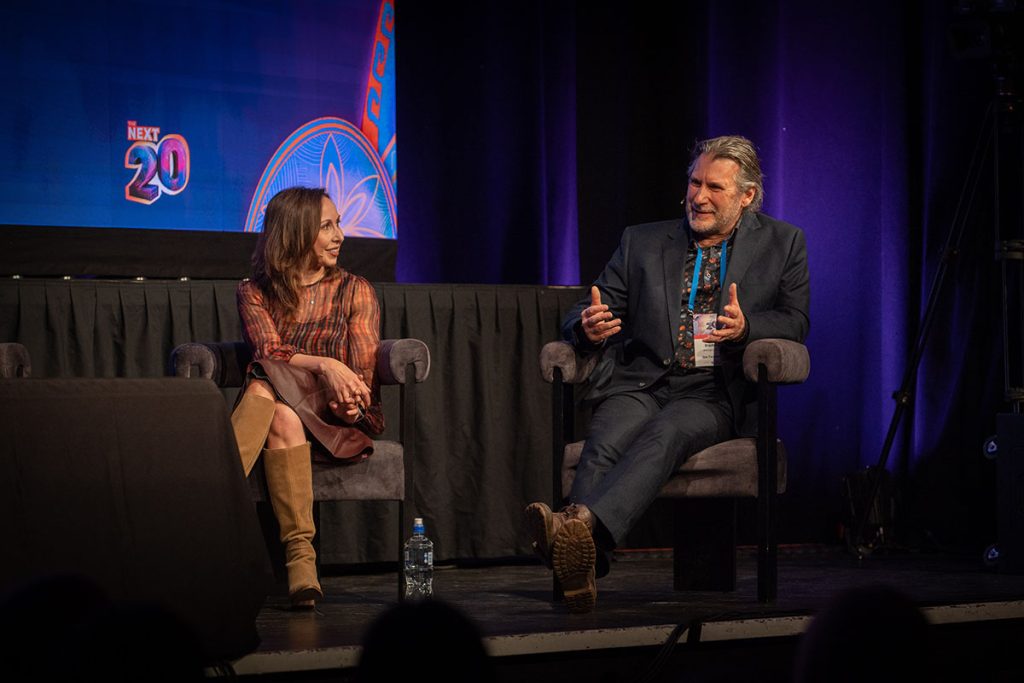
Erik Bradshaw of Ibis Technology: “Bootstrap is always the start. Funding comes along after, and funding makes some things easy and other things hard. I sometimes feel like if I had more money, I would have just made bigger mistakes.”
AI: Friend, not nirvana
On AI, the panel’s optimism came with a caveat attached to almost every sentence.
One founder put it plainly: AI is a friend, but not “pure nirvana” – every decision now gets weighed against whether the tool or the old way of working is still the right call, and running a software business today means being willing to fall out of love with your own product fast enough to rebuild it.
Bradshaw was unequivocal: “I’m having as much fun now with technology than I’ve had in 30 years… it doesn’t matter that you’re doing it down at the bottom of the world.” The barriers to entry, he added, have come down for everyone, including the next Kiwi startup coming up behind them.
For Turin, the AI moment is less about hype and more about timing: travel planning was hard to monetise before, but AI’s speed at surfacing options – the nearest restaurant, the fastest route – is shifting the economics. The trust gap doesn’t close on its own, though. “That combination of humans and technology” is the product, she said: the app for the routine, a person for the judgment call.
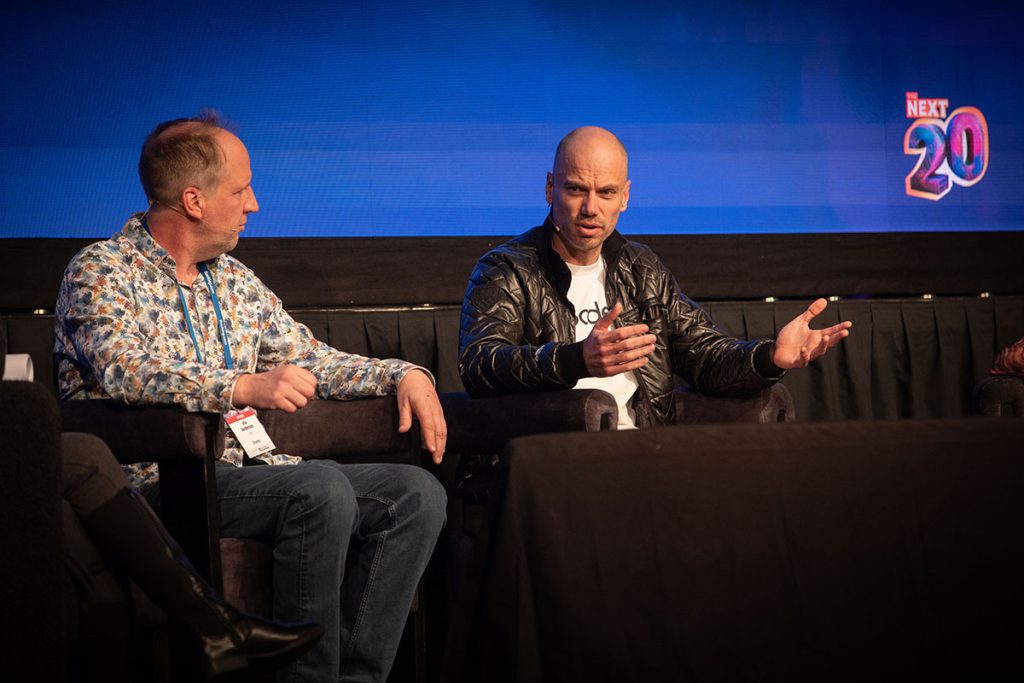
Richard McLeod’s reckoning came in 2008, four bars and restaurants deep, with the bank owed money and no revenue in sight. “You start to really understand the economics of your business because you’re forced to,” he said.
What Gen Z actually wants
Closing on rapid fire, I asked the panellists the must-have for a next generation travel app. Their wishlist – an app that knows what a traveller wants rather than what the app wants to sell them; weather-aware, effort-free itinerary building – “I’ve got three days in Queenstown, I want Milford, I want Skyline, work it out for me”; and above all, flexibility.