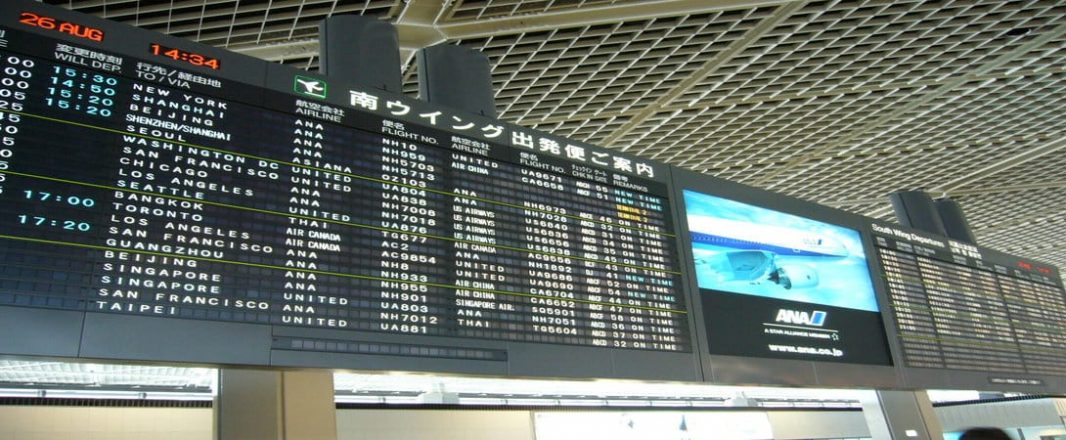
 The 9th annual survey by SITA, carried out in partnership with Airports Council International (ACI) and Airline Business, are based on responses from 91 airport operators, representing the views of173 airports worldwide managing 2.3 billion passengers per year.
Pictured left: KL Internaitonal Airport, Sepang, Malaysia
The survey found that improving and personalising the passenger experience is the number one driver of IT investment by the majority (59%) of the world’s airports.
The airports’ top reason for providing mobile apps is to keep passengers informed about their flight status and wait times, with 88% planning to invest in them by the end of 2015. During this period 78% of airports also plan to invest in social media with two thirds of these currently focused on evaluations or trials.
As passenger numbers continue to rise at airports across the world, optimising the use of the available real estate is a priority, and passenger flow management will become more and more important. Half of the airports surveyed see geolocation as a top priority for reducing passenger congestion.
Within the next three years new way-finding services are set to become commonplace on mobile devices, allowing passengers to navigate easily through the airport. Just 10% of airports provide them today, but this is set to jump to 70% by 2015.
.gif) Airports are also investing in business intelligence solutions to deliver an improved passenger experience. Some 86% of airports see it as a priority for sharing information and collaborating with partners; 83% to ensure more accurate service information for passengers; and 76% to reduce flight delays due to ground operational issues.
Airports are also investing in business intelligence solutions to deliver an improved passenger experience. Some 86% of airports see it as a priority for sharing information and collaborating with partners; 83% to ensure more accurate service information for passengers; and 76% to reduce flight delays due to ground operational issues.
Francesco Violante, CEO of SITA (pictured right), said the survey showed operators are investing in the “intelligent airport” to improve the passenger experience in an operationally efficient manner.
“With airports planning to invest in business intelligence, and using it to better collaborate with partners, it is clear that there is a strong desire among operators to work together with stakeholders, including airlines and ground handlers, to create a better passenger journey.”
Airport operators are deploying geolocation technologies to track, in real-time, the location of staff, vehicles, baggage and other key assets and resources, as well as monitoring passenger flow. More than 60% believe that this is a priority to improve business intelligence across the airport operation, while 40% are already evaluating these new infrastructure technologies.
The three main areas that airports are looking to improve business intelligence with geolocation technology are:
The survey also found the use of self-service kiosk on the rise.The implementation of bag tag printing at kiosks by airports has doubled from 2011 to 2012.
There are also strong investment plans for assisted bag drop with 83% intending to provide it by 2015. In addition, 60% of airports plan to provide full self-service bag drop by then.
* Click here for more details on the survey.
Photo of the KL International Airport courtesy of flyklia.com