Travellers today are no longer defined by their demographic segment but by their values, behaviours and motivations. As such airlines and other travel providers will need to harness the wealth of data and social media information to create “purchasing experiences”, which cater to individual needs, according to findings in the report, Future Traveller Tribes 2030: Building a more rewarding journey.
Future travellers have specified needs based on their tribes. (Image credit: EarnestTse/iStock)
Commissioned by Amadeus and written by Frost & Sullivan, the report was launched at Amadeus’ Airline Digital Merchandising conference in Bangkok (June 1-3).
It offers advice to travel players seeking to develop strategies, which will create a more rewarding journey for emerging traveller segments.
“Personalised bundles of products and services, perpetual touchpoints between the travel provider and traveller, and frictionless purchasing will all characterise the traveller experience of the future.
“New sales channels will also emerge in tandem, and can be divided into “inspiration” channels (smartphone, tablet, virtual reality headset), which offer more immersive experiences, and will be used as discovery tools; and “information” channels (smartwatch, augmented reality glasses and service robots), which will focus on short-form content and purchasing,” states the report.
Data will become the most important resource available to airlines, giving the competitive advantage to those that can most effectively collect and use it.
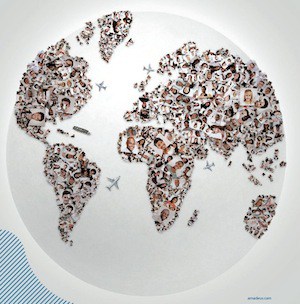
Six future traveller tribes identified.
These findings were built upon the six “traveller tribes” identified in Future Traveller Tribes 2030: Understanding tomorrow’s traveller, written by Future Foundation and published in April this year.
In 2007, Amadeus commissioned a future-focused report on key consumer groups travelling in the year 2020. Outlined were four significant demographic segments, or “tribes”, which were built largely from functional building blocks such as demographics, nationality and travel behaviour (business versus leisure).
The new Future Traveller report brings those tribes into the present, and projects them forward into the end of the next decade with a greater focus on the wider travel ecosystem including airports, hotels, rail companies and travel agents.
While the tribes in the 2007 report were demographically-based, the tribes in 2030 are based on the values, behaviours and needs of travellers. The original four tribes were not discarded, but were rebuilt into new frameworks and increased to six.
The new tribes:
• Simplicity searchers – people who value ease and transparency in their travel planning, willing to allow a third party to make all the decisions to avoid having to do the research themselves.

Social capital seekers use digital media to enrich their travel experiences.
• Cultural purists – travellers who use travel to immerse themselves in an unfamiliar culture, looking to break away their routine daily lives and engage with a different way of living.
• Social capital seekers – they take maximum social reward from their travel, use digital media to enrich their experiences and share them online.
• Reward hunters — travellers looking for a return on the investment they make in their busy, high-achieving lives. Linked to both physical and mental self-improvement, they seek extraordinary and often luxurious “must have” experiences
• Obligation meeters – this group is best represented by business travellers whose needs and behaviours are mainly shaped by their being in a certain place at a certain time without fail.

Ethical travellers visit a place for either environmental or political reasons.
• Ethical travellers — people who allow their conscience to be their guide when organising and undertaking their travel, and visit a place either out of environmental concerns or for their political beliefs.
Hazem Hussein, executive vice president, airline commercial for Amadeus Asia Pacific, said the new report took the traveller insights uncovered in the first phase of the Future Traveller Tribes study, and turned it into actionable advice for airlines to better serve and cater the emerging traveller segments.
“The industry is seeing a shift in power back into the hands of the traveller. Airlines today need to have a clear understanding of what motivates travellers and how their purchasing behaviours have evolved, if they truly want to build a more rewarding and connected journey for tomorrow’s traveller,” he added.
Download both reports here.
* Images credit: Amadeus