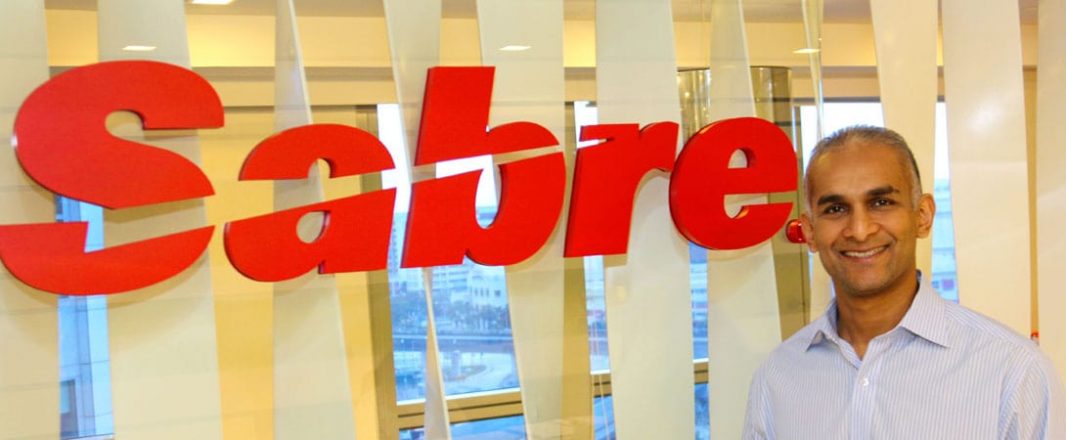
Roshan Mendis, the newly-appointed vice president of Sabre Travel Network Asia Pacific, has a big job ahead of him.
He’s got the task of integrating Abacus, Sabre’s newest acquisition, into the Sabre global family and that means not just in technology terms but also people terms – always the more challenging aspect of acquisitions especially with an organisation of 600 or so employees – and creating an entity that will live up to its potential of making Sabre a serious Asia Pacific player in a region that offers a new frontier of growth for the Dallas-based company.
And he’s got a target in mind. Asia Pacific currently accounts for 20% of Sabre’s business and Mendis believes it could be 40-50% bigger than it is now in five years.
The collective goal is for Sabre to be the largest travel distribution player in the world and for Asia Pacific to play a major part in that mission. “Here, we get full exposure to growth markets. We are the fastest growing GDS in Europe and we are already the largest player here,” said Mendis.
Abacus has approximately 40% of the market in APAC and it’s a share it has to defend vigorously under increasingly competitive conditions and the acid test will be how it fares independently of its airline ownership which competitors say has given it a natural or un-natural advantage depending how you look at it.
And whether you think the acquisition will mean the Americanisation of Abacus or the Asianisation of Sabre, the truth is “magic happens in the middle”, said Mendis.
“Magic will happen when we can take everything that is good in Abacus, which are many, and take everything that is good about Sabre elsewhere, and put those two things together.”
You could say Mendis is well-built for the task ahead and was the logical choice for the job following the departure of Robert Bailey on July 7 after seven years of leading Abacus International.
The new role he’s been given spells a homecoming of sorts for the Sri Lankan. He worked in Singapore for a stint – he was behind the sale of Zuji to Webjet as well as Travelguru to Yatra in India. And he returned to Dallas three years ago to take over Travelocity where he then oversaw the sale of that business to Expedia.
“I guess I have a history of getting tough and challenging projects – whether they be growth opportunities or new acquisitions. This is a big acquisition which fundamentally changes the complexion of our travel distribution system.”
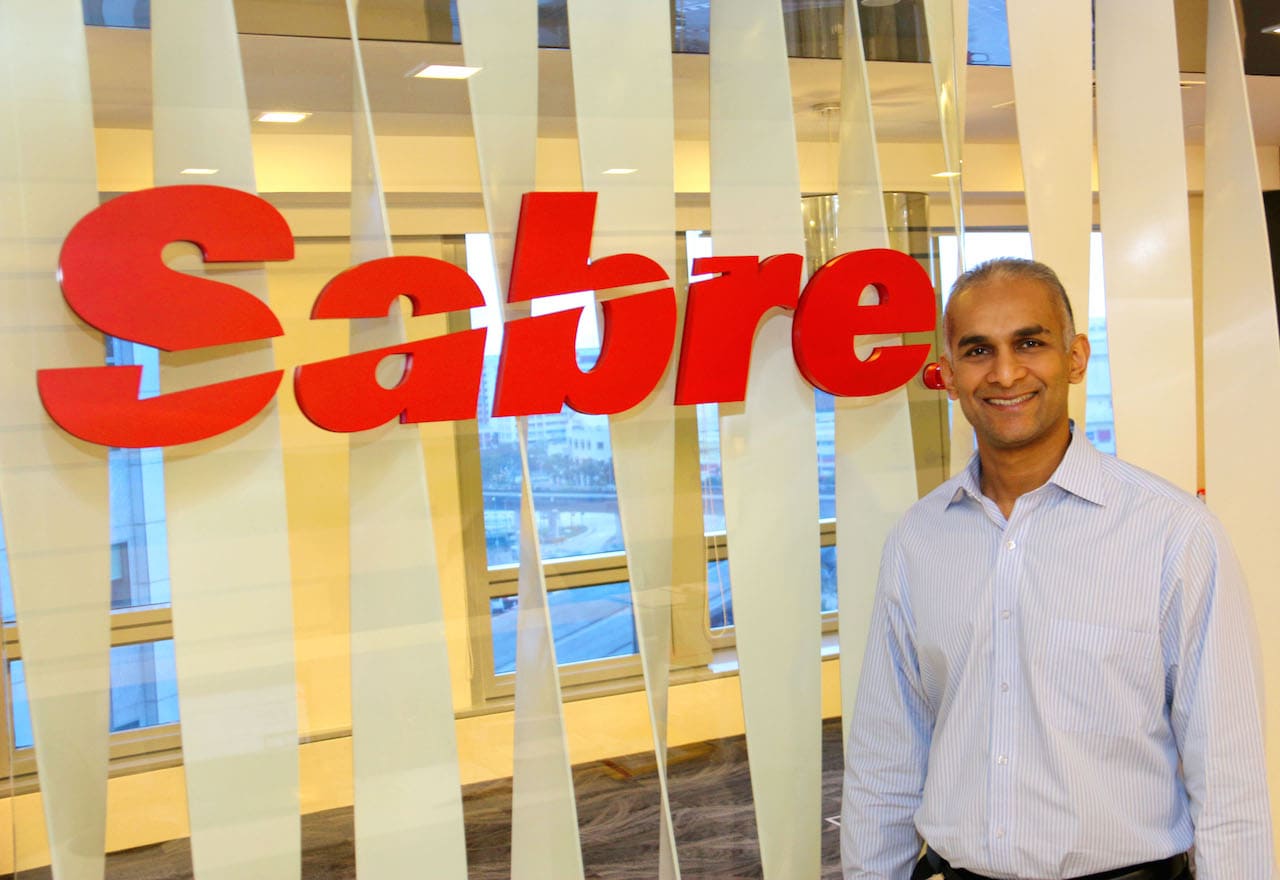
Roshan Mendis: APAC is currently 20% of Sabre’s business and the new head expects it to be 40-50% bigger in the next five years. (And by the way, a picture says a thousand words)
I asked him if therefore, with his knowledge of Asia and Sabre, that perhaps he’s the best person to make it happen in the middle.
“I don’t want to trivialise the opportunity we have ahead of us. The entire team that is dealing with the integration effort are experts at managing migration and if you look at the resources being aimed against the opportunity, you will realise two things – one, the massive effort being put behind it and two, that Sabre is very committed to the investment and its willingness to make it a success.
“Whether it’s me or not is not important. What’s important is we have many people and a lot of resources to ensure this happens.”
The biggest challenge of integration? “What we have been telling customers – the dual objective of ‘nothing will change’ and ‘everything will be better’. That is a challenge to achieve.”
“The first week has been great. Customers are settled, they don’t see disruption to their business, they see support and hopefully, they will see some goodness come through – that we will move faster, answer product questions faster and see a faster product roll-out for 2016 and beyond.
“Over time, with the marriage of Abacus and Sabre, we hope to make everything better. We will be able to develop a product and service model for OTAs that’s best in class, bring customised Asianised product to market early and we will be early to use local knowledge from Asian partners to inform global product plans.”
As for the Abacus’ NMC model, in which the GDS has joint venture partners in certain markets, Mendis said “it will be a continuous process to understand in which markets we operate best directly and which markets we work with joint venture partners.”
Its recent acquisition of its NMC in Hong Kong is a hint of what lies ahead. “My guess is over time we will distribute directly in more and more markets but will still have strategic distribution partners.”
As for the Abacus name and brand, it is also clear what lies ahead – already Abacus is now a part of Sabre Travel Network Asia Pacific and you can expect that over time, the name will be used less and less although Mendis is not answering yes or no to the question, “Will the Abacus name be kept?”
In Australia and New Zealand, the business already operates under Sabre.
Said Mendis, “We like the idea of a global brand that signifies what it means to do business with a global player – and that goes beyond brand, but also product, service, operations. It’s important for our Asian partners who are no longer bound by geography. We have China players doing business in greater China and beyond, India OTA players moving to the Middle East – all that points to us being able to provide a consistent best in class proposition.”
Stressing that his job is “not to fix anything”, he said, “It is to understand how having a global proposition for agencies and suppliers, best in class product, marriage between local and global insights, can bring to our Asian partners, and how we position ourselves to ride the growth even faster.”
And contrary to media reports, he said the travel distribution business is not declining. “It’s a growing business for us and it’s a growing market all over the world. The agency distribution model is still going strong. People going online and booking travel on their own – that’s one of the engines of growth – and the largest OTA players are our customers.”
Corporate travel is another vector of growth and as the Asian business of multinationals grows, Sabre’s global positioning, with a strong Asia Pacific network, will work in its favour, he said.
Let the magic begin.