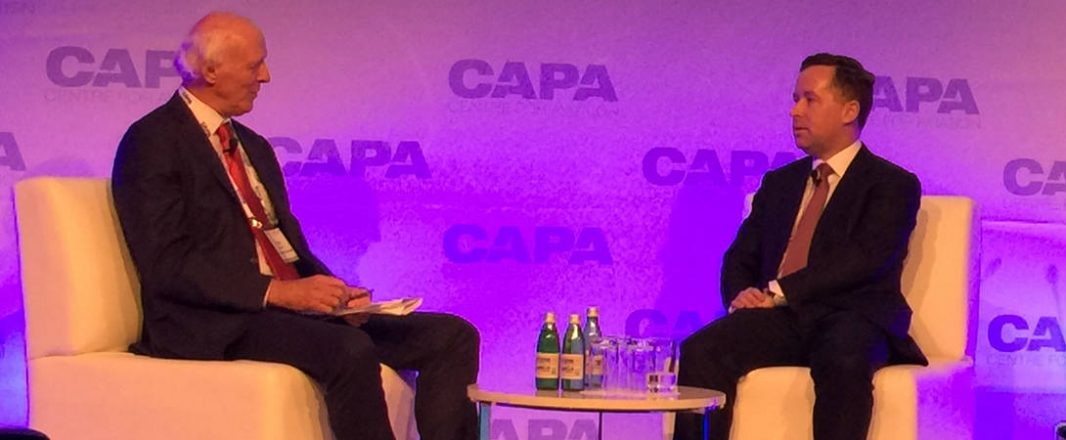
What I like about Australia is how they call a spade a spade and if they could, they’d abbreviate it (and they probably have) and so when Peter Harbison, executive chairman of CAPA (Centre For Aviation) called Alan Joyce a “tough little bugger” on stage, I wasn’t too surprised.
In fact, if I were the CEO of Qantas, I’d take it as a compliment, especially coming from a man who, after 25 years of watching and analysing the ups and downs of aviation in Australia and around the world, should know what “tough” means.
Harbison reminded Joyce that on June 8, 2012, Qantas share was trading at 97. On August 4, the day of the CAPA Australian Pacific Aviation Summit in Sydney, it was at 317 – a four-fold rise in three years.
There was talk of shutting down the airline, Joyce was getting death threats and there were calls for his resignation. This time last year, Qantas announced its biggest losses – $2.8 billion. In a couple of weeks, the Australian airline is expected to announce a pretty impressive profit which he could not disclose but you can tell it will be a happy day from the way he said it.
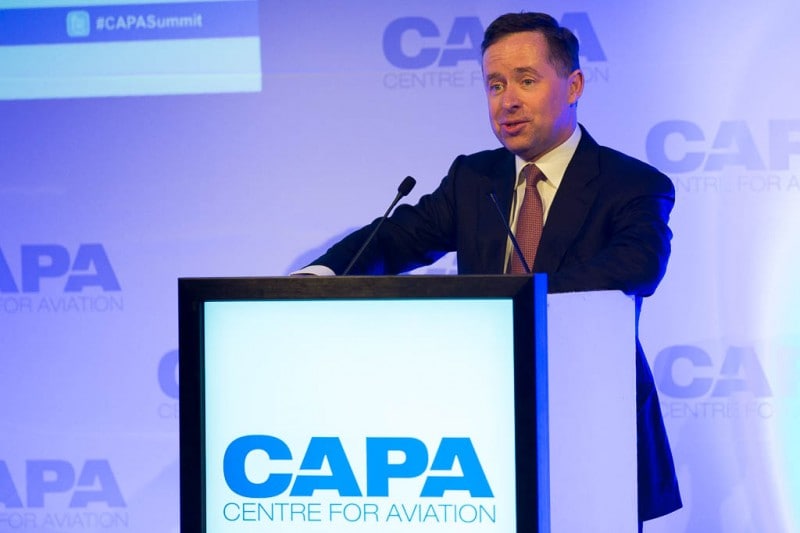
Alan Joyce: “Focus, determination and capability will get you there.”
It was thus a very different Joyce who took to the stage this year. Calling it the “biggest transformation ever”, Joyce said that business, in all segments, was returning cost to capital and that the turnaround was not only in financial terms but also in customer satisfaction.
“Share prices fluctuate everyday. What you do is focus on delivering the right strategy. Focus, determination and capability will get you there,” he said.
He sees three opportunities ahead for Qantas – an Australian economy in transition, the continued rise of Asia and big data, which is turning into Qantas’ biggest asset.
The rebounding of the Australian economy and the competitive Australian dollar are leading to increases in both domestic and inbound travel. “The weak Aussie dollar means great opportunities for our international business.”
Indeed the turning point in the plan was getting its international business back into profitability. “How do you justify buying new aircraft and expanding otherwise – we knew we had to become profitable.”
This positions it well to tap into Asia which, by 2034, will be bigger than Europe and North America put together. The group has seen a drastic turnaround in Asia – in May, it reported a $300 million EBITDA improvement since 2012.
It’s added 80% more capacity to Singapore, similar to Hong Kong; it’s invested in product and lounges and it’s doubled capacity to Japan.
The intra-Asia market is a big opportunity for Jetstar, already the largest low cost carrier in Japan and second largest in Vietnam and Singapore – which is why its setback in Hong Kong has been a disappointment. The Hong Kong government rejected Jetstar Hong Kong’s application to operate out of the SAR and Joyce said he was concerned about protectionism and government interference.
“We are a Hong Kong company, Hong Kong ownership, Hong Kong carrier. The same rules should be applied to everyone – when different rules are applied to different carriers, that shouldn’t be allowed.”
He said the goal, through its partnership with China Eastern, was to make Shanghai more competitive to Hong Kong and Singapore. “We would have moved into the China Eastern terminal and coordinate schedules and connectivity.”
Delinking Asia and Europe – shifting of hubs from Singapore to Dubai for its European routes – with the partnership with Emirates has also worked well. “We’re combining two amazing assets – the Emirates network to Europe and our customer base.”
On that note, he said, big data was turning into a pot of gold for Qanrtas – with 27 years of customer information and 11 million frequent flyers, the group is sitting on a lucrative asset.
It’s seen its frequent flyer programme increase in profitability and double in size; it’s launched new businesses including Red Planet, an ad agency, as well as Qantas Catch. “These are already profitable businesses with low capital investment,” he said. “If you do this right, you can hit the sweet spot.”
And that sweet spot – combining customer insights and loyalty – could mean turning a cyclical airline business into a sustainable one.