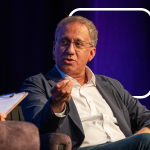

De Schepper:“We are getting to a volume point where it cannot be ignored.”
Mieke De Schepper wants to help hoteliers in APAC see the light, as it were, regarding the true value of distribution via OTAs. The vice president, Market Management, Asia Pacific, Expedia® Lodging Partner Services, who joined Expedia after a long career with Philips, where she was responsible for developing the lighting business in Asia, said the big change for the lighting industry came with LED technology.
“It took a lot of persuasion for a very conservative industry to accept that change and move to LED lighting,” said the Singapore-based executive.
Similarly, she said, technology had brought big changes to the hotel industry and hoteliers had to adapt to new ways of distributing.
Asked what was the tipping point for the lighting industry to adopt LED on a mass scale, she said, “There is a certain price point, hitting that sweet spot, and we (online travel) are getting there. We are getting to a volume point where it cannot be ignored.”
Sharing these statistics – more than six billion room nights booked in APAC (Oxford Economics), 25% online penetration and growing at 32% from 2013 to 2015 (Phocuswright) – de Schepper said online travel was also getting to a point where it cannot be ignored.
In the six months since she’s come into travel, the Dutch executive has been on a steep learning curve. What she’s found interesting is “how different hotels use different distribution channels in different ways”.
“Some hotels are quite conservative in their channel mix, using traditional wholesale, while some have moved to e-commerce channels. It’s a lot to do with heritage. New hotels, because they don’t have legacy, are more fully into e-commerce.”
Her mission is to convince hoteliers of the value of OTA distribution. “We can help to yield revenues and with our technology and marketing, bring more customers to them.”
Her job is also to develop the supply chain for Expedia’s house of brands which include, among them, Expedia, Hotels.com and Egencia. In the last nine months, her contracting team has more than doubled to more than 300-strong.
“We have added people in places where we needed to add hotels obviously. This has been in places such as Japan, Thailand, Taiwan and Korea. We are also contracting more 2-3 star hotels, smaller hotels and going deeper into the market to make our content more relevant for the Asian traveller.”
While there is still strong demand for 4 and 5-star hotels, she said, “We are starting to see shifts from the younger generation wanting 2-3 star hotels. As a result, our ADR has come down as we go deeper into the market.”
With the addition of this more affordable supply, she said the group was beginning to tap into domestic travel “which we didn’t have before. This makes us more relevant to domestic travellers”.
Overall, she said, there has been strong demand for North Asia – Japan, Korea and Taiwan – and Hong Kong has been a strong outbound market. The biggest growth is in inter-APAC travel, which accounts for 75% of total business. This segment is growing at 60% a year, said de Schepper.
Packages are a strong area of growth. “Hong Kong, for example, is mainly a packages market and we sell ‘air attached’. We offer the package rate to customers if they book within 10 days of booking a flight. We are looking at extending that period.
“The advantage to hoteliers is that the average booking window is longer, the cancellation rate is lower and the average stay longer.”
To assist hotels, Expedia has also made live its Real Time Feedback feature in Asia where customers are sent an email to instantly rate their ‘happiness’ with check-in, room and location. This allows hoteliers to take instant action and prevent negative reviews if necessary.
The tool launched in the US first and went global in June after localisation. It is available in Expedia PartnerCentral in 29 languages. Since August 2014, the group has received more than 2.3 million reviews.
“Early results show a correlation between hotel partners leveraging Real-time Feedback to improve the guest experience, and hotel review ratings,” said a spokesperson.