In the news: Second edition of AirAsia Japan, survey on youth travel by ITB Berlin, MyTeksi’s new safety feature
AirAsia Japan taking a second shot, take-off in 2016
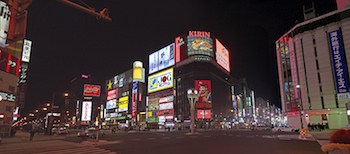
Sapporo is one of AirAsia Japan’s first destinations. (Image credit: ES3N/iStock)
When AirAsia’s joint venture with All Nippon Airways (ANA), then known as AirAsia Japan, ended in June 2013 Tan Sri Tony Fernandes, the low cost carrier group CEO, had said, “We have not given up on the dream of changing air travel in Japan, and look forward to returning to the market.”
Fernandes has done just that – taking another shot with the second edition of AirAsia Japan.
In a statement released on October 6, AirAsia Japan chief executive officer Yoshinori Odagiri (formerly chief executive of the JV with ANA) announced that the airline has been granted the Air Operator’s Certificate (AOC) required by the Civil Aeronautics Act from Japan’s Civil Aviation Bureau of the Ministry of Land, Infrastructure, Transport and Tourism.
AirAsia Japan is scheduled to commence operations from its base at Chubu Centrair International Airport in Aichi prefecture in Spring 2016. The all-economy class airline will operate with a fleet of Airbus A320 aircraft. Its initial flights will connect Nagoya to Sapporo and Sendai in Japan, and Taipei in Taiwan.
“We are very excited to be back in Japan. We have fantastic partners here and we are united in the vision to change the way people travel in Japan,” said Fernandes.
“Centrair Airport is a fantastic base, and with our new routes we look forward not only to enable the Japanese to enjoy our direct destinations but to connect them to the rest of Asia and beyond on our extensive network,” he added.
The new AirAsia Japan will have an initial capital investment of about ¥7 billion (US$69 million).
AirAsia Investment Ltd will hold the largest stake in the new carrier with 49%, while Rakuten Inc, Japan’s e-commerce giant, is the third largest shareholder at 18% after Octave Japan Infrastructure Fund with 19%.
The remaining shares are held by Noevir Holdings 9%, which has interests in cosmetics, pharmaceuticals and health food, apparel and aviation business; and Alpen 5%, which makes and sells sporting goods and manages ski resorts, golf courses and fitness clubs.
The first JV with ANA ended after less than two years due to a difference of opinion in management and on ways to operate the business. The Tokyo-based airline relaunched in December 2013 as Vanilla Air, now wholly owned by ANA, based out of Tokyo’s Narita Airport.
New survey reveals the young in Europe are travelling less

Less young Europeans are travelling. (Image credit: william87/iStock)
Foreign trips by young Europeans have been declining since 2007 by about 10% due to lower birth rates and social changes, and is one of the few segments in the European travel market showing a negative trend.
The findings from a special evaluation of the World Travel Monitor from IPK International, which was commissioned by ITB Berlin, also revealed the number of older travellers is rising.
Germany is the new favourite destination of young European visitors, recording growth of 60% to reach more than seven million. The positive media reporting and accompanying marketing measures at the football World Cup in Germany in 2006 contributed to the country’s image as a hospitable and open country.
Destinations such as Sweden, Croatia, and the Netherlands and the cities of London, Paris, Copenhagen, Munich, Berlin and Amsterdam are also popular with the young travellers
Other key findings from the survey:
- In 2014 young Europeans aged 15 to 24 went on 54 million foreign trips, and spent about 430 million nights abroad on these trips. Compared to 2007, the number of foreign trips dropped by about 1% a year.
- In 2007 young Europeans preferred to travel to Spain followed by France, Italy and Great Britain. However, youth travel to these four countries declined by 1%-2% a year up to 2014.
- The main motivation for travel among young Europeans are for a holiday, with a third doing that. The other reasons include educational trips or visiting friends (without any holiday motivation).
- “Sun & beach” holidays make up about one quarter of all foreign stays with sunbathing, swimming, shopping and going for meals as popular activities. City trips and tours follow behind, with the remaining quarter comprising events, summer and winter sports, and travel for special occasions (such as weddings or birthdays).
- Only 12% of the trips are for business purposes mainly to conferences, seminars and trade fairs and on incentives.
- Fewer than half of the young holiday-makers book hotel accommodation, although it is rising by about 1% a year since 2007. The sharing of free accommodation has declined by the same rate during this period. There is a slight increase in new forms of accommodation such as couch surfing or internet bookings of private flats since 2014.
- On average, young Europeans spent about 700 euros per trip in 2014, and slightly more 80 euros per night.
“The consequences of demographic changes are already being experienced in the European travel industry. This trend can only intensify, so now is the time to take the right steps. Precise offers tailored to the needs of the different target groups will ensure that both younger and older people retain their desire to travel,” said Dr. Martin Buck, Messe Berlin’s director of travel & Logistics, comments:
MyTeksi launches new safety feature for drivers and passengers
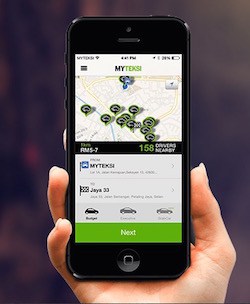
Number masking, new safety feature on MyTeksi. (Image credit: MyTeksi)
Malaysia’s taxi-booking app, MyTeksi (known as GrabTaxi regionally), has introduced its latest feature – number masking — that aims to enhance safety for its drivers and passengers in Malaysia.
This new feature allows for completely anonymous calls between drivers and passengers to ensure extra security and privacy for both parties.
This is part of the company’s new investment of US$6 million to enhance its mobile application service, and to provide more training and education to drivers across the region, the company said in a statement.
“We must always stay vigilant and believe that the key to ensuring our drivers and passengers have the best ride experience by introducing preventive measures, such as limiting the personal details available to both parties,” said Vincent Tan, MyTeksi’s acting head.
MyTeksi added that over eight out of 10 women surveyed in Malaysia acknowledged that taxis are safer now than before its app was available, with over seven out of 10 women feeling safer taking taxis at night.
The number masking feature is being progressively rolled out to users in Singapore and Malaysia from October 6, and will be available to all MyTeksi app users in these markets by end-October 2015.
The feature will be implemented in Indonesia, Philippines, and Vietnam by November 2015