
I guess for me and those who have grown up with it, it will always be the Rose Garden but for a new wave of travellers, which is who the third generation of the family business wants to attract, it will be the new name.
At WITX-Women In Travel in Bangkok last month, Suchada Yuvaboon (centre), who took over the business from her mother, Khunying Valee Yuvapuran and who has herself passed on the torch to her sons (Arrut, left and Anak Navaraj), said the new name better reflects the Thai heritage the resort so proudly embraces.
“My sons were tired of people coming to the Rose Garden and asking where are the roses?” she laughed.
While she may have said this partly in jest, there is some truth to the remark and it shows the evolution of Thailand’s tourism industry and, with it, travel businesses – once run by a generation more influenced by the West and now helmed by a new generation that wants to preserve a heritage they see fast disappearing.  (Suchada with her middle son, Ko)
The Rose Garden’s journey to become Sampran Riverside is part of that evolution.
Suchada’s mother, influenced by the tropical gardens in Hawaii and the gardens of England’s Hampton Court which she visited in the early years, set out to create a garden oasis as an escape for family, friends and Thais living in Bangkok.
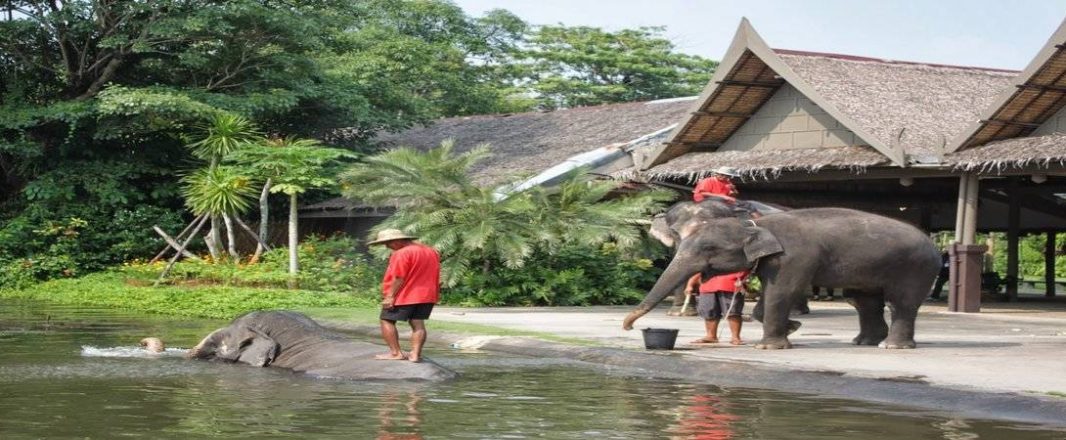
It later became a getaway for foreign tourists who wanted a taste of Thai culture. The resort featured day shows of cultural dances and elephant rides and, in its heyday, attracted millions of tourists on day excursions from Bangkok. It was very popular with Europeans and later the first wave of Japanese.
But as markets shifted and customers changed, interest in the day shows dipped. The resort turned to meetings and incentives and when foreign sources of business were impacted by social, political and economic events in recent years, local events became the mainstay.
A few years ago, Suchada’s eldest son Arrut Navaraj, who worked in finance, came onboard and started putting his own touches to the resort. He introduced a spa based on Thai treatments, an organic farm, produced branded natural and herbal products (which are now producing healthy revenues) and packages based on Thai lifestyle.
Meantime, Suchada focused on the gardens and made them more about Thai plants, herbs and spices, than roses and orchids. She introduced an eclectic café serving Thai snacks and a mini floating market.
Today at the resort, you can immerse yourself in a true Thai experience. You can make your own herbal compresses, candles, and scents. You can learn to carve fruit, make pots, mill rice – so from the previous let’s-sit-back-and-watch, Sampran Riverside is now all about let’s-do-and-learn, which is what new travellers want these days.
(Pictures show before and after fruit carving and no, I didn’t do any of it.)


I had asked Arrut to put together a weekend retreat post-WITX and included in the programme were personal consultations with an Aryuvedic doctor, yoga, a sunset river cruise, cooking classes and workshops.
While I confess we ate more than we cooked, it was a very enlightening weekend. I learnt about my doshas, for one, and how I have to detox my liver and also I appreciated how difficult it is to carve fruits and make pots.
This 2-night retreat opened my eyes to how much the Rose Garden has changed – and so yes, perhaps it’s time for a new brand because it is now more about the Sampran Riverside experience than it is the Rose Garden Resort & Spa.