.jpg)
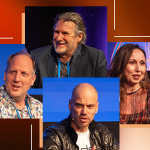
With Twitter planning to allow country-specific censorship of tweets that might break local rules (see latest story re-Brazil wanting to take up Twitter’s offer), Alan Soon, managing director, Yahoo! Southeast Asia (left), said this is the year of government intervention.
Governments have seen how influential social media can be and they will do their best to invoke censorship and privacy rules.
He said companies such as Facebook, Google and Twitter would have to adopt measures to respect local rules and governments would, in turn, be more vigilant about protecting the privacy of its citizens and censoring what can be said.
“Privacy is a way of control, isn’t it?” he said, adding however, “I think those governments that try to do so won’t have much success.”
Commercial interests are also weighing in heavily on the space. In the audience were mainly brand marketers looking to learn how they can use the social media space to sell products and services and get new customers and when Henry Mason (centre), director of research and analysis at trendwatching.com, declared “You don’t need a social media marketing strategy”, he hit a nerve.
Referring to Apple who he said didn’t even have a Twitter page, Mason clarified later that what he meant was that while you do need a social media strategy (mainly to engage customers and improve service), you shouldn’t use social media to sell products and services.
When the subject of celebrity endorsements on Twitter surfaced, something which may cause people to lose trust in the impartiality of social networks, Mason said if your friends start seeing commercial messages on your feed, they’d quickly lose interest.
“Social media is about customers, not brands,” he said.
The whole decision eco-system has changed, he noted. “Discovery now happens by default – you can’t avoid it. Online profiles are the new status symbol – less about the having than the finding and sharing.”
For example, you ask your friends on social networks questions such as “what digital camera should I buy?”, other customers have become curators and now even unknown people are helping in the decision making.
Soon acknowledged the pressure media companies were under. When he asked the audience how many people heard of Whitney Houston’s death through social media, almost all hands went up.
There’s been a reinvention of news, led by social media, he said. “If the news is important, it will find me” – that’s the challenge facing news organisations.
So the key is to be “discoverable”. “You can have an amazing Pulitzer prize winning author but if he doesn’t understand SEO, no one will discover him,” he said.
Of course, the counter-trend is, if something is too easily discovered, then what’s so special about it? Which is fundamentally what everyone is in search of – that pearl in the oyster, that special piece of information, that special restaurant, that no one knows about?
That is one of the issues with social media – that it tends to flock birds of the same feather around the same nest and hence does not allow for diversity of opinions and interests.
This was something Soon said he was concerned about. “I’d like to find other people who are not similar to me who don’t like the same things as me – that’s real discovery.”
Be that as it may, both executives agreed that to survive in this new “expectation economy” where customer expectations are not set by your competitors but all leading brands, companies need amazing products to begin with.
Perform or perish, was the title of Mason’s presentation. If you have an amazing product, people will talk about you and people will find you. If you don’t, you, well, perish.
Which doesn’t seem a revolutionary an idea at all really. “Yes, nothing’s really changed,” agreed Mason. “People don’t change as fast as technology – just the tools have.”
So what’s an amazing product, I asked them?
“Relevancy,” said Mason.
“Something I didn’t know I need,” said Soon.