Timothy O’Neil-Dunne is no young chook in travel. His career history includes being part of the founding team at Expedia, head of technology at Worldspan, co-founder of VaultPAD Ventures, and a managing partner at T2Impact. Needless to say, he’s built an impressive CV over the years.
Nevertheless, you could argue he never actually did a startup of his own – until now. Four years ago, after advising lots of professionals and entrepreneurs on the complexities and intricacies of airline distribution, he decided, with co-founder Paul Addy, to take a crack at it.
“I figured instead of telling people what to do and how to do it, I should do it myself,” he said.
The result – Air Black Box, the world’s first multi air carrier booking system that works to allow passengers to book both LCCs and FSCs under the same flight reservation. O’Neil-Dunne sought to reimagine flight bookings, by making the entire interline experience less of a headache for passengers.
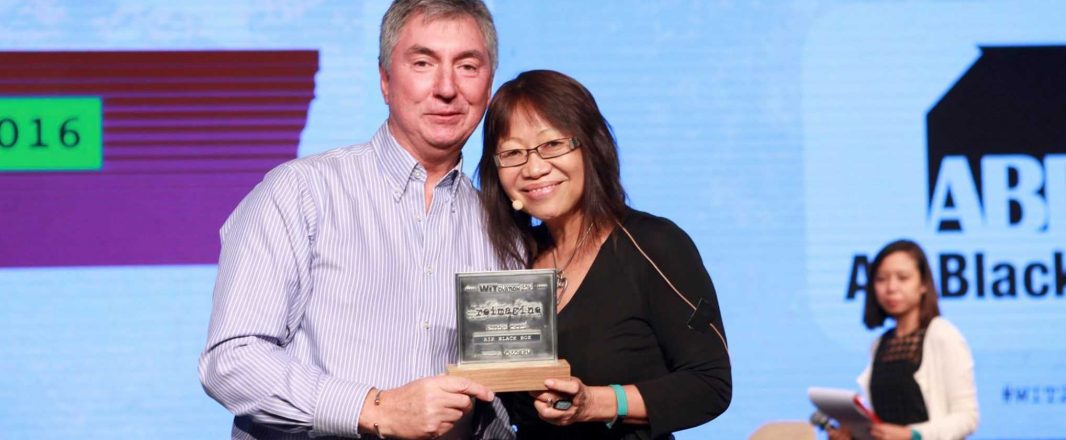
It won the Editor’s Choice: Reimagination Award at the WIT Conference and went on to win the Innovation of the Year Award a month after in Amsterdam from CAPA (Centre for Aviation).
At the WIT Bootcamp in Singapore in October, O’Neil-Dunne shared the three lessons he has learned as both a travel industry veteran and a late entrepreneur.
While his advice may seem obvious to those who have trodden the entrepreneurial path before him, his words lacked the sugar coating many are used to when receiving advice and the knowledge shared was not taken for granted.
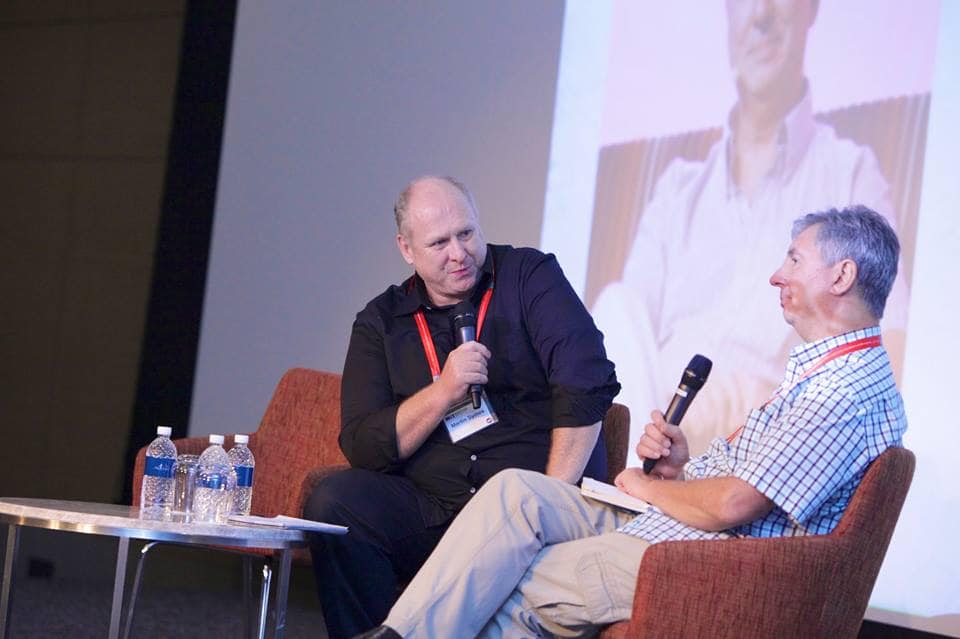
Timothy O’Neil-Dunne (Air Black Box) being interviewed by Martin Symes
The first piece of advice he believes other entrepreneurs must think about when building their own business, is the need to understand what true teamwork means… both in and out of the company. To him, teamwork means significantly more than forming a group of competent members.
“You must have a team, the age of the single-edged entrepreneur is over… consider who all the members of your team actually are. They are not just the people at work, but they are the people at home who support you too. That’s something a lot of entrepreneurs, particularly young ones forget. There is a lack of comprehension or empathy for the people who are also giving up what you are giving up to buy into your vision. You can be darn sure that they are with you all the way.”
He conjures an image of the entrepreneur’s anxious family and friends, who must sustain the same if not greater degree of blind faith that your business idea will succeed. He reminded budding startups of the sacrifices that others must make to help realise your vision.
The other important thing to understand is the importance of intellectual horsepower.
“You can’t do a startup with just your mates, you need to have really, really strong intellect on your team… stupid people can’t learn.”
It is a careful reminder that no matter how much fun brainstorming ideas and business plans may be, when sitting round the local pub… execution takes real work. A startup cannot merely thrive on the originality or utility of the idea but on the strategic way in which it is carried out. This “intellect” must act as the base foundation of any team, if it is to survive beyond the point of dumb luck. Finding the right people to carry an idea forward is not a task to be underestimated.
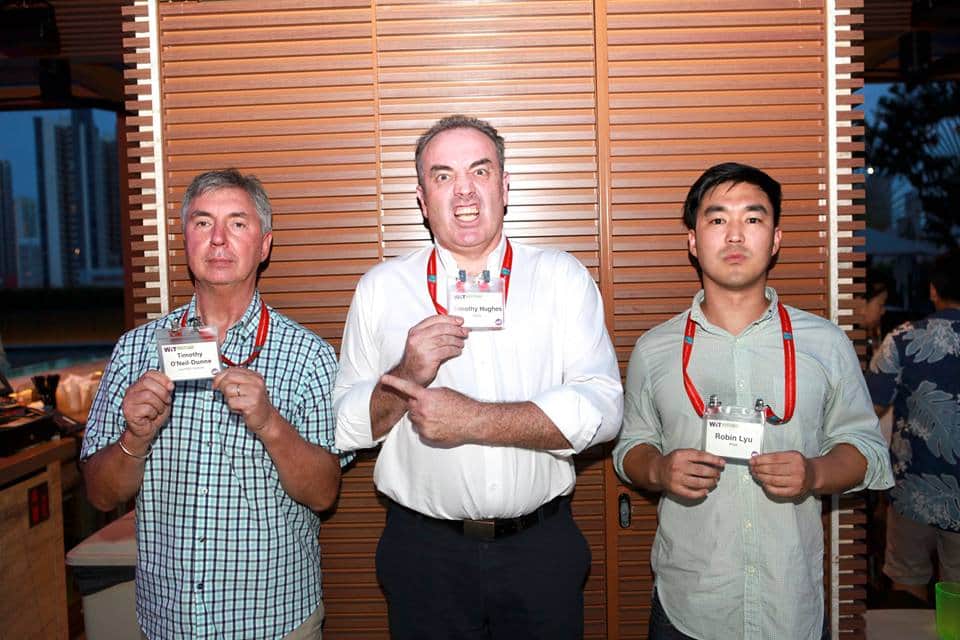
An incriminating mugshot at the WIT Bootcamp 2016
Finally, rounding out his session, O’Neil-Dunne made a crucial point around the importance of money. He did not stress his views on whether it is better to accept funding or to bootstrap a business. Rather, he addressed the importance of reflecting on attitudes to the way in which money is received, handled and dealt with in the company.
“The final thing of course, is the money,” O’Neil-Dunne concluded. “Just bear in mind that when you have money, if it isn’t money of your own, that you treat it as your own. Somebody has entrusted that with you. When everyone else assumes that cash is a commodity, it is not. It is somebody else’s lifeblood.”
Air Black Box is self-funded, said O’Neil-Dunne, remarking that he is proud of what he has managed to achieve thus far (specifically being cash-flow even and even drawing a profit after four years).
Yet, despite their growth and success, cash conservation has always been a top priority at Air Black Box. “If I’m spending $5000 for a business class plane ticket when we’re all on the same metal tube in the sky, shouldn’t I spend $4000 doing something much more pleasurable instead? You tend to think very carefully about what the value is of what you do.”
The analogy highlighted the importance of always factoring in how the way you spend money affects the way your business is able to grow and the principles that guide that growth. Startups are not a glamorous game; no one can truly afford lavish spending habits if you are truly building from the bottom up.
“This is really about the people how the determination to do what you believe in,” he reminded.
The three core lessons shared rang true in a lot of industry veterans ears as they reflected back on their own experiences, but perhaps what resonated the strongest was O’Neil-Dunne’s notion of why entrepreneurs truly do what they do.
“I find that there is a great passion in finding something that makes your mark. Everybody wants to leave something behind and a lot of people have a very hard time trying to express what that ‘thing’ is… I find that a common characteristic amongst entrepreneurs is a desire to leave a mark and make a difference.”
When asked when he might consider retiring, O’Neil-Dunne quickly retorted “retiring is for old people.”