That is true of course as long as that “human touch” is well trained and knowledgeable but I think that gap is narrowing more and more.
As technology advances, online companies have become better and better at customer service, whether it’s holding your hand through a transaction or getting a refund for your product or answering your questions.
Recently, I decided to subscribe to the Strong VPN service on the recommendation of a friend. I went to their website and within seconds of me clicking in, a customer service window opened and someone named Alex asked if he could help.
I said I was thinking of subscribing and he asked what did I want to do? I liked that he didn’t immediately offer me a list of packages but instead asked what was my reason for subscribing.
I told him I wanted to stream movies and he immediately proposed a package. He told me their customer service was on 24×7 and if I ever needed anything, all I had to do was ask.
After the transaction – yes, I bought the package – it got me wondering was Alex a real person or was he a robotic help desk programmed to handle basic enquiries and if that got too complicated, then a human would take over?
On my second visit to Strong, the customer service was equally impressive. This time, I had more complicated questions and Kristine, the agent, was very patient with me and soon, she and I started having a chat about the challenges of technology – how nothing is never as easy as it sounds.
And she left me a smiley at the end of our chat, and again promising that she’d always be there if I had further enquiries.
Was Kristine real? I think so but I don’t really know.
 Which is why when you watch the movie “Her” about a man who falls in love with his computer’s Artificial Intelligence operating system, you know that this is possible – and in fact, probably already happening somewhere in a home near you.
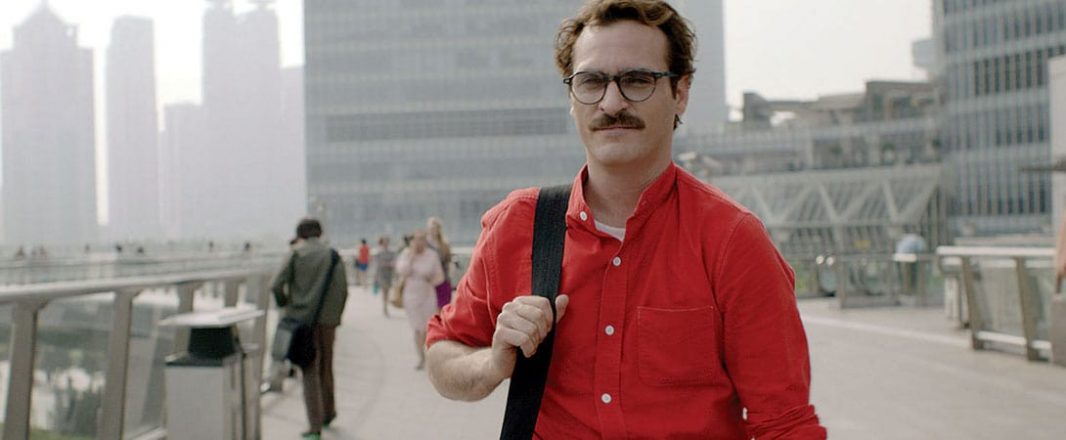
The Spike Jonze movie (left) is supposed to be set in the future but at times, it felt more like the future is already here, a world in which our devices are isolating us more and more and will increasingly do so as we move towards artificial intelligence embedded in our devices.
It’s a world where we talk to our computers, listen to our music, have virtual friends, play virtual games, have a virtual assistant to manage our correspondence and yes, have conversations with our OS that get so real that, like Joaquin Pheonix in “Her”, we end up having fuzzy-wuzzy, even physical, relationships with our devices.
It’s really not as crazy as it sounds. In Tokyo, where I am writing this, young boys have “virtual girlfriends” and prefer them because real relationships can get messy and virtual love is something more controllable that you can switch on and off at will.
Of course, the debate as to whether artificial intelligence will one day take over the place of humans in call centreshas already been raging for a couple of years but as with all new technology, it takes time for it to work and to find traction. Banks have probably been the first to adopt this new technology and it seems to be serving them well for if there is one industry that needs help in customer service, it is this sector. Airlines and hotels with the thousands of call centres they have to manage are also looking into this new technology to see how to not only defray costs but improve customer service.
The move by IBM to introduce Watson, the world’s smartest computer, to work in customer service is a step in this direction and it will be interesting to see where it goes.
While in Australia last week, I heard that major brick-and-mortar travel agents are also experimenting with artificial intelligence for their call centres to see if they can be made more efficient and more intuitive to handle the basic enquiries and leave the more complex questions for humans.
They understand they can no longer rely on the “human touch” differentiator to see them through a new world order where technology is changing the game so much that you don’t even know if the voice you’re talking to at the end of the line is real or not.
And if you still don’t believe me, read this piece – yes, many things can be faked these days, even empathy.