Two weeks ago, I was in Amsterdam and you couldn’t find a more liberal country than Netherlands where the coffee bars serve more than caffeine and where the people speak several languages just because they have to, situated as they are in the middle of Europe.
Even then, I sensed a growing unease about the influx of immigrants and foreigners. The young driver who picked me up spoke of the difficulty he had of getting this job – he’s been at it for five months – and he also spoke of how local folks in Amsterdam were getting weary of their city being overtaken by tourists.
Global brands like Uber and Airbnb are changing the shape of local economies and Amsterdam is one good example of how local residents no longer feel the city is theirs because a lot of apartments and homes within the city are being let out to tourists.
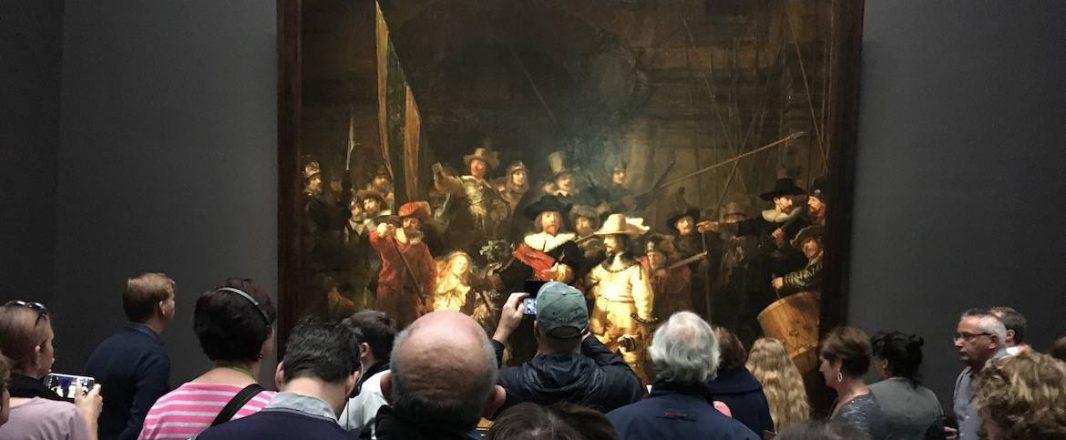
Amsterdam is a wonderful city for travellers. It’s walkable and bikable and you can also hop on and off on canal boats. On the day I took to explore the city, I headed off to the Rijks Museum and by sheer chance, I walked in through the back entrance, somehow missing the long queue of visitors at the main entrance.
To catch a glimpse of the “Night Watch”, the famous painting by Rembrandt (painted in 1642), I had to peer over the heads of countless visitors and wait my turn to see this remarkable piece of work up close.
A week later, I was in Kuala Lumpur and in this very spread out capital city of Malaysia, I too sensed growing unease about foreigners. Locals talk about neighbourhoods being taken over by this ethnicity or that. Service staff are all “foreigners”, locals do not want to take on such jobs anymore – a common refrain in this globalised world we live in.
By contrast with Amsterdam, Kuala Lumpur is not made for visitors. It is definitely not walkable. Its roads are jammed. It is very spread out and you have to know where to go to get anywhere. In this city, brands like GrabTaxi and Uber have made a huge difference to commuters. I use Uber more extensively in Malaysia than anywhere else because the local taxi service is so messed up.
This is clearly an instance where globalisation has worked in favour of ordinary folk.
This morning, I am waiting for my United Airlines flight to Los Angeles via San Francisco. It’s two days following the “Trumpit” shock and the entire world is still coming to grips with a President-elect who’s the complete opposite of incumbent Barack Obama who imbued the White House with grace and dignity.
As well travelled as I am, travelling to the US always fills me with trepidation. I get anxious about immigration and customs days before my flight. It’s not always been the most welcoming country for foreigners – getting this 10-year visa took me at least two months.
Now with a new President who wants to build walls, ban Muslims, hates women and who was elected on the wave of a growing unease of foreigners, will America be even less welcoming now for travellers?
Trump is the kind of guy who elicits strong feelings either way. Will people who hate what he stands for give America a wide berth as a destination? With so many places in the world to visit, travellers are spoilt for choice.
I was in London a few days after the Brexit vote which also took everyone by surprise. I felt like I was in a city that was mourning. Young people looked glum and those who worked in a city that depends on open-ness for its very survival looked depressed. The full fallout of Brexit has yet to be felt and again, that vote was also won on a growing unease of foreigners.
Will I experience the same thing in Los Angeles in a state that clearly did not vote for Trump? There’ve been reports of protests and talk of California wanting to become an independent state.
Whatever the case, it is surely an interesting and historic time to be in the new America. Watch this space for my next postcard.