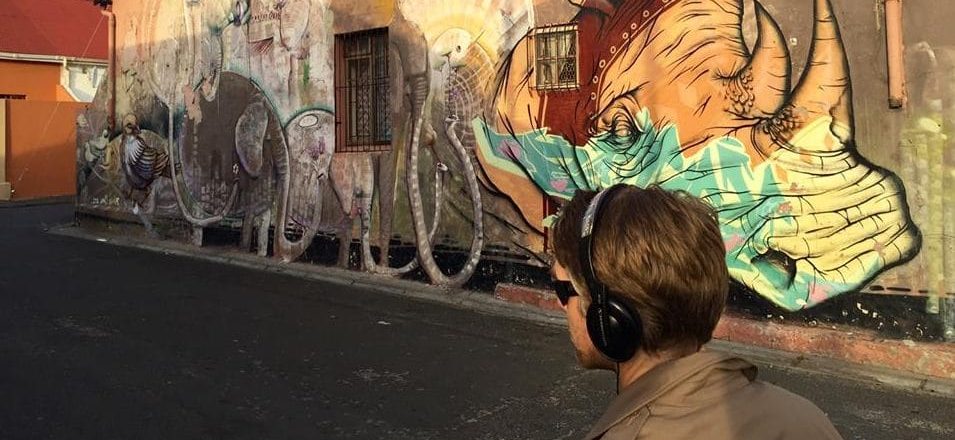
We travel to experience places, hear stories and uncover perspectives from people that grew up in a world different to our own. Stumbling upon these stories isn’t easy and it’s easy to transition from traveller to a simple tourist, gawking at different landmarks for days on end.
Fortunately, the rise of immersive audio walking tours on our mobiles like VoiceMap means that we can learn far more about a place as we move through it than before… without the hand-holding guidance of a flag-toting group tour organiser.
But it simply isn’t enough to hear a monotonous voice drone on about the facts and figures behind key historic landmarks.
Iain Manley, former travel journalist and the founder and CEO of VoiceMap, has given voice to the people who have a far deeper connection to a place than a traditional tour company.
Simply put, VoiceMap is a publishing platform and marketplace for location-aware audio tours. It doesn’t have the traditional focus on distributing key (but dry) information about particular destinations but instead focuses on giving people a platform to share stories by letting them design and record their own audio tours.
VoiceMap allows users to create tours that aren’t pinned to traditional sightseeing destinations but rather spots they have a personal affinity to. Since its launch in October 2014, VoiceMap’s library of audio tours has been crafted by everyone from celebrities,journalists, novelists and tour guides to simply passionate locals.
A relatively unique medium, VoiceMap hopes to fundamentally change the way people see a place or get them to engage with the world in ways they perhaps hadn’t considered before.
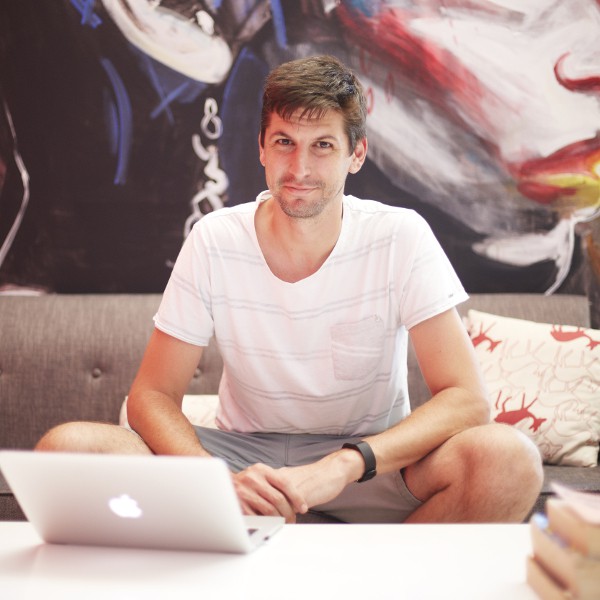
Iain Manley, founder and CEO of VoiceMap
The process of creating and vetting content
VoiceMap’s submissions undergo a strict vetting and editing process to ensure that each tour reaches a certain standard before being sold online and on their app.
“Location-aware audio is not something people are very familiar with so asking them to create a great audio tour without having been on one is a bit like asking someone to create a great film without ever having gone to the movies,” said Manley.
“We help them through the process of creating a tour – we divide it up into steps so we can map it out. They write up a script, which gets sent to our editors. Our focus isn’t really on changing the style of content but making sure that the logistics are going to work, that the directions are clear etc.”
Once the content is approved, the creator can then send sample audio, which is checked by a sound engineer, before the recording is done in full. “A lot of people just use a mobile device, they record on an iPhone or Android and we get very close to studio quality.”
For each purchased tour, the profits are split evenly between its creator and VoiceMap (after processing fees have been deducted). Manley remarks that this is one of the reasons why VoiceMap has been able to grow their content so quickly. Cape Town (where VoiceMap is based) has over 40 tours, over 30 in London, and growing numbers in cities across the USA, Europe, Singapore and Hong Kong.
VoiceMap also collaborates with large attractions and other players in the hospitality space, including world heritage sites, TKTS, the National Arts Council of Singapore, the Urban Redevelopment Authority and even the iLight Festival in Singapore.
“We normally take on the job of producing the tour. We do everything from mapping it out, producing and editing a script, selecting voice artists, recording, editing the audio, then adding sound effects, through to final publication.”
Most notable perhaps is VoiceMap’s collaboration with the Society of London Theatre where Sir Ian McKellen narrates a tour of Theatreland in the West End.
“In Ian McKellen’s case, he really is talking about a place he is passionate about and we had to dial him back because he knew so much history about the West End that he wanted to put in but we thought people should hear more of his own perspective.”
Yet, Manley is quick to emphasise “it’s not just celebrities; we’ve had amazing tours created by people you wouldn’t expect just because they’re really passionate about the place.”
VoiceMap’s focus is on truly getting listeners to connect with a certain place, landmark or even destination as a whole by conveying it through the eyes of another. “There’s that empathy that allows people to imagine themselves into the situation.”
Manley recalled his time working at a GPS audio tour company in Cape Town providing for open-top buses, cruise ships and larger attractions. “We had this production line and we would tell stories about [places] without any of us really appreciating what it meant to be from [there].”
Scaling is a key challenge
The advancement of mobile in both audio and GPS, coupled with the fact that most people consume their content through mobile, has set optimal conditions for a company like VoiceMap to thrive.
However, one of the key hurdles Manley sees is guiding first time users through the experience. For example, he’s observed that people tend to get nervous when there is silence during the auto-play as they shift from one spot to the next.
“The challenge is really just educating the market and changing behaviours… and manage people’s expectations when they do a tour for the first time. We have to be careful for the first 15 minutes to guide people through the experience.”
The pressure to scale quickly is undoubtedly a much larger challenge. “Our goal is to have thousands of these tours in hundreds of cities. As an app, every time we publish a new tour, the app’s utility increases because people don’t want an app they can [only] use in five cities.”
Yet without a large volume of high quality content available worldwide, keeping user interest and app engagement high won’t be easy. But, this is not a challenge VoiceMap faces alone.
Reflecting on VoiceMap’s key competitors, Manley observes that they range from absolutely no quality control whatsoever (a completely open platform), which offers typically poor user experience, to Andrew Mason’s (founder of Groupon) Detour, where all tours are created in-house to a high standard but at a steep cost.
Mason has the added benefit of a large personal fortune upon which to build Detour, Manley points out, an advantage VoiceMap did not have. Nevertheless, Sugar – a venture builder/incubator in Singapore – were quick to offer seed funding (amount undisclosed) to get the company off the ground.
“Once that happened, everything else moved very quickly. They knew a lot more about building a company so I didn’t have to fiddle my way forward through bootstrapping, which might have been good learning… Our runway from that was pretty much up.”
Once Sugar came on board, a VoiceMap prototype was developed within three months and their library of content began to grow. “At this point we’re pretty capital efficient, but we are fundraising at the moment.”