Chinese international travellers currently numbered an estimated 100 million, making China the world’s largest outbound travel market. By 2030, the country will have about 600 million middle class citizens and most of them will want to travel.
What drives the Chinese to travel so often and in such large numbers?
Because they can afford to, is one of the reasons. Nine out of 10 Chinese travellers now have the means, and are hoping to travel more frequently as compared to five years ago.
The higher disposable income, coupled with advanced technology solutions and access to relevant travel information, are the top three factors behind the continued growth of China’s travel trade.
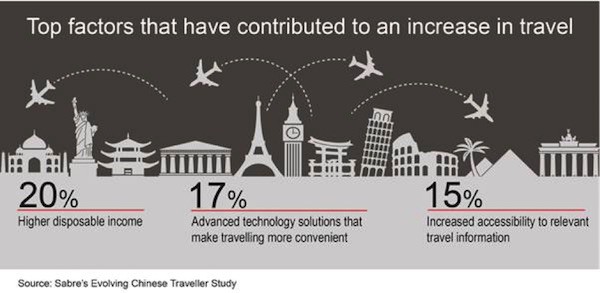
These insights were revealed in a study by Sabre Corporation, carried out in collaboration with Donghua University in January this year. It focuses on the Chinese traveller’s evolving preferences and major trends that are shaping China’s booming outbound travel.
“Technology and the continued increase in disposable income are driving today’s Chinese travel industry growth. As traveller motivations and preferences evolve, there is a great opportunity for the travel industry players to support and cater to their needs,” said Alan Chen, regional director, North Asia, Sabre Travel Network Asia Pacific.
Here are other revelations in the report.
Diversified motivations for travel
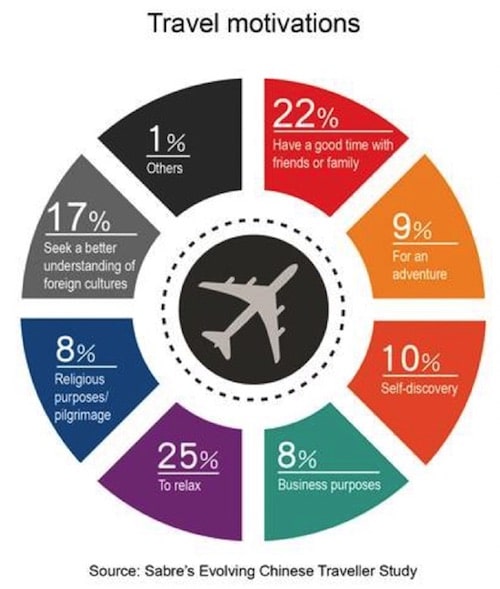
Today’s new generation of travellers, the digital natives who grew up with the Internet, tend to be more demanding when it comes to travel experiences and want more than the traditional sightseeing. The top three motivations are to find an outlet where they can relax (25%), have a good time with friends or family (22%), and seek a better understanding of foreign cultures (17%).
While 49% of the respondents see travel as a means of personal improvement over half (51%) say it has become a new form of social currency. For the latter this means that travel has become a platform to connect and build stronger emotional bonds (57%) and a way of enriching their life experiences to share with friends and family (56%).
More personalised travel experience
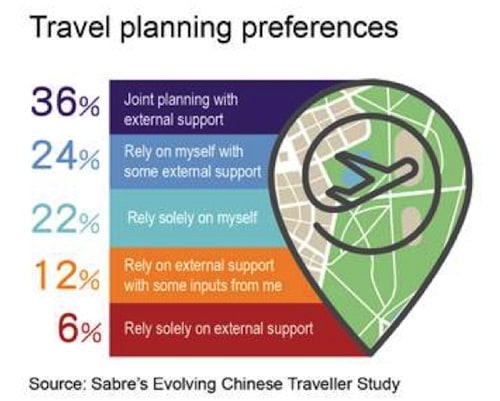
Chinese travellers are increasingly involved in travel planning, and seek the flexibility to plan independently. About 74% of respondents say they are willing to spend time to plan their travel, This reflects the growing sense of self-empowerment and investment in personalising travel experiences.
Support from travel service providers
Despite control over their holiday plans travellers still need support and trip guidance offered by travel providers and agents, especially with information overload. About 78% of the respondents welcome such support to help them cut through the clutter, and determine what is useful and relevant for them.
Three to five years ago respondents felt that there was a lack of travel information available to them (60%). Now, nearly half of the respondents (46%) believe that there are too many travel options and information available.
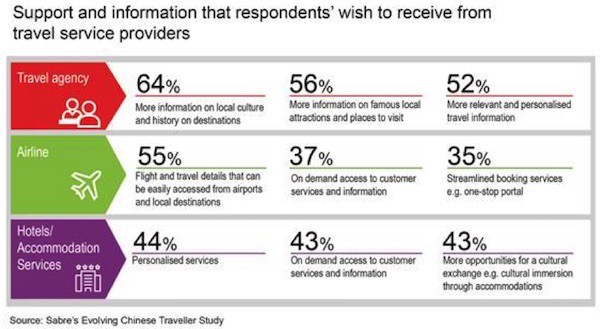
Sabre said it is bringing more data-driven decision support tools to market this year that will help airlines, hotels and travel agencies track and understand their customers’ evolving profiles in order to create more personalised and relevant experiences for travellers.
• Featured image credit (Chinese tourists at Miyajima Torii in Hiroshima): junce/iStock