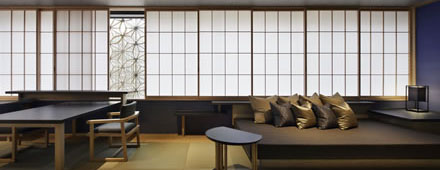
I suppose when you work in travel, you shouldn’t be surprised who you run into so when I heard that Hoshino Resorts was having a media lunch in Sydney the week I happened to be in town, I gatecrashed it.
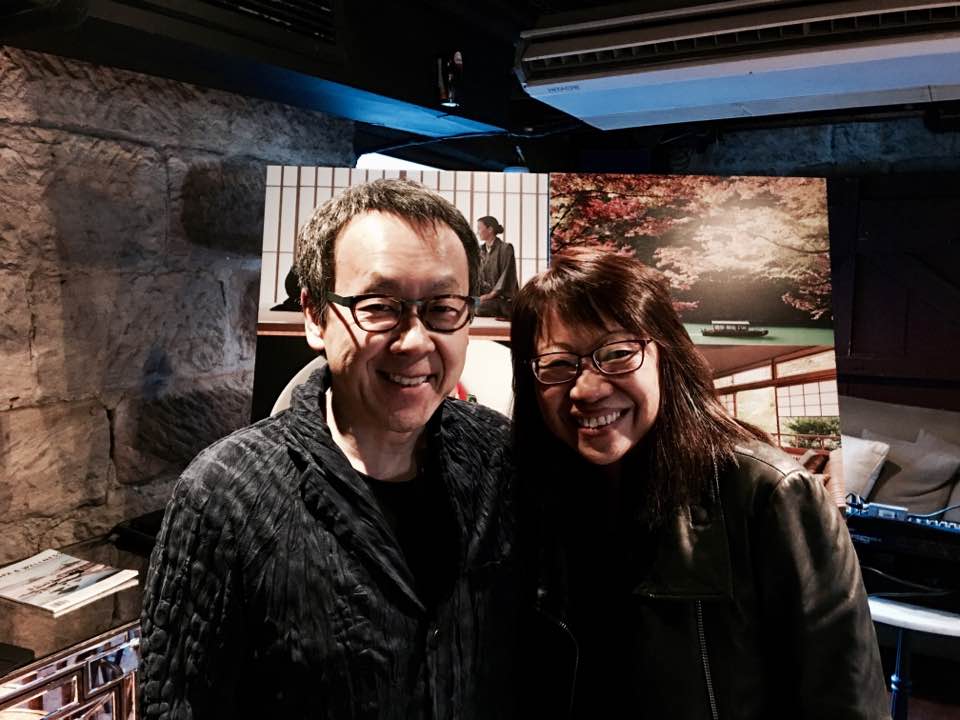
Catching up with Hoshino in Sydney at Sake On The Rocks
I wanted to catch up with Yoshiharu Hoshino, who wants to take his fourth-generation family business global by bringing Japanese ryokan hospitality to the rest of the world – plus it was an excuse to check out the much-talked-about Sake Restaurant located on The Rocks.
I like Hoshino’s approach to work and life, how he combines the two. When I asked him what he was doing in Sydney, he said, “You know, I am a big skier and I try and ski for 60 days of the year and every year, I spend 30 days in Australia and New Zealand. Summer in Japan is winter here – it’s perfect.”
His resort has an exchange programme with Cardrona Alpine Resort in Queenstown where the two exchange ski personnel and season pass holders of Hoshino Resorts can ski free in New Zealand and vice versa. Hoshino has similar programmes with leading ski resorts around the world.
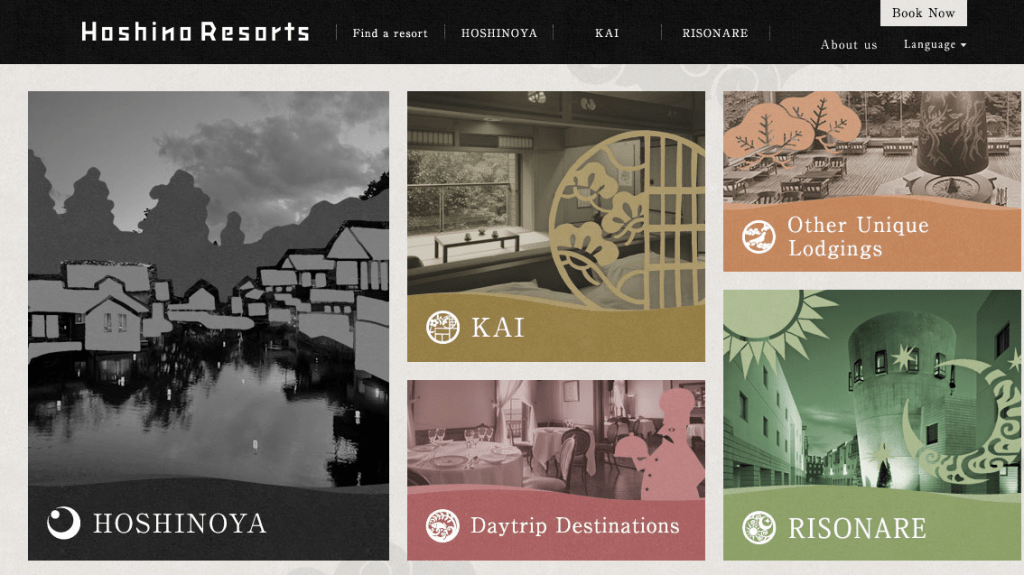
The different brands of Hoshino Resorts
While in Sydney, he thought, why not have an event to tell the media about Hoshino Resorts and its unique style of ryokan experiences under three brands, Hoshinoya, Risonare and Kai. “Already many Australians have visited our properties which number some 35 in Japan and it is clear that interest in Japan continues to grow.”
At the same time, he is on the lookout for locations to bring his brands outside Japan. There is a Hoshinoya in Tokyo, the first breakthrough for the company.
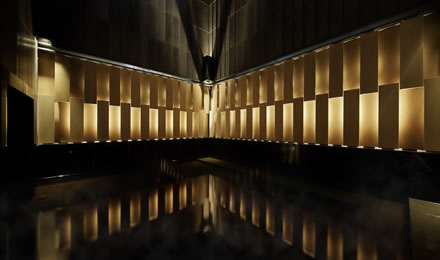
Hoshinoya Tokyo, his first urban property. “Japanese ryokans in the city is something I’ve wanted to do for more than 10 years.”
Said Hoshino of the Tokyo property, “Japanese ryokans in the city is something I’ve wanted to do for more than 10 years. We wanted to create the kind of traditional ryokan that can work in large cities – where business people and tourists come to experience the Japanese ryokan style. So in future, we want them to choose us not because we are in Japan but because Japanese ryokans are more appealing to them than Western-style hotels.”
The first Hoshinoya outside Japan opened in Bali this year. “Our objective is to adapt the ryokan concept to work in major cities such as Sydney, London and New York and to establish an entirely new accommodation category in these markets in the future.
“Japan has become a very popular destination among Australian travellers. At the same time, we believe the cosmopolitan cities in Australia are the epicentres for trendsetting which will readily welcome new accommodation concepts.”
But he admits to challenges because while the Hoshino name is known inside Japan, its brand recognition outside is not. “We are growing but not fast enough so we are working hard to promote ourselves overseas.”
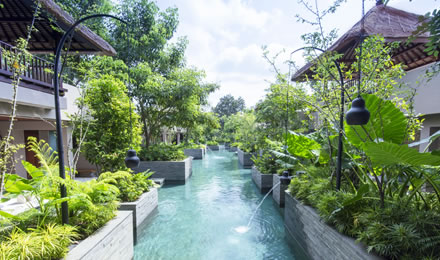
Hoshinoya Bali, the first branded experience outside Japan: Expanding the brand outside Japan has been a challenge due to low brand recognition outside its home country.
He is also watching the growing trend of “minpaku” (private) accommodation closely with the Japanese government recently agreeing to legalise the sector.
“This is a new accommodation style created by the IT revolution and it is changing our industry, just like Uber did to transportation. We have to accept them. It’s great for guests to have a wider range of accommodation and investors and developers like it as well.
“My concern is many hotels have become too close to “minpaku” because many have scaled down services, and consumers see the two blending. We have to become THE hospitality industry again.
“Yes, we have to be efficient but we shouldn’t make it so stripped down, we have to provide value, otherwise we can’t compete.”
One positive thing is that for the first time, property owners can now evaluate guests. “Perhaps if we develop this for the hotel industry, guests have to be polite and nice. I think as the “minpaku” trend grows, we can adopt some technology that will allow us to rate and select our customers.”
Hoshino is well aware of the struggles Japanese companies have had expanding overseas but he is confident he can do this via the ryokan approach.
He believes that if the urban ryokan concept works in Tokyo, it will be a template that can be reproduced in any large city. “In the 1980s when I was studying hotel management in the US, Japanese hotel companies tried to expand their business in cities like New York and San Francisco but failed. And the main reason is that they went abroad to manage Western-style hotels when there was no reason for the market to accept that idea. It’s like a foreigner coming into Japan to start a sushi chain, the Japanese would feel uncomfortable.
“So instead of going overseas to manage western hotels, we should make adjustments to traditional Japanese ryokans and bring that concept overseas. That’s the only path that I believe Japanese companies can take to expand outside of the country.”
It may be a crazy idea but “that’s something I want to do with my career,” Hoshino stresses. “It has partly to do with succession. The ryokan has been a family business for more than 100 years. I’m fourth generation and I need to pass it on to the fifth and sixth generation. So we have to keep improving ourselves and expanding. If someone has to do it, we should be the one.”