
Robert Meza is the Head of Travel of the ENTERTAINER
In 2013, one article reported that Ctrip had achieved more mobile bookings than desktop, and this was probably the first time that the term Mobile Travel Agency (MTA) had made sense to me.
In retrospect, I’m not of the opinion that larger Online Travel Agencies (OTAs) woke up immediately to the opportunity that presented to them by the mobile.
To this point, Expedia openly admitted to following a “mobile-second strategy” until 2015.
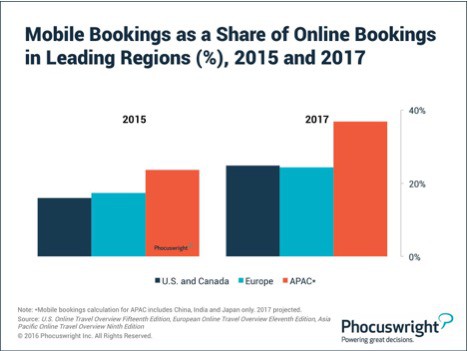
Today, we are witnessing how mobile adoption in the travel industry continues to grow at an astounding rate, and this goes beyond the U.S. and European markets. In fact, a recent Phocuswright report revealed that the Asia Pacific region is leading the mobile charge.
A recent report in Daily Travel News also predicted that half of direct online bookings would be generated from mobile devices in 2017.
Despite all evidence showing the positive influence mobile has had, and can still have, on travel booking numbers and revenue, there still appears to be a huge gap that most travel companies have not taken advantage of. This opportunity lies within the experience-driven in-destination market.
It may come as no surprise to those in the travel industry how the in-destination opportunity has long been passed over in favour of selling hotel room nights and flights.
This, of course, had its merit, as the value of a flight or a hotel room – both more expensive than the price of a desert safari for example. However, the value does not equate the margin. The margin potential with the in-destination market is at very healthy levels.
Three words
Leaving margins and bookings aside, ask yourself the question, “why do most people travel?” Three words: discovery, exploration, and experience. It means taking a city sightseeing tour bus to get the lay of the land, perhaps buying a ticket to a museum or even just enjoying a walking tour of a town they’ve just arrived in.
Phocuswright revealed that activities, tours, attractions, and events alone were worth about $135 billion worldwide, and this does not even include dining and shopping. A significant amount of these bookings are made while the traveller is in the destination.
If “the mobile phone is the number one item that people take on holiday, with millennials likely to touch their smartphone more than 40 times a day,” could a travel-focused company and industry be any better positioned, to take advantage of mobile and serve their customers the things they want to do once they get to a destination?
There is a lot of work being done behind the scenes as it is very fragmented and not nearly as up-to-date as hotels and flights. Most of the companies are focused not on the whole in-destination experience, but on addressing only bits and pieces of the possibility.
Building a world-class mobile experience to serve the in-destination market takes digitising a lot of working parts – dining offers, day planners, guides, and instant booking of tours and activities. It’s about the entire experience.
Customising for specific demographics, whether telcos, airlines or even financial institutions who want to connect with customer loyalty, can add another layer of sophistication to the effort in creating more value for their consumers. But in the long game of trendsetting, it’s important to know which side you are on.
The market is wide open and large enough, so it’s still anybody’s game.
This is a sponsored article by the Entertainer. Find out more about Entertainer go and the Entertainer Guest.