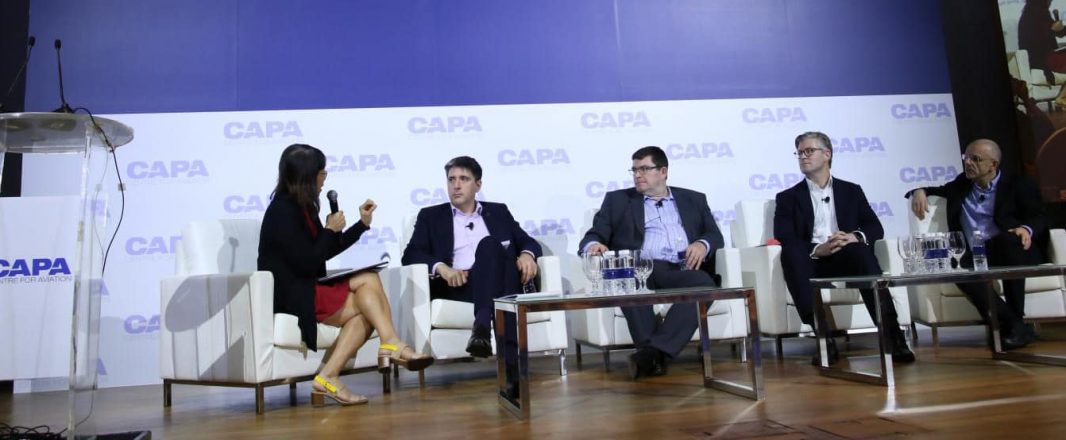
Airlines, particularly, those in the West should start looking east, specifically, to China to understand where mobile, ecommerce and payments are headed. That was the message from Hugh Aiken, senior director of strategic partnerships, Skyscanner, at the recent CAPA Global LCC Summit, when asked about opportunities for airlines when considering their distribution strategies.
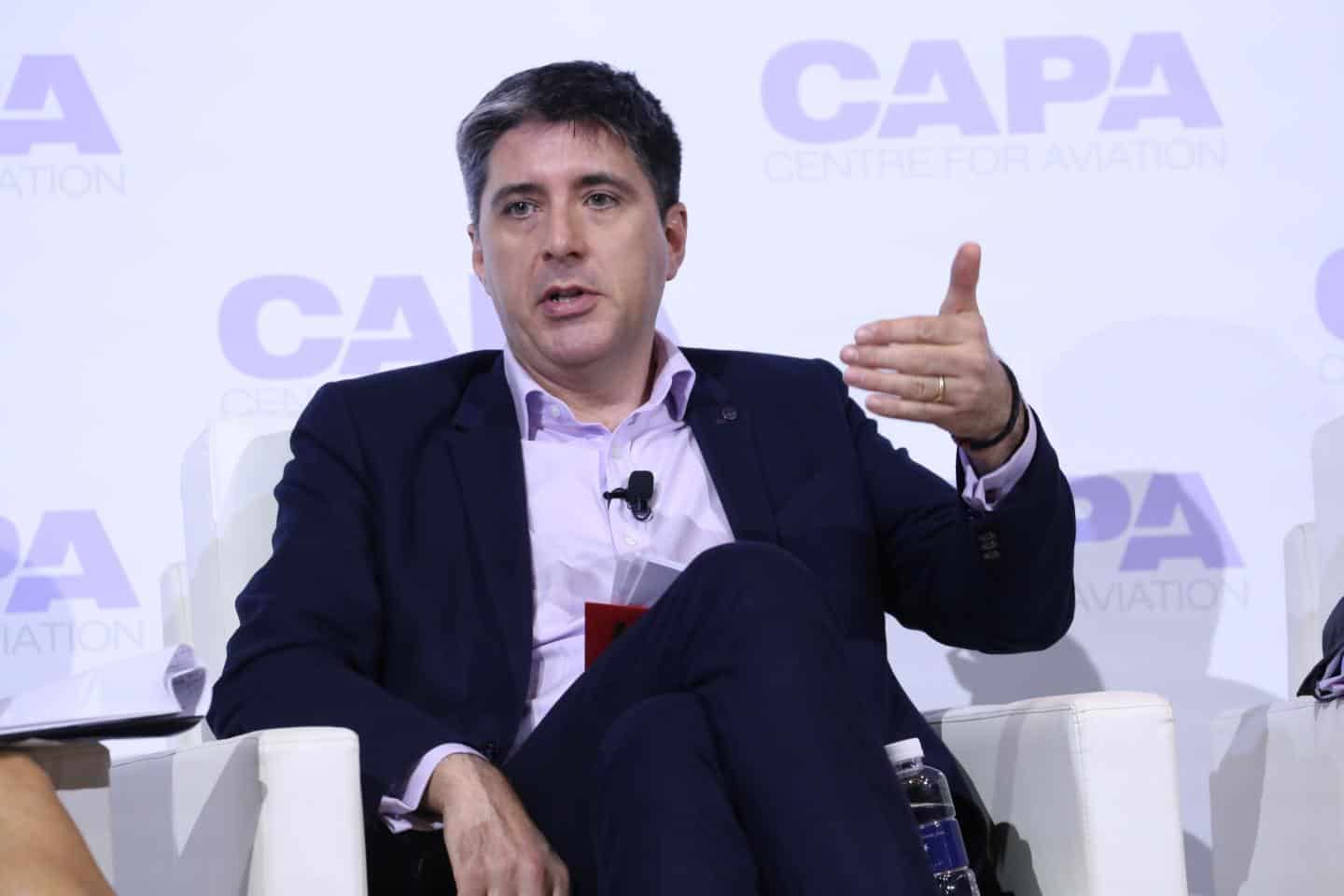
Hugh Aiken: “How does airline.com stand out in a world of “Hey Alexa, where can I go this weekend for less than $200?”
Speaking on a panel on “Evolving LCC distribution strategies to adjust to new business models”, Aiken said Chinese travel would not only influence distribution strategies but it was also setting the pace in terms of product.
A Skyscanner report on China, released last August, shows the aviation market in China doubling in size by 2035 and outbound travellers crossing 122 million in 2016, and said that companies would have to acquire local knowledge and execute locally to gain advantage in the market.
Before it was acquired by Ctrip in 2016, Skyscanner had taken a local approach by acquiring a local business, Youbibi, in 2014. In China, Skyscanner is known as Tianxun (Chinese for ‘scan the skies’) and the report said that during 2015, Tianxun saw a 67% increase in visitors and year over year revenue growth in the market was at 78% by September 2016.
Product wise, it has released specific features tailored to the Chinese market, for example, an ‘inspirational feed’ on the Tianxun app. “Chinese travelers only have between 5 and 10 days of annual leave per year, and just 5% have a passport, yet traveling abroad is increasingly popular. We realized that providing inspiration via editorial content was crucial in illustrating the travel possibilities on offer in a market where foreign travel is at a less mature stage,” said the report.
Another opportunity highlighted by Aiken on the panel was value-based recommendations and learning from others such as Netflix. “This approach can drive conversion and customer engagement – and we’ve not seen anyone do this well in aviation to date.”
On the same panel, Jonathan Newman, commercial director of Barcelona-based Caravelo, a technology company providing solutions to airlines such as ability to sell upgrades and a white-label travel concierge named Nina, said another opportunity in distribution was a change in model from loyalty to subscriptions.
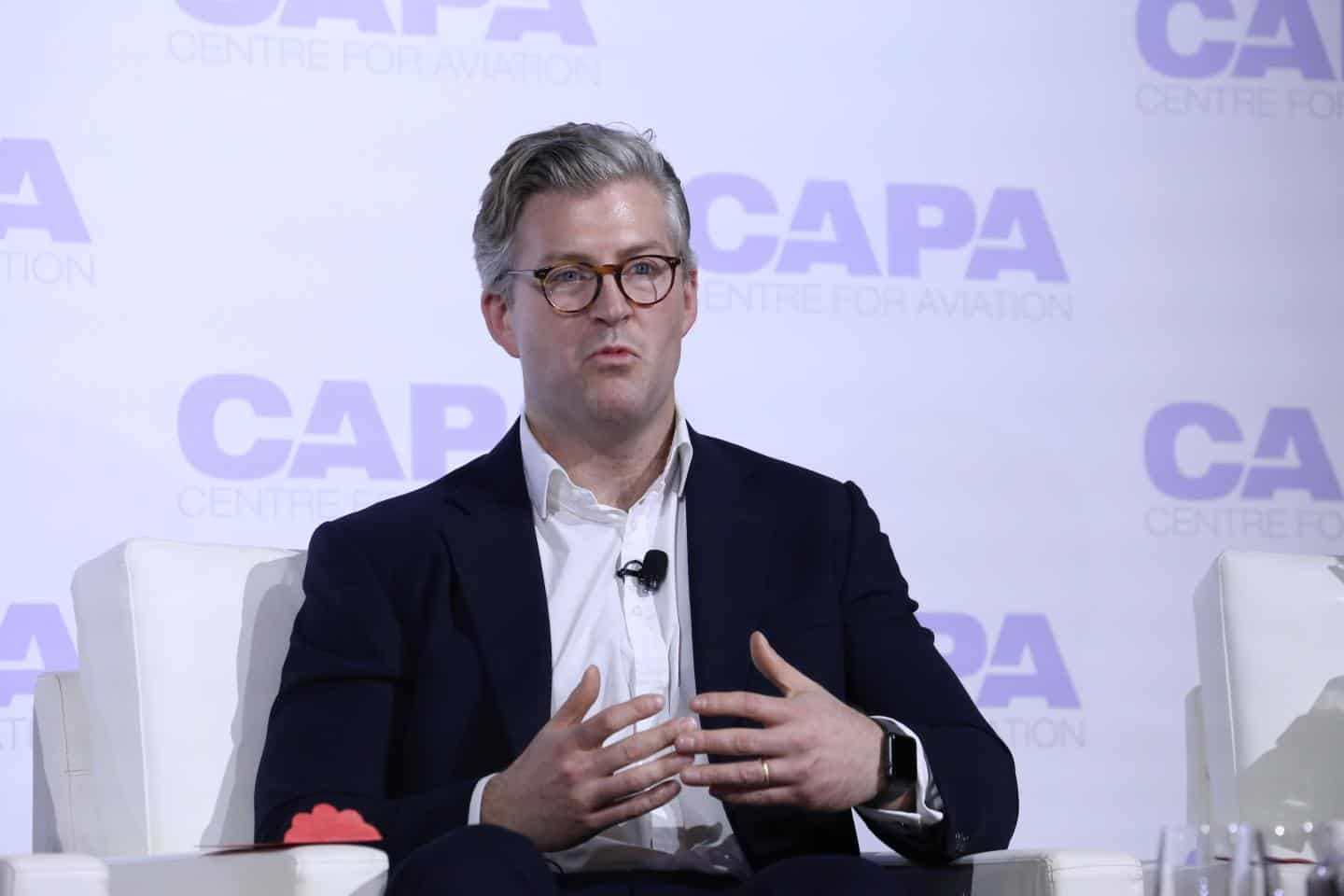
Jonathan Newman: Caravelo’s Vale chatbot platform is being used by Volaris of Mexico.
This shift towards subscriptions is being driven by the big tech companies (of course). Amazon made $9.7b in revenues last year from subscriptions, a growth of 52% from the previous year. Amazon Web Services, which is targeting travel as a vertical, generated about $4.3 billion in operating profits last year, 52% more than the profits earned by the company’s North American retail arm on one-sixth the revenue. (article here)
In travel, Secret Retreats, a “curated community of privately owned and passionately managed exclusively Asian boutique hotels, yachts, lodges, villas and inns”, is based on a subscription model.
Whether it can work with airlines remains to be seen but Newman said airlines also have the opportunity to become end-to-end travel service providers rather than segment-based flight operations and this would require “internal digital transformation including automation of legacy systems and processes that have been unique to the airline industry”.
A trend pointed out by both Newman and Aiken was the rise of new channels such as voice. Asked Aiken, “How does airline.com stand out in a world of ‘Hey, Alexa, where can I go this weekend for $200?’.”
In announcing Amazon’s fourth quarter sales of $609.5b, an increase of 38%, founder and CEO Jeff Bezos said, “Our 2017 projections for Alexa were very optimistic, and we far exceeded them. We don’t see positive surprises of this magnitude very often — expect us to double down.
“We’ve reached an important point where other companies and developers are accelerating adoption of Alexa. There are now over 30,000 skills from outside developers, customers can control more than 4,000 smart home devices from 1,200 unique brands with Alexa, and we’re seeing strong response to our new far-field voice kit for manufacturers.”
While Aiken said the percentage of searches via voice was still minimal on Skyscanner, a voice-led future would pose challenges to airlines on how they differentiate in a brand-agnostic environment versus a T-mall model where brands would still be able to stand out.
Newman cited conversational commerce as a trend to watch. It has its travel concierge, Nina, and recently developed the Vale chatbot platform which is being used by Mexico-based Volaris to offer sales and servicing for its v.club members through Facebook messenger.
Holger Blankenstein, chief commercial officer of Volaris, was quoted as saying, “Chatbot technology, underpinned with AI, will revolutionise the way airlines engage with their customers. We are firm in the technology and will continue to evolve Vale to be a full-time personal assistant for our travellers.”
When the panelists, which also included Director New Distribution Capability, Yanik Hoyles, and Ian Heywood, VP Product & Marketing, Air Commerce, Travelport, were asked if they saw chatbots as more service or commerce, the resounding answer was service.
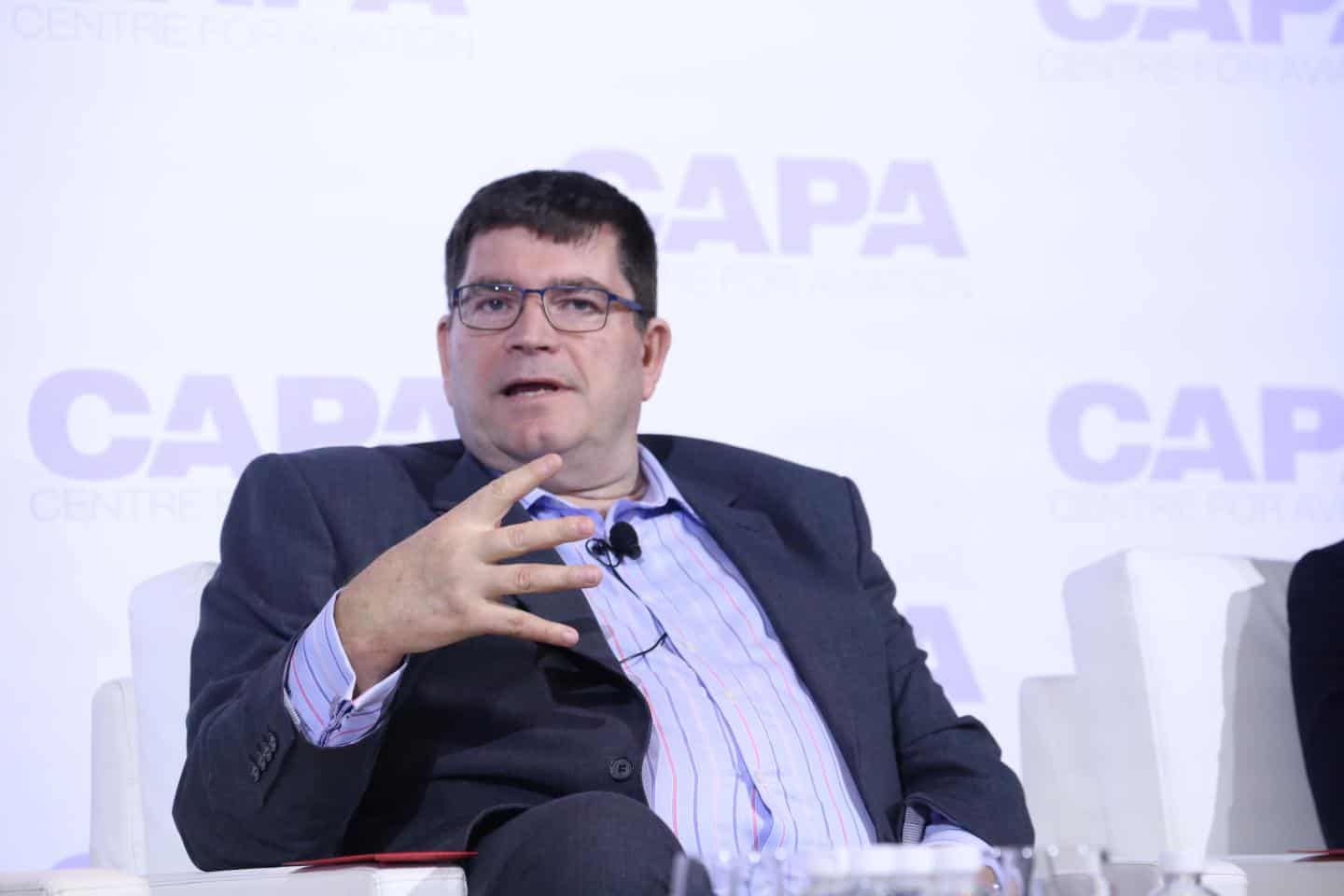
Ian Heywood: New solutions are enabling airlines to differentiate and retail and merchandise better.
IATA’s Hoyles and Heywood spoke of the changes to IATA’s NDC, including the IATA One Order. An article in the travel business newsletter, The Beat, says, “One Order could reengineer mid- and back-office agency operations, entice new distributors into travel, overhaul how airlines and travel management companies help disrupted passengers, transform the quality of management information and change how corporate clients pay for travel.
“One Order will be much bigger than NDC,” said Travelfusion CEO Moshe Rafiah in the article.
Hoyles said NDC would allow traditional airlines to catch up or even overtake their low cost competitors in retailing commerce while Heywood said new tech like voice notwithstanding, NDC would allow airlines to differentiate better in an ecommerce environment.
In its report on “The changing dynamics of airline distribution in South-east Asia”, Travelport noted the airline challenge of creating differentiation. “Passengers today think most airlines have little differentiation (35% of leisure passengers and 42% of business passengers younger than 50 years are likely to view airlines as pretty much the same.”
Other than China, it is clear that South-east Asia will also play a major role in influencing the future of airline distribution, with airlines like Scoot, Cebu Pacific and AirAsia taking the lead in changing the status quo. According to the Travelport report, there are 23 LCCs in ASEAN and they now contribute to more than 50% of domestic seats and 20% of international seats compared to only 30% domestic and 4% international in 2007.
The fastest growth distribution channel is mobile. Criteo reported that 54% of travel bookings are now made in-app.
Many airlines are not optimizing their mobile proposition, said Travelport, adding, “By adopting personal push notifications, airlines are seeing a 9% increase in conversion rates.”
Heywood is bullish on driving ancillary revenues. Airline ancillary sales in 2017 were $82b while airline profitability will be $32m, the Travelport report noted.
Of course, the next wave in ancillary revenues could come from other products and services that could be sold inflight to a captive audience, with Peter Harbison, executive chairman of CAPA, saying this could be the next big thing.
To which Heywood quipped, “I dread that future.”