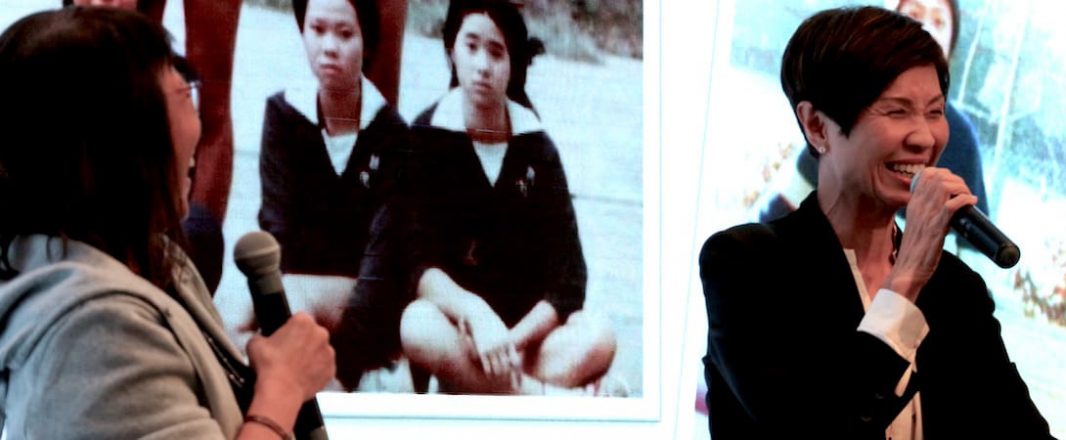
Rainy Chan’s career has seen far more than the proliferation of technology through hospitality. Beginning as a receptionist, she made a steady climb to the top of the hospitality ladder as Regional Vice President of The Peninsula Hotels and General Manager of The Peninsula Hong Kong, before starting her sabbatical this year.
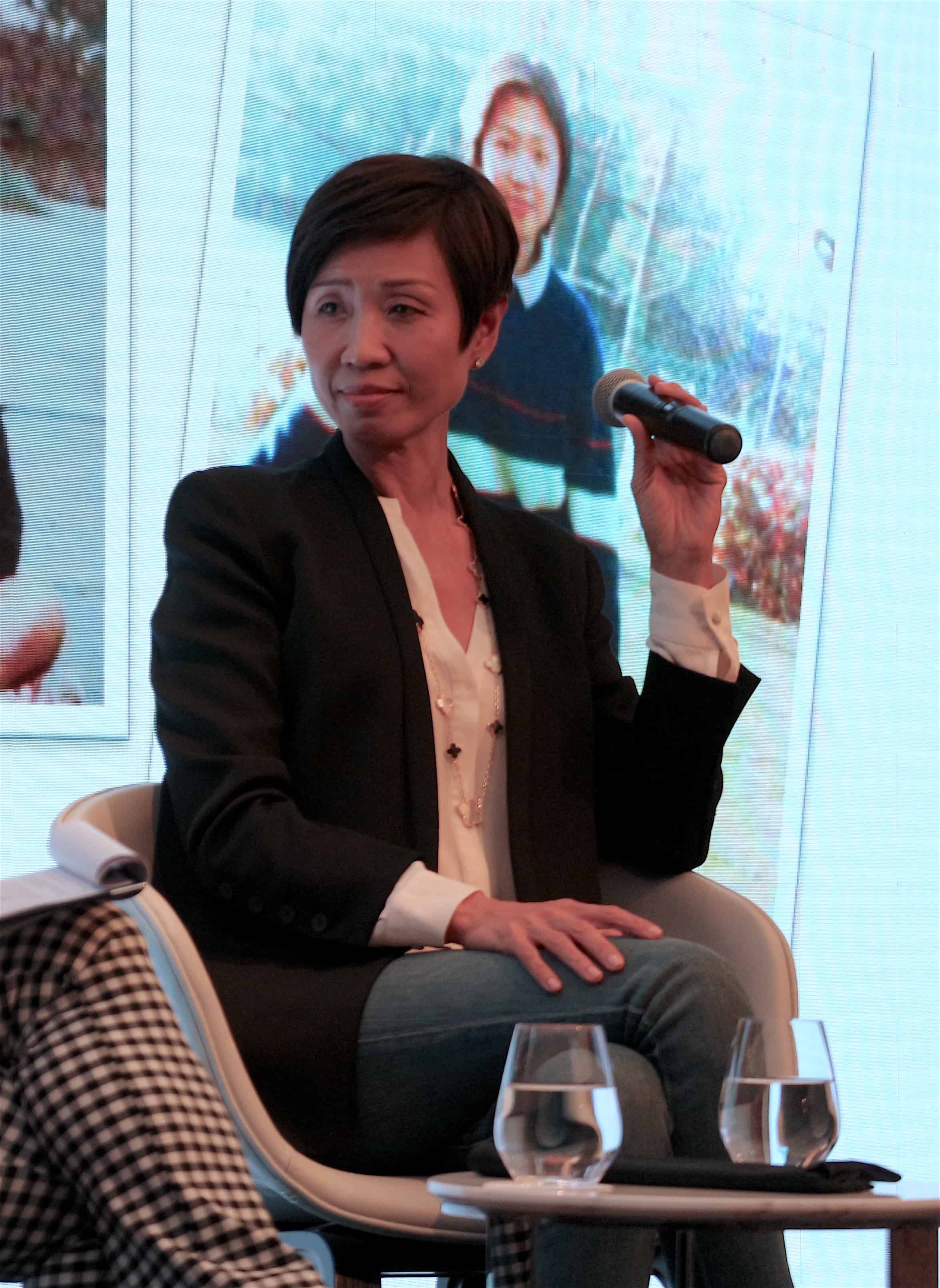
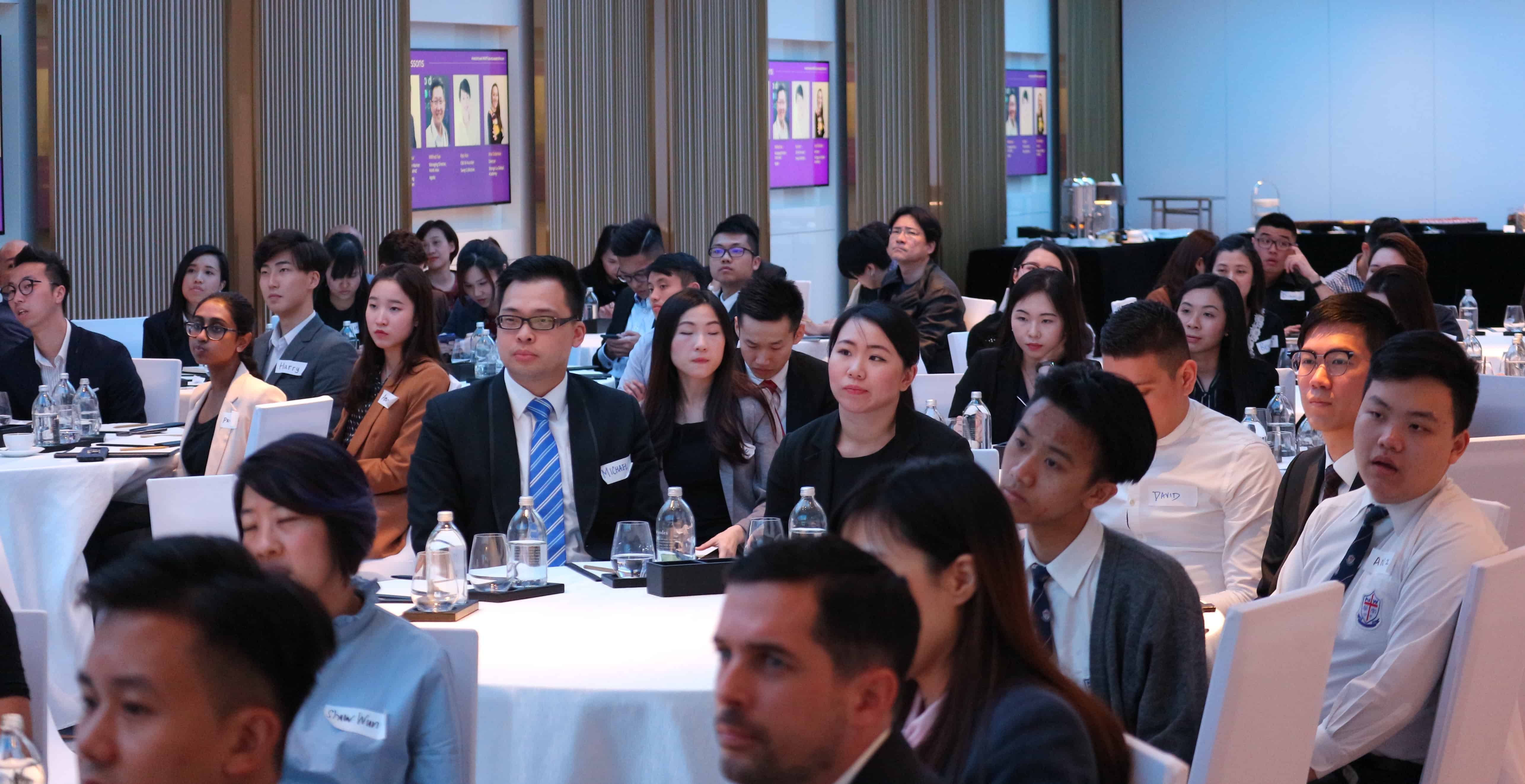
At the WIT Future Leaders Forum, Chan gave the audience of young executives a glimpse into how her life experiences, lessons and philosophies shaped her outlook as a leader.
The early years
Rainy Chan grew up in a household led by a father that believed education was not important. Fortunately, her mother believed the opposite and nurtured Chan with the determination to make the most of her education, regardless of the other responsibilities she took on as the eldest daughter.
Chan worked part-time to make ends meet, supporting her four sisters, which came at the cost of her schoolwork. It was at the insistence of her English teacher about the importance of the language. “My English teacher was very insistent that I continue to learn… She helped me a lot. While I couldn’t manage all my subjects, I never gave up English.”
Chan regards her experience as the eldest child as preparation for her future role as a leader. “As you learn in life, you want to influence the people you care about in a positive way… you don’t wan to just teach, you want to inspire.”
It was one of the philosophies Chan carried at the back of her mind throughout her life as she planned to seize and excel in whatever opportunities arose.
 On opportunities
That being said, the opportunity for a career in hospitality did not simply fall into her lap. “In Hong Kong, at that time it was impossible to get into hotels because I didn’t have a college degree. I couldn’t get into hotels because no matter what job you applied for, they always asked for a high education.”
Her first step into hospitality was as a receptionist at a health club, a job she got through her friend’s boyfriend who was a manager. Like hospitality, “it was also a service job.”
It was only when she moved to Hawaii and pursued a receptionist position at the InterContinental in Maui that Chan got a real taste of what the hospitality industry had to offer.
“I went for my interview in my black suit and I realised that nobody else was wearing shoes, [everyone was in flip flops, in true Hawaiian-casual style].” She caught the attention of the HR director, making a memorable impression with her “sophisticated” and formal demeanour.
However, the job came with the condition that the candidate could use a typewriter (typing at least 30 words per minute). Demanding to be given a chance, Chan requested she be given two weeks to learn how, practicing on a very old, mechanical typewriter. On the test day, she was confronted with an electronic one, significantly different to that on which she’d practiced.
“I failed the test, but she hired me because of my attitude. [The HR director] said, I can teach you how to type but I cannot find an attitude like yours, I am hiring you for your potential.”
“I’ve carried that learning with me all my life. I’ve never looked at someone by what they can do now. I look at someone with what they should be able to do given the right opportunity.”
On challenges: women in leadership
The bigger challenges Chan needed to confront throughout her career, however, were not down to what skills she had or hadn’t yet developed in her career. Rather, it concerned the industry’s readiness to take on a strong, female leader. It was a challenge that required more than hard work on Chan’s part. It required a fundamental shift in the hospitality industry’s mindset and attitudes towards women.
“I never really quite compared myself with others. In our industry, you work hard whether or not you want to. What was hard for me was the industry was not ready really for females to take leadership roles. When I became a front office manager 23 years ago, it was big news… The question I heard most often was ‘where is your boss?’”
“When I became general manager in Bangkok, the world was changing but Thailand was not.”
She recalled the flurry of sexist comments she’d receive on a daily basis by her male counterparts, often being judged on her appearance over intellect, despite her already impressive credentials.
Fortunately, she believes that there indeed has been progress in attitudes towards women in the hospitality workplace. “Hotel schools now have more women than men but it’s a matter of how many of those women enter into top positions.”
After all, the hotel industry is run by women, but there are so few at the top. “I think it’s always about a good balance”; a good combination of both male and female traits would lend itself to more effective leadership.
Nevertheless, issues of diversity in the workplace extend beyond a single industry into the cultural and societal restraints that are much harder to shift.
“Often times, it is our choice [not to take top roles]… the demands of the job, the travelling, your family may not give you the understanding you need,” to embrace higher roles that you could excel in. It is arguably a systemic issue.
“Women have different phases in our life that require different types of support… Look at maternity. When women come back to work, it’s a really big decision. For the first time, they’re separated from a little baby. Emotionally, three months is not a long time.”
So, Chan implemented a policy that would allow mothers to bring their child in once a day to breastfeed, as well as providing paternity leave. “We are evolving and that support will encourage women to grow their career without needing to give up something that’s important to them, like their family.”
On loyalty
While Chan’s career has spanned an incredible range of job positions, the majority of her working life has only been spent between two hospitality companies; a rare type of loyalty these days. Yet, for her, loyalty meant far more than how long she’d been in any one company.
“I think loyalty should not be measured by years of service… for me, I stayed because I never doubted or questioned if I should leave. As long as I had reasons to come to work, was happy, had responsibilities and that the company trusted me, and also accepted who I am. They invested lots of resources for me to grow. That was something I demanded, that I needed to learn. I was transferred to different areas, learned different things.”
For younger generations just entering the workforce, “in today’s world, you cannot expect employees to give you the same level of opportunity. If you’re in the same position for more than three years and there’s no intention or opportunity to change your position or your location, then you’ll stop learning. In three, five and ten years, you should consider – ‘am I still happy?’”
But cultivating loyalty to retain younger employees should not come and the expense of ignoring those in middle management roles who have already devoted years of their life to service. Their loyalty must be maintained too, albeit in slightly different ways.
“I think as an industry, there are so many things we have to do to evolve to make our industry more interesting and attractive. I know it’s right to focus on young people because it’s sad for me that young people don’t want to join [it].”
That being said, “I think there’s a great need for improvement in how we look at experienced staff that have been in the industry for a long time and stay more or less in the same position. There is not enough for them to grow and companies are not encouraging them,” beyond offering pay increases to maintain their roles.
With a staff body at the Peninsula Hong Kong that spans four generations, Chan said that to keep older workers engaged and inspired, company leaders must bridge the generation gap between their employees. Chan asked herself, “How do I impose a standard with four different approaches? So that each generation feels relevant to what the hotel is trying to do.”
“We created different ways of communicating with different generations so they can see information and execute goals in a way they can relate to.”
To bridge the gap in communication between staff generations, Chan also created an annual ‘family open house’, where staff family members were invited to visit hotels during working hours and experience the hotel.
“For many staff, their families had never been to the Peninsula despite them having worked for 25 years… the first time we did it, older generations would bring their children and younger staff would bring their parents and even grandparents.”
Doing so let colleagues mingle on a very different level than they were used to. “They became friends even, in many ways I bridged the generation gap not by telling them what they should learn from each other but by bringing things that are important in their life into the workplace.”