
“Glaciers melting in the dead of night, And the superstars sucked into the supermassive (black hole)” so goes the song by Muse – a fitting soundtrack, given the name of Meta’s new agent.
That’s the refrain playing in my head amid the Great Agentic Arms Race unfolding before our very eyes. Travel’s glaciers are melting in the heat of AI. Will the superstars be sucked into the supermassive black hole of the new AI gatekeepers, or will they find their own galaxy?
Eight weeks ago, nobody in travel was talking about Muse. This week, everybody is trying to get into it.
Meta launched its personal agent in the US on September 8, and Mark Zuckerberg has highlighted travel as one of its top use cases.
When Muse launched in Japan, Klook was among the first on board. The day it launched in Singapore, Agoda went live as a connector, alongside early partners including Singapore Airlines, Klook and Trip.com, Shopee, Grab, Lazada and ShopBack.
Then there’s OpenAI’s Dots. And Instinct, the text-message agent built by a 23-year-old, now valued at US$10 billion, which says more than half of its transactions are travel.

At WiT Singapore, Agoda’s CTO Idan Zalzberg likened the current disruption to a game of squash. “To be good at squash, you have to do two things,” he said. “You have to be very fast. And you have to position yourself in a good place on the court. If you corner yourself and the ball goes to the other side, you’re not going to make it, no matter how fast you are.”
Other than the advice about the T-zone, he also insisted that “travel deserves its own agent”, so don’t be surprised by what comes out of Agoda in the coming weeks. These days, products ship as fast as a squash ball gets hit.
Owning that front door – the customer’s first move – is high stakes. Booking alone spent more than US$8 billion on marketing last year to buy it.
So how are the giants arming themselves?
Booking Holdings is building its own. On September 29, it launched Lola, an AI agent for hotels, restaurants, events and whole trips, founded by Steve Hafner and Paul English. Two weeks later came Vayo, a Seattle startup led by Mike Fridgen, with a planned US$100 million behind it. The logic: spin them out as startups so they can be AI-native without the baggage of the mothership.

Agoda’s CTO Idan Zalzberg likened the current disruption to a game of squash. “To be good at squash, you have to do two things,” he said. “You have to be very fast. And you have to position yourself in a good place on the court. If you corner yourself and the ball goes to the other side, you’re not going to make it, no matter how fast you are.”
Expedia is plugging into everyone. It signed up to sell hotels inside Muse in the US, staying merchant of record while payment happens in Meta’s interface. It is also in Google’s agentic booking and has its own ChatGPT app. And this week it dropped 30-plus AI features across Expedia, Hotels.com and Vrbo. Ariane Gorin’s bet: be wherever the traveller is, and be the engine underneath.
Trip.com Group wants to be both. Chairman James Liang has said the goal is to be the go-to app and the trusted infrastructure for AI agents. TripGenie will book and pay through Mastercard’s Agent Suite from 2027. Trip.Biz launched Agent One for corporate travel. And Trip.com is among Muse’s launch partners in Singapore.
The suppliers are moving too. Last week Wyndham’s Geoff Ballotti told Wall Street that Muse, Dots and Instinct can now book Wyndham hotels directly, fed straight from its central reservation system. Cloudbeds has wired independent hotels into Muse so the booking lands in the hotel’s own engine, not an OTA’s.
Then there are the economics. Zuckerberg told analysts Meta could take a percentage of the value Muse helps create. If that happens, an agent-sourced booking might carry a fee on top of the OTA’s commission, which means the middleman gets a middleman.
So every travel brand now faces the same question I hear in every WiT corridor: do you feed the agent, or fight it? Feed it, and you risk becoming an invisible wholesale feed behind someone else’s interface. Fight it, and you risk being absent from the place your next customer starts.
Amid the ruckus, it’s good to keep perspective. That front door is barely open – yet. Booking’s Glenn Fogel says AI agents drive well under 1% of Booking’s room nights. And when I ask Muse or Instinct for a hotel today, they mostly take me to the OTAs.
That shouldn’t lull us into complacency, though. New gatekeepers are knocking on travel’s front door, and it pays to be Zen but vigilant.
And what happens when something goes wrong mid-trip? That, says Rajnish Kumar, co-CEO of ixigo, may be where the real battle is.
“If we as an industry make our inventory accessible to AI agents, we open the door to more competition at the consumer layer. But that is not necessarily a bad thing,” he says. “As [the] effort comes down, more travel intent can turn into actual bookings. That creates an opportunity to grow the overall market.”
It also changes what travel companies compete on. “The booking funnel we have spent years optimising becomes less of a differentiator. What matters more is whether we actually deliver. Was the reservation honoured? Were changes handled smoothly? How quickly did the refund arrive? An agent that learns from those outcomes has a reason to keep returning to the most reliable provider.”
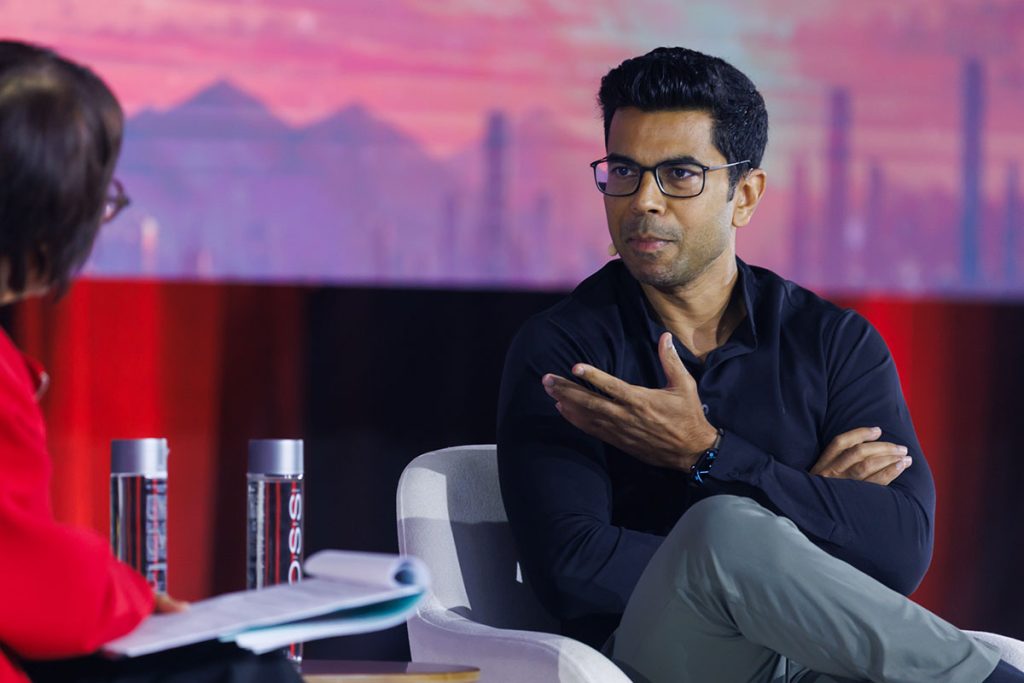
“If we as an industry make our inventory accessible to AI agents, we open the door to more competition at the consumer layer. But that is not necessarily a bad thing. As [the] effort comes down, more travel intent can turn into actual bookings. That creates an opportunity to grow the overall market,” said Rajnish Kumar, co-CEO of ixigo
His advice: do both. Let external agents book your inventory, and build your own assistant that handles travel – changes, cancellations, refunds – better than any general-purpose agent can, so customers have a reason to come back directly. Because, as he puts it: “The real risk is becoming dependent on one dominant AI platform for access to customers. The market could get bigger while your bargaining power gets smaller.”
So stay quick on your feet, and get back to the T. Otherwise, you might just get sucked into the supermassive black hole.