If there is one thing travel entrepreneurs Uttara Sarkar Crees, Andrew Dixon and Simon Wong have in common, it is that they all got into what they are doing by accident but are now following their passion and paths with purpose.
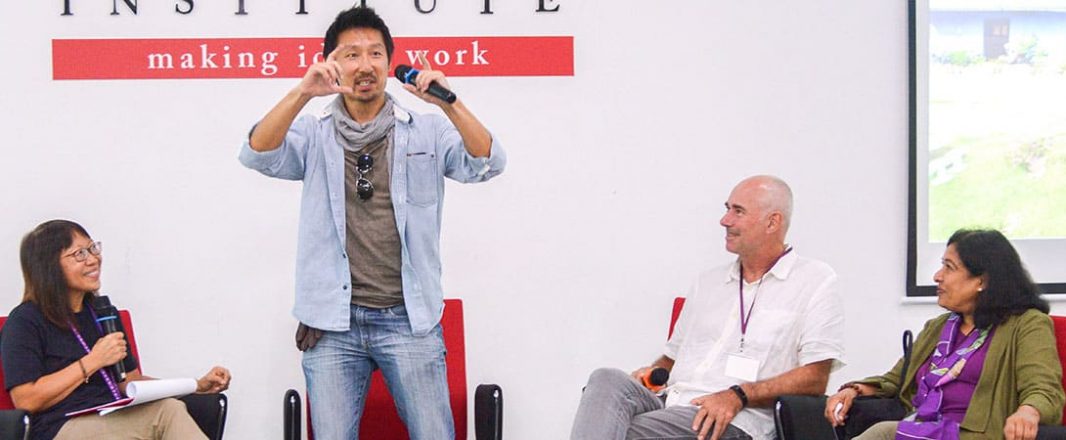
Speaking at the inaugural WIT Indie in Penang last week, the trio shared their journeys with fellow independents and creatives gathered for the one‐day event focused on the long tail of travel.
The beginning of their journeys
Born in Uganda of Bengali parents, Uttara moved to China’s Shangri‐La about two decades ago through a mix of “circumstances, love and passion”.
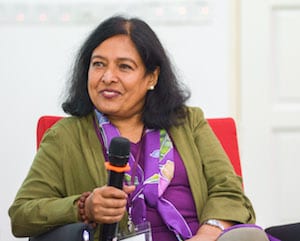
Circumstances, love and passion” led Uttara Sarkar Crees to China’s Shangri‐La
In Africa, surrounded by jungles, mountains and plantations, she grew to love nature and when further studies took her to Darjeeling in the mountainous north of India, she knew she had found her natural element. From there, she moved to Nepal where she became part of the pioneering team that set up Tiger Tops, Asia’s first luxury lodge, and its adventure travel arm, Mountain Travel,
“During the course of working there, I became more and more involved with ecotourism, became an ecotourism planner and then went to China as a consultant to help create the first ecotourism project involving pandas.”
Uttara was involved with the Wanglang Panda Sanctuary in Sichuan Province, where she advised local authorities on how to introduce eco‐tourism principles and activities to the area and making the model financially sustainable.
In 1996, she moved to Gyalthang/Zhongdian, in Yunnan, China and set up Gyalthang Eco‐Travel to bring in foreign tourists into this Tibetan Autonomous Prefecture in the mid‐90s.
Australia‐born Andrew Dixon was looking for a place to have a family holiday from his base in Singapore and discovered a little private island off Bintan. That family holiday place eventually became Nikoi Island.
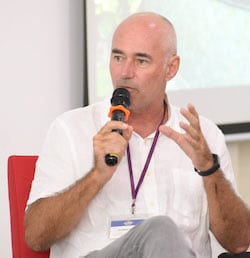
Nikoi’s success led Andrew Dixon to develop Cempedak
Its success prompted him to lease a second island, Cempedak, an and build an all‐bamboo, high‐end resort for adults only.
For Simon Wong, who has a branding design background, the idea of offering what he claims to be the world’s first Vespa vintage sidecar tours came after he and his friends put on display their own vehicles at a charity event in Singapore and “people kept asking us, how much is a ride?”
That hobby of sidecars has now turned into a business. Triquetra.sg, launched in August last year, had its travel agency licence approved a couple of months ago and it is offering Vespa vintage sidecar heritage tours in Singapore.
Meeting challenges with resolve and creativity
It is clear all three are undeterred by the challenges they faced in setting up their businesses.
Running a eco tour operating business in the remote Yunnan‐ Tibetan region means a very seasonal business (mainly May‐ October). Uttara designs journeys for specialist groups and expeditions and, as such, finds that hard to scale. It’s also hard for her to get the word out and so she relies primarily on word of mouth currently.
To create his vision of Cempedak, Dixon’s challenge was sourcing the bamboo – he had to arrange for a total of 700,000 pieces of bamboo to be carried cross the seas from Java and Sumatra on 280‐foot‐long barges.
Wong had to get creative and resourceful to change licensing so that his sidecars could operate tours in Singapore.
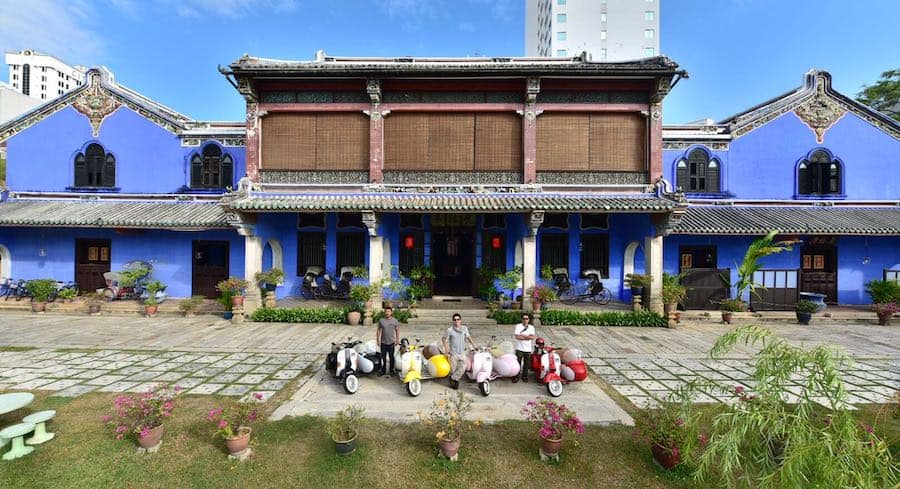
Triquetra.sg team at Penang’s iconic Blue Mansion (Image credit: Triquetra.sg)
As part of WIT Indie, he organised a 500‐mile Charity ride from Singapore to Penang, to raise funds for cancer research as well as raise awareness of his tours which he would like to expand to places such as Hong Kong’s New Territories and Sri Lanka.
He wasn’t sure of local regulations in Malaysia or the welcome he and his fellow riders would get in Penang, and he was pleasantly surprised by the help he got from traffic police when one of the cars had a breakdown and the overwhelming response his sidecars got when they drove through Penang, giving tourists and residents free rides over several days.
Keep it local, simple and real
Sharing their lessons learned along the way, Uttara advised those who intend to set up tourism businesses in local remote areas. “One, you really need to research your site and your stakeholders and continue to do that in order to avoid any conflict.
“Two, we had to stay as local as possible, use natural and local products, blend into the environment and understand every stakeholder’s habits, whether it’s a one‐horn rhinoceros or certain birds and plan our activities in a sustainable way. Create a code of conduct to work with the tribal people around the area, because if you don’t get everybody working with you not going to have a product.”
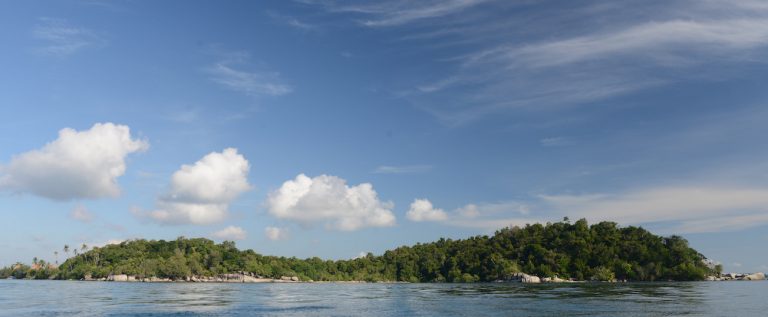
Authenticity, simplicity, real – Cempedak Island
Dixon’s key lesson is “we try to keep things simple and keep it real”.
“One of the things we did was staying niche rather going for everyone in the market, and to stay very focused.”
Wong said, “You have to hit at the easiest point of least resistance with the little force that is available to us.” In his case, have a product, know your place and your purpose, stick to that and people will find you.
The challenges of scale
Handcrafted businesses run by passionate individuals are, by their nature, hard to scale.
Said Sarkar Crees, “You can’t have 30 people going on bird watching, and you can’t have 30 people going on a botanical journey without trampling the flowers. In terms of products, we can scale them for small groups.
“Where we could scale better is to distribute journeys throughout the year, and distribute more journeys to different regions, and we also need to scale our marketing to reach the right clients who are willing to pay for the experience.”

Simon Wong plans to offer sidecar experiences to countries like Malaysia and Hong Kong.
Triquetra.sg’s Wong would love to have different/small groups of sidecars in different countries, offering different types of experience.
“Some of them could be journeys like the rides we had driving up to Penang and passing through beautiful padi fields, or heritage experiences around inner cities, or having small groups in nice places around the world where people can see things in better detail.
“What we need are more passionate like‐minded individuals around the world.”
For Dixon, his next journey is not about scale but how to introduce more environmentally‐friendly and sustainable practices into his resort. He is currently breeding Black Soldier Flies which consume food waste from the resorts and turn them into animal feed, creating a closed loop for wastage. It is also investing in a farm to grow produce for the resort’s kitchens.
For all three, what started as serendipity, from mountains to islands and sidecars, has now turned into purpose‐filled journeys with a common objective – to immerse travellers into deep, local, authentic experiences.
• Featured image: From left – WIT’s Yeoh Siew Hoon, Triquetra.sg’s Simon Wong, Nikoi/Cempedak’s Andrew Dixon and Gyalthang Eco‐Travel’s Uttara Sarkar Crees