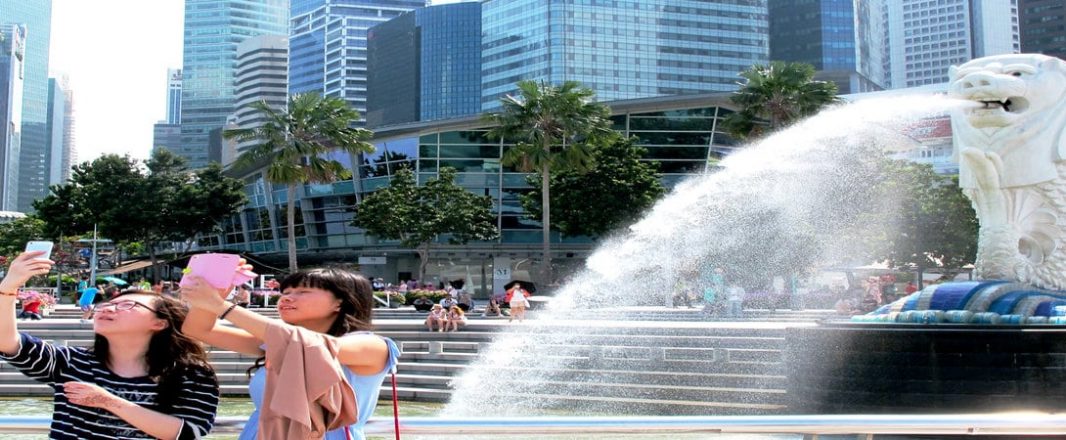

Young and wealthy Chinese citizens, fascinated by technology and with a desire to experience individual forms of travel, are no longer taking the kind of trips once popular with many Chinese people.
Chinese citizens’ travel habits are undergoing huge change and the international travel industry must tailor its services to meet the demands of China’s new generation of tourists.
Chinese speaking staff, typical Chinese dishes, and communicating via China’s popular social media channels could well be the recipes for success, said the report.
The demand is for high-quality service rather than low-cost group tours. China’s tourists want to experience individual travel. While visiting as many attractions as possible remains an important part of a tour, relaxation and entertainment have now moved further up the wish list.
Shopping is still one of the favourite activities of Chinese travellers, with the average amount of money they spend per visit reaching double-digit figures.
ITB advised tour operators should also take the needs and habits of Chinese people into account on their websites. Individual information pertaining to the market as well as links to Chinese search engines, such as Baidu, are what is required, instead of simply translating one’s own content.
Websites should be hosted in China to enable a quick response to any censorship activities. They should not contain any links to websites, which are banned in China, such as Facebook or YouTube.
For Chinese people, taking their specific cultural aspects into account is equivalent to affording someone respect, whereas for many Chinese tourists a website that ignores their needs is tantamount to a bad travel experience.
As for China’s young generation of digital natives, social media, online bookings and mobile technologies are indispensable tools for planning and booking trips.
Those who wish to travel abroad make use of online media to prepare in detail and to obtain information on their travel destination, and after a trip they share their experiences with other community members on the web.
Ninety-two percent of China’s Internet users go on social networking sites, around twice as many as in Europe or the US.
The report surmised that the Chinese, with their continuing desire to travel, is becoming one of the world’s main source markets for tourism.
According to estimates by the United Nations World Tourism Organization (UNWTO), 66 million Chinese citizens travelled abroad this year, 15% more than in 2010.
IPK’s Asian Travel Monitor expects that by end 2011 Chinese citizens will have undertaken around 18 million trips with overnight stays to destinations abroad. The most popular countries in Europe for Chinese holidaymakers are Germany and France.