
In our continuing series of articles around our WIT Singapore Conference theme of “Through The Looking Glass”, where we look outside travel in search of different stories and lessons, we look at how a new startup is aiming to use blockchain and fintech to address the base of the pyramid in emerging markets.
While tech giants talk about reaching the “next billion users” one startup wants to address the base of the pyramid in a different way, not to tap into them as simply consumers but to “create economies where economies do not exist” and narrow the inequality gap between the haves and have-nots.
Everest.org, which develops “financial technologies for elevating humanity”, was set up to provide product and service solutions for emerging markets and the base of the pyramid – “the 3-4 billion people, the C, D and E level markets, which represents a $5 trillion market. Adding in the next 2 billion people shifts this figure to 20 trillion”, said Gautam Ramnath, director of partnerships of the US-based, Singapore hubbed organisation.
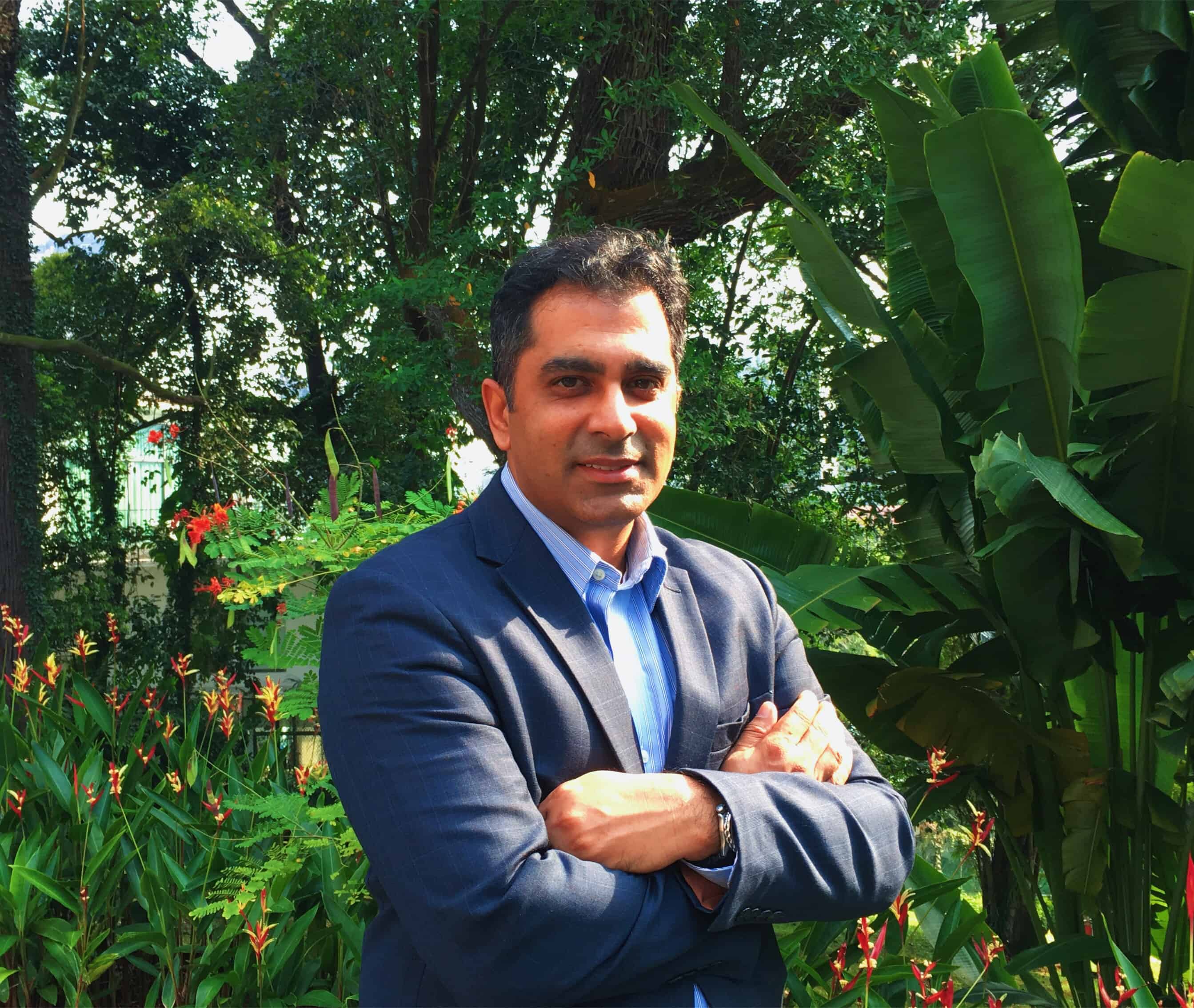
Gautam Ramnath: “A big part of why this is now possible is because we can leverage the power of blockchain as a tipping point technology.”
“These are people earning less than $10 a day; these are the next billion users and they are starting to see some upward economic mobility. By bringing on multisector users onto our platform, we can securely offer them a myriad of different services in a secure and cost effective manner, which aligns with subsistence marketplace business models. A big part of why this is now possible is because we can leverage the power of blockchain as a tipping point technology.”
The platform is described as a “decentralised platform incorporating a payment solution, EverChain, with a multi-currency wallet, EverWallet, and a native biometric identity system, EverID”.
To put its model to the test, it is partnering with Indonesia’s TNP2K (National Team for the Acceleration of Poverty Reduction) to run pilots in selected regions to enhance the efficiency, accountability, transparency, and gender inclusivity of the National LPG (Liquefied Petroleum Gas) Subsidy Program.
The LPG subsidy programme was developed to provide 41 million Indonesian households with liquified petroleum gas as cooking fuel instead of dangerous and costly kerosene. By leveraging blockchain technologies, the Everest platform helps deliver subsidies to digital wallets, so that even users without a mobile device can access them by simply using their biometry.
At the signing of the partnership, Everest CEO Bob Reid said, “By delivering subsidies to biometrically validated digital wallets and savings accounts over a transparent and low-cost blockchain, the government is modernising government service delivery, cutting down on leakage, and enabling banking services with enhanced financial inclusion.”
Bambang Widianto, Deputy Chief of Staff for Human Development and Equality/Executive Secretary of the National Team for the Acceleration of Poverty Reduction (TNP2K), said, “The solution that will be tested by utilizing digital ID of beneficiary is expected to transform the current mechanism by ensuring the right targeting. The new mechanism is expected that only those who are entitled (poor and vulnerable household) can enjoy this subsidy and also to save more than US$1.3 billion in government subsidy funds.”
This is the first pilot programme of its kind in the ASEAN region. Currently, Everest.org is working on 15 use cases and another pilot involving health care and mothers in Cambodia is in the works.
Everest.org was in stealth mode till recently, and was having its technologies reviewed at the Asian Development Bank and tested at the World Bank Blockchain lab. “With blockchain value transfer and blockchain KYC (Know Your Customer), we are able to bank the unbanked and deliver services such as micro finance, micro insurance and even remittances rapidly and securely. Understanding consumer behaviors and ethnography plays a massive part in designing the solutions that will have the most resonance amongst these populations.” said Ramnath.

Gautam Ramnath: “First you have to trust blockchain and accept it – its immutable ledger with decentralisation principles that can really power efficiency and security.” (Image credit: ikachan999/iStock-Getty Images)
He acknowledges there’s a lot of skepticism around blockchain with all the recent hype associated with it, and not many tangible proof of test use cases being seen. So why should we trust Everest.org, I asked?
“First you have to trust blockchain and accept it – its immutable ledger with decentralisation principles that can really power efficiency and security. A lot of blockchains are also sector-focused. We are different, in that we have built our platform at the foundational or atomic level. With this, and our deep understanding of how to design and implement within these population segments, we take on any sector, take lessons from one to the other and build on economies of scale to offer multiple, cross cutting products and services to the user. And that’s what makes us so interested in the travel sector – why couldn’t the Everest platform be used to deliver travel as an aspirational service to the next billion users?
With seed funding by Softbank’s Mistletoe fund, it has closed its seed round and is looking to rapidly raise US$20 million to scale up its strategic vertical stacks. “For blockchain, often you have to build the bridge that you have to cross. Partnering with global and local B-C organisations, whether private sector, governments, NGO’s or financial institutions allows them to nimbly leverage the Everest platform to deliver the specific products and services for emerging markets. As such, we are thrilled to be the B2B solution for local B-C players in the market.”
Ramnath himself is a product of this market. “I remember pumping water in the morning – six buckets of water a day – for the first few years of my life. Then things happen in your life that alter your course – inflection points. My dad got a job with IBM and that put my family on a totally different trajectory, I won’t ever forget that – my roots.”
That trajectory took him out of India to Australia and Chicago and he ran his own architectural and construction firm for many years but it was a stint in Mali, West Africa, when he realized that “whatever I do, there’s got to be more to it; we have to be able to fully develop sustainable business models that the help democratize prodcuts and services across all population segments; we should all be able to access basic and aspirational goods and services, no matter how much we may earn”.
His stint at the GAIN Alliance, a UN & Gates Foundation created international organisation saw him working on nutrition partnerships to deliver “health by stealth and at scale” by developing market-based solutions in delivering nutrition.
One lesson he learnt from GAIN was how to bring the two worlds of big business and nutrition purists together. For instance, by bringing Hershey’s onto GAIN’s Business Alliance and developing a cross cutting strategy for supply chains, brands and CSR, Hersheys launched Project Peanut Butter in Ghana – a peanut processing factory in northern Ghana which provides peanut growers got a higher price, helps them develop better quality crops and develops nutritious products for local markets. “I loved the challenge of bringing a confectionary company into the nutrition sector in a mutually incentivized, thoughtful and tangible way,” added Ramnath.
Married to a diplomat, Ramnath has followed his wife’s career which has taken him to Tunisia, Mali, Washington DC, Mexico City and now Singapore. “My skillset is more portable than ever given the how flat the world has become.”
He sees blockchain as an inflexion point that could change the paradigm for social enterprises and impact investing with private equity and venture capital.
“Blockchain changes the paradigm because of its decentralized nature and it is so relevant for emerging markets where KYC and secure transmission of value is critical. While large enterprise database systems may work for developed markets, blockchain can pave the way for emerging markets, said Ramnath. “It is about attracting the next billion in a good way – in a way that aligns with their incentives such that solutions can be sustainable and exponentially impactful.”
• Gautam Ramnath will be speaking at the WiT Conference to offer “Through The Looking Glass” perspectives on blockchain and its potential implications for travel.
• Featured image credit: monsitj/iStock-Getty Image