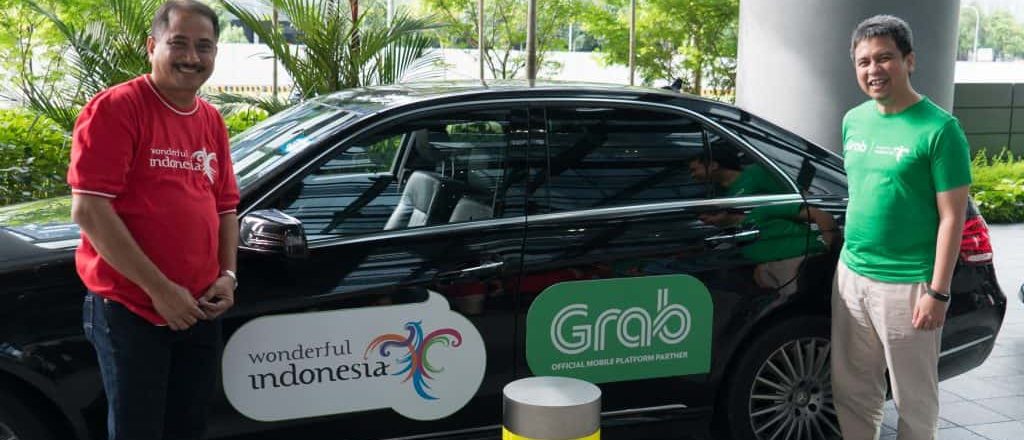
Ministry of Tourism of the Republic of Indonesia has partnered with O2O mobile platform, Grab, to accelerate inbound travel growth within ASEAN. The one-year partnership will comprise ‘Smart Tourism’ initiatives on Grab, designed to offer users a “value-added experience” for both domestic and foreign travellers.
Indonesia’s tourism sector is the ninth fastest growing tourism industry in the world, according to WTTC – ranking third in Asia and the top in ASEAN. The partnership will facilitate Tourism Indonesia’s ambitions of doubling its tourism arrivals from 10 million to 20 million (17 million this year), as well as boosting its foreign exchange receipts.
Said the Minister of Tourism of the Republic of Indonesia, Arief Yahya, “the partnership is part of the country’s policy of developing the digital experience in tourism to [and within] Indonesia.”
To reach these targets, the Ministry of Tourism has set its focus on Southeast Asia as the most lucrative travel market for Indonesia. Yahya quoted that approximately half of tourists within ASEAN are intra-ASEAN travellers. 40% of tourists to Indonesia are also from ASEAN countries. Yahya said that the ministry wants to boost this to at least 50%.
“As you know, tourism is about proximity… another is purchasing power. So, we need to attract ASEAN tourists with the highest purchasing power,” said Yahya. And, based on exit surveys, it was also recognised that 50% of travellers to Indonesia are millennials.
Yahya explained that the most logical and effective way to access this demographic was through upgrading its digital experience and connecting with consumers on a platform they engage with almost daily. “The more millennial, the more digital… if they’re not digital, they’re not millennial.”
Grab’s CEO advisor, Lionel Yeo explained, “mobile penetration rates in ASEAN are growing rapidly… we see a great opportunity to serve customers better by giving them information on new travel destinations, and allowing them to book trips and packages via the Grab app.”
“I had to realise that we never planned or designed [our campaigns] to be millennial friendly,” said Yahya. That must change.
Yahya listed three key ways in which he believes the partnership with Grab will help achieve Indonesia’s tourism targets. Firstly, he requested a calendar on the platform that lists events on both a national and hyper-local level, to capture traveller’s attention beyond just attractions.
Secondly, it is to “promote the president’s programmes of ‘ten new Balis’, [which] is the top priority of seeking out new destinations in Indonesia.” On the Grab app’s newsfeed, an “Explore Indonesia” segment has been added, promoting content such as “10 Irresistible Places in Indonesia”, as part of its ongoing #JelajahIndonesiaLebihDekat campaign.
“Grab’s penetration in SEA is so strong that we are a great platform to get the content out… we also want to facilitate them in making a booking,” said Yeo. “In thinking about millennials, we need to think about the whole consumer cycle… you can trigger them to think about certain destination and enable them with the services to make it happen.”
Most importantly, it aims to provide “excellent digital services” in all tourism destinations for both foreign and its 275 million domestic travellers.
Through Grab, tourists will also be able to rent a GrabCar service in various parts of Indonesia, have access to “Hot Deals Jakarta” promotion program offering discounts to Singapore tourists, use GrabCar Shelter’s – designated pick up/drop-off points for tourists and international airports, use GrabChat (which can auto-translate messages to reduce language barriers), and enjoy food delivery through GrabFood.
It serves Grab’s broader ambitions of becoming a lifestyle ‘super app’ by the likes of Alipay – by being able to offer services beyond its original design as a ride-hailing platform.
Beyond its partnership with Grab, the Ministry of Tourism also invested heavily in digital media, pushing content on Google, Baidu, TripAdvisor, Ctrip and Expedia, to name a few, using a competing destination model.