
“There are big changes in the China travel market, which also means big opportunities for marketers.” This was how Reene Ho-Phang, founder and, managing director of BrandStory Asia, described what lies in store for companies looking to do business with this outbound travel giant.
She was giving some top tips to the delegates at last week’s WiT Indie 2019 held at the Penang Institute on the most effective way to tap the China market.

Reene Phang-Ho: Big changes in China market mean big opportunities for marketers.
BrandStory Asia, a destination marketer in China, was established in 2003 to engage with the travel industry to stimulate the desire for and drive travel by Chinese consumers.
“My work is about creating love for destinations like Hawaii and Jerusalem, and this love will lead to lots of money from my clients,” she added, with reference the conference’s theme, “Love & Money”.
Describing China as the “world’s largest source market for travel” that is (still) growing and evolving, Ho-Phang pointed the three key points for marketers to note in the evolution of the China market – the digitisation of the country, geographical expansion, and changing habits.
Evolution of the China market
- Social media: This dominates Chinese lives at home and while travelling. Consumers use their mobile devices for everything – from watching movies to purchasing travel and socialising.
- Digital payment: “We don’t carry wallets or credit cards anymore as we pay for everything with the mobile phone (Alipay/WeChat payment). Even buying fried dough for breakfast from a street hawker is with mobile by scanning a QR code,” said Ho-Phang.
- Rise of Tier 2 markets: In these cities such as Chengdu, Chongqing and Ningbo, now coined as the “‘new Tier 1 cities”, there is an explosion in outbound travel as people have more purchasing power, are changing their lifestyles and now want to travel. Airlines are flying in to meet demand. This has resulted indouble digit growth for these metropolis.
- Mega shift to FIT travel: Major Chinese OTAs are reporting an increase of 60% in this segment versus groups.
- Luxury travel boom: Residents of Tier 1 cities — Beijing, Shanghai, Guangzhou, Shenzhen — are growing wealthier and more sophisticated, sparking a rise in luxury travel.
- Family travel: Groups are still travelling but no more are they followers of flag-carrying tour guides. Instead, the groups are now smaller with multi-generation families travel becoming popular; they account for 30% of Chinese outbound tourists (30 million). These travellers want experiences and are willing to pay more for hotels.
Islands, first choice destinations
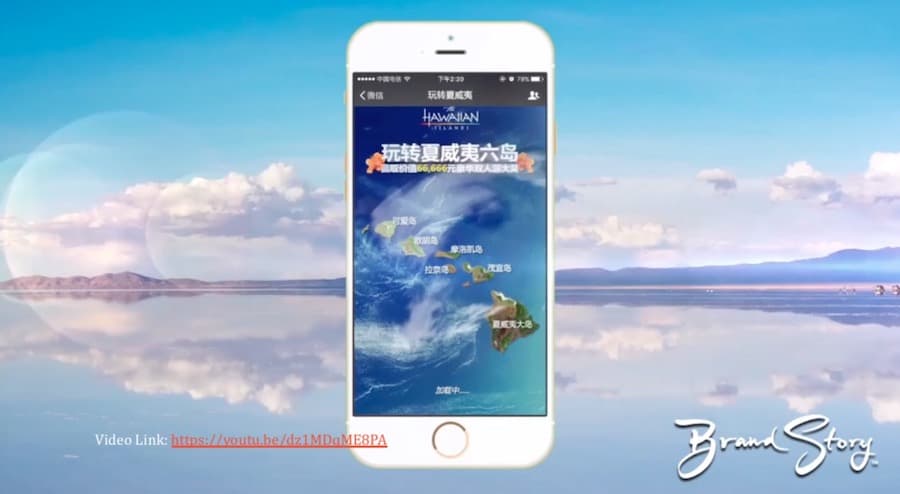
Ho-Phang said BrandStory’s interactive WeChat campaign on the mobile phone – Hawaii’s 6 Island Adventure – revealed that 46% of travellers ranked island holidays as their first choice destination. The campaign is popular as it not only showcases the products but educates Chinese consumers about Hawaii, that it is not just one island but six. Travellers can follow the campaign on the microblogging website Weibo. Ctrip, she added, reported 20% increase in bookings with this campaign.
Another segment with great potential is YOLO (You Only Live Once) – adventure seeking Chinese travellers who accounted for 190 million adventure seekers spending US$30 billion.
Current data shows a 12% increase in spending from Chinese outbound tourists, and China is the #1 market in terms of top spenders.
•Download Reene Ho-Phang presentation (PDF).
• Featured image credit: Image Source/Getty Images