
Travel activities account for 9% of global travel market and is the third largest segment of the travel space after airlines and hotels. This is a significant space worth about US$129 billion (RM500 billion).
Nearer home, Asia Pacific is the largest regional market for tours and activities with 30% of the share – a huge market, just as big as Europe and North America.
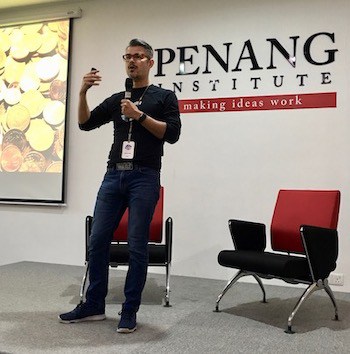
Stephen Joyce: Travel activities is third largest segment of the travel space after airlines and hotels.
It is thus not surprising that many companies are venturing into this sector. While the big boys have the resources and manpower to market their products and services globally, the smaller players may have difficulty in doing so. How then can an experience business get itself discovered?
Sharing some techniques with operators and owners of tours & activities at WiT Indie in Penang March 15, on how to do this was Stephen Joyce, CEO of Rezgo, the tour operator software that allows tourism agencies to integrate a real-time online booking system into their websites.
Touching on the conference’s theme of Love & Money, Joyce said while tour and activities is a big industry, it is essentially made up of small businesses that operate “out of love, not necessariy for the money”.
Elaborating, he gave a global snapshot of these business:
- 64% generate on average less than US$250,000 per year for their business (global statistics); in some markets in Asia, this may be significantly less.
- 61% have less that 5,000 customers per year, not a huge volume of customers as they serve fairly small markets.
- 53% have five or less employees; many of these companies are single owner or operator.
- About half (56%) are industry-ready and are able to distribute through third parties like OTAs with support from their technology. The percentage is much lower in Asia as most of the business is done offline with many still using paper and pencil, phones calls, dealing with local resellers. In markets like Thailand, for example, all tour and activities are bought off one or two offline resellers.
On ways to get discovered Joyce listed these steps:
Know your customer
“The first thing you have to do before you get discovered is to know who your customer is and who you want your customer to be. Is your customer local? Are they international or domestic travellers?”
Joyce explained that in South-east Asia, a domestic traveller is one who travels between countries within the region like from Thailand to Malaysia or from Singapore to Cambodia, a domestic traveller in the US which is geographically much larger, is one who travels within its country borders.
(Image credit: Soft_Light Getty Images)
The choice of payments for customers is also vital to note. International travellers from outside South-east Asia, like Australia, Europe or the U.S., may prefer to pay with credit cards rather than cash. Chinese tourists will want to pay with Alipay or WeChat Pay.
Other factors to consider are how likely customers book in advance, or if they mobile-centred. Also consider their demograhics – are they older or younger, millennials or baby boomers; what language do they speak and in what currency do they prefer to see pricing.
Joyce stressed that the currency used in pricing is important. “Customers are likely to purchase a product or service if it is in their own currency. For example, if your target market is Japan and you’re bringing Japanese tourists inbound, consider pricing your product in Japanese Yen instead of USD, Singapore dollars or Malaysian ringgit.”
Get prepared: Automate bookings
Joyce said this was key as 67% of activities providers worldwide manage their reservations and availability using some kind of system like email and a calendar. This method is, again, used much less in Asia.
Steps to take to automate:
- Accept credit card payments or the payment method preferred by your customers (Alipay, WeChat Pay, Apple Pay etc),
- Use a reservation or booking platform system to manage your availability and business. “When you digitise your payment choice, it’s easier to share unlike when it’s on paper,” said Joyce.
- Review your pricing to ensure your added costs are considered.
- Get a website with your own domain and brand; use it to distribute your brand.
- Connect your online booking system to your website so people can book online.
Direct business is good business
“90-98% of your sales will come from direct business if it is done right,” said Joyce.
Here’s how get more direct business:
- Set up you Google My Business profile – that’s how people look for you. Do that right away.
- Ensure you have rich descriptions, content, photos and videos on your website to describe your tours.
- Set up social media profiles for your business – Facebook, Instagram, Twitter, WeChat.
- Develop a content strategy to improve your SEO.
- Use Google Adwords Express or Google AdWords to drive direct customers from Google Search. Start advertising. It’s a very effective way to drive business, especially locally on mobile.
In closing,Joyce reminded the delegates that for their experience business to be discoverable, they need to remember the following – “price your activities accordingly, use a reservation system, connect to the important channels and use digital marketing effectively.”
• Download Stephen Joyce’s presentation (PDF)
• Featured image credit: spkphotostock/Getty Images